

Digital-First Customer Strategies: Competing on Experience in Tough Times
In uncertain economies, customer experience becomes a competitive edge. Learn how digital-first strategies help organisations retain trust and loyalty.

When economic pressure rises, many organisations instinctively focus on cost-cutting. But history shows that companies which win during downturns don’t compete on price alone — they compete on experience.
In an era of cautious consumers, digital-first customer strategies have become a decisive differentiator. Customers expect speed, personalisation, and consistency across every interaction, regardless of economic conditions. For South African organisations navigating uncertainty, experience is no longer a “nice to have” — it’s a strategic survival tool.
This article explores how digital-first customer strategies help organisations retain trust, deepen loyalty, and stay competitive when conditions are tough.
Why Customer Experience Matters More in Uncertain Economies
In tough times, customers become more selective, more value-conscious, and less forgiving of friction. Poor service, slow responses, or inconsistent digital experiences quickly erode trust.
This shift mirrors the broader volatility discussed in Global Economic Headwinds: How South African Businesses Can Stay Resilient.
Strong customer experience delivers:
Higher retention when acquisition costs rise
Greater lifetime value per customer
Stronger brand trust during uncertainty
Key insight: When budgets tighten, experience becomes the battleground.
Digital-First Does Not Mean Digital-Only
A common misconception is that digital-first means removing the human touch. In reality, the most effective strategies blend digital efficiency with human empathy.
Digital-first organisations:
Use technology to remove friction
Empower customers with choice and control
Reserve human interaction for moments that matter
This balance aligns with the people-centred leadership principles in The Human Side of Transformation: Keeping Purpose Alive Amid Change.
Practical takeaway: Digital should enable relationships, not replace them.
Personalisation at Scale: From Data to Relevance
Customers now expect interactions tailored to their needs, preferences, and context. Digital tools make this possible — even for SMEs.
Practical applications include:
Personalised offers based on behaviour
Targeted communication across channels
Adaptive customer journeys
AI-enabled personalisation builds on capabilities explored in AI and Business: Practical Use Cases for South African Enterprises.
Result: Customers feel understood, not marketed to.
Speed, Simplicity, and Self-Service
In uncertain environments, customers value convenience and responsiveness more than ever. Digital-first strategies prioritise:
Seamless self-service platforms
Faster issue resolution
Reduced customer effort
These efficiencies not only improve satisfaction — they also reduce operational costs, supporting resilience as outlined in From Insight to Impact: Building Resilient Strategies for a Volatile Economy.
Practical tip: Measure customer effort, not just satisfaction.
Trust as a Digital Differentiator
Digital experiences must be built on trust — especially where data privacy, security, and transparency are concerned. Customers are increasingly aware of how their data is used and expect ethical handling.
Trust-based digital strategies include:
Clear data usage communication
Secure, reliable platforms
Consistent brand experience across channels
Leadership plays a critical role in maintaining trust under pressure, as highlighted in Leadership in Crisis: How to Maintain Trust and Morale Under Pressure.

Empowering Frontline Teams with Digital Tools
Customer experience is ultimately delivered by people. Digital-first organisations equip frontline teams with:
Real-time customer insights
Integrated CRM platforms
Automation that removes admin burden
This human-digital partnership reflects workforce priorities discussed in Talent, Skills & Automation: Preparing Your Workforce for the Next Decade.
Key insight: Better tools create better conversations.
The South African Context: Digital as an Equaliser
For South African organisations, digital-first strategies can level the playing field. They allow smaller firms to compete with larger players by delivering:
Consistent omnichannel experiences
Scalable service without proportional cost increases
Access to broader markets
This agility is critical for long-term competitiveness and aligns with themes in Designing the Future: Strategic Priorities for South African Leaders in 2026.
From Customer Strategy to Execution
Many organisations understand the importance of customer experience — but struggle to execute. Digital-first success requires:
Clear ownership of customer journeys
Alignment between marketing, operations, and IT
Continuous measurement and improvement
Bridging this gap reflects execution challenges explored in From Strategy to Execution: Closing the Gap in Organisations.
Conclusion
In tough economic times, customer experience is not a cost — it’s an investment. Digital-first customer strategies help organisations retain trust, deepen loyalty, and differentiate when margins are under pressure.
By combining technology with empathy, data with purpose, and speed with trust, organisations can compete not just on price, but on experience.
In uncertain markets, the brands that customers remember — and return to — are the ones that made things easier when times were hardest.

AI and Business: Practical Use Cases for South African Enterprises
AI is reshaping South African business. Explore practical AI use cases that improve decision-making, automate operations, and build resilience at scale.

Artificial intelligence is no longer a futuristic concept reserved for tech giants. Across South Africa, AI is quietly reshaping how organisations operate, compete, and create value. From automating routine tasks to improving decision-making and customer engagement, AI has moved from experimentation to execution.
For business leaders, the real question is no longer whether to adopt AI — but where to apply it for tangible impact. In a constrained and volatile economic environment, practical use cases matter more than hype.
This article explores how South African enterprises can apply AI in realistic, high-value ways that drive efficiency, resilience, and growth.
Why AI Has Become a Strategic Imperative
AI adoption is accelerating globally, but local realities shape how it should be deployed in South Africa. Skills shortages, infrastructure constraints, and economic pressure mean organisations must focus on use cases that deliver measurable returns.
This pragmatic approach aligns with the resilience-focused thinking outlined in From Insight to Impact: Building Resilient Strategies for a Volatile Economy.
When used strategically, AI helps organisations:
Improve productivity without increasing headcount
Enhance decision quality through data-driven insights
Respond faster to market and customer changes
AI becomes a competitive enabler — not just a technology upgrade.
Use Case 1: Smarter Decision-Making Through Predictive Analytics
Many South African organisations sit on large volumes of underutilised data. AI-powered analytics can turn this data into predictive insights, helping leaders anticipate trends rather than react to them.
Practical applications include:
Sales forecasting and demand planning
Credit risk and fraud detection
Scenario modelling for strategy and investment
This foresight-driven capability complements the strategic planning mindset explored in Strategic Foresight 2026: Turning Reflection into Action.
Practical tip: Start with one decision area where better prediction directly improves outcomes.
Use Case 2: Automating High-Volume, Low-Value Work
AI-driven automation is especially valuable in environments with cost pressure and skills gaps. Robotic Process Automation (RPA) and AI-enabled workflows reduce manual effort while improving accuracy.
Common applications include:
Invoice processing and reconciliations
Customer onboarding and compliance checks
HR administration and payroll queries
This aligns closely with workforce transformation priorities discussed in Talent, Skills & Automation: Preparing Your Workforce for the Next Decade.
Key insight: Automation should free people to focus on judgement, creativity, and relationships — not replace them.
Use Case 3: Enhancing Customer Experience at Scale
AI-powered chatbots, recommendation engines, and sentiment analysis tools are transforming customer engagement across sectors — from banking and retail to telecoms and professional services.
In the South African context, AI can:
Provide 24/7 customer support at lower cost
Personalise services based on behaviour and preferences
Detect service issues before customers escalate
Stronger customer trust and responsiveness support the leadership principles highlighted in The Human Side of Transformation: Keeping Purpose Alive Amid Change.
Use Case 4: Strengthening Supply Chain and Operations
AI plays a critical role in building operational resilience. Machine learning models can detect disruptions early, optimise inventory, and improve supplier performance.
Applications include:
Demand forecasting and inventory optimisation
Predictive maintenance in manufacturing and utilities
Supplier risk monitoring
These capabilities reinforce lessons from Supply Chain Resilience: Lessons From Global Disruptions and Local Adaptation.
Bottom line: AI helps organisations move from reactive operations to proactive control.
Use Case 5: Supporting Leadership and People Decisions
AI is increasingly used to augment — not replace — leadership judgement. People analytics platforms help leaders understand engagement, performance, and retention risks.
Practical uses include:
Identifying skills gaps and reskilling priorities
Predicting employee turnover
Supporting fairer, data-informed talent decisions
This leadership augmentation reflects the evolution described in The Evolving Role of Leadership in 2026: From Control to Empowerment.

Key Enablers for Successful AI Adoption
Technology alone does not guarantee success. South African organisations that extract real value from AI focus on three enablers:
1. Clear Business Use Cases
AI must solve a defined business problem — not exist as a standalone innovation project.
2. Skills and Change Management
Employees must understand how AI supports their work. This reinforces trust and adoption, especially during transformation.
3. Governance and Ethics
Responsible AI use builds confidence with regulators, employees, and customers — particularly in data-sensitive industries.
These execution challenges echo themes from From Strategy to Execution: Closing the Gap in Organisations.
AI in the South African Context: Opportunity with Responsibility
AI adoption also presents an opportunity to address structural challenges — from productivity gaps to skills development. When deployed responsibly, AI can support inclusive growth rather than deepen inequality.
Organisations that align AI strategy with purpose and long-term value creation are better positioned for sustainable success.
Conclusion
AI is not a silver bullet — but it is a powerful accelerator when applied with intent. For South African enterprises, the greatest value lies in practical use cases that improve decisions, automate inefficiencies, and strengthen resilience.
The organisations that win with AI will not be those chasing the latest technology trend, but those that integrate AI thoughtfully into strategy, culture, and execution.
In a decade defined by uncertainty, AI becomes most powerful when it helps people think better, act faster, and lead with confidence.

Digital Transformation in South Africa: What Leaders Should Prioritise in 2026
South African organisations face rapid digital disruption. Discover the key digital priorities leaders must focus on in 2026 — from data strategy and AI to talent, cybersecurity, and customer experience — to drive resilience, competitiveness, and long-term growth.

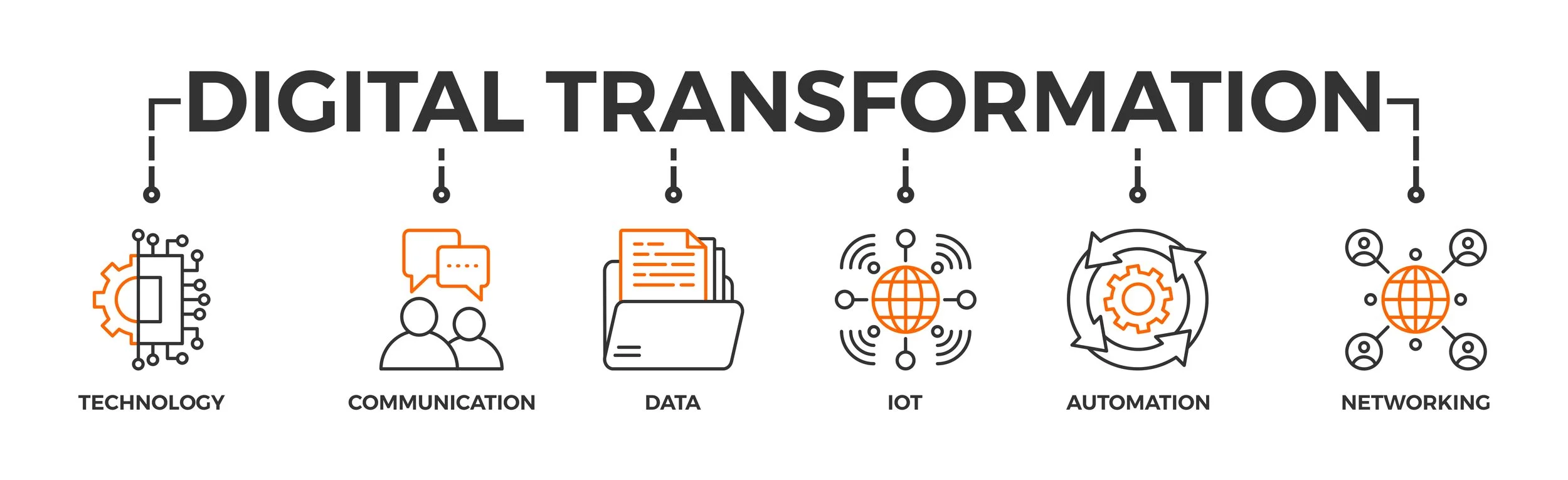
Digital transformation is no longer a long-term ambition — it’s the engine powering competitive advantage. And in South Africa, where economic pressure meets rapid technological change, the organisations that prioritise the right digital capabilities in 2026 will be the ones that accelerate past their competitors.
Think of South Africa’s digital landscape like an evolving ecosystem — adaptable species thrive, rigid ones disappear. The organisations that survive 2026 and beyond will be those that evolve quickly, build digital muscle, and rewire their operations for speed, intelligence, and resilience.
In this article, leaders will learn the top digital priorities to focus on in 2026 — from AI adoption and data strategy to talent transformation and cybersecurity — and how to build a digital roadmap that drives real value.
1. Build an Enterprise-Wide Data Strategy (Not Just Tools)
Data is the foundation of digital transformation — but many organisations treat it as a technology problem rather than a strategic capability.
South African leaders need an enterprise-wide view of data: where it lives, how it’s collected, how it flows, and how it supports decision-making. Gestaldt Consultants report that companies that integrate data across functions are 25% more likely to outperform in profitability.
As Satya Nadella puts it: “Every company is a software company. You have to start thinking and operating like a digital company.”
Practical Tip: Build a data governance framework with clear ownership, quality standards, and value outcomes.
2. Prioritise AI and Intelligent Automation for Efficiency Gains
AI adoption is accelerating in South Africa, and 2026 will be the year leaders move from experimentation to execution.
From customer service automation to predictive analytics, AI is becoming the backbone of cost efficiency and faster decision cycles. According to Gestaldt Management Consultants, AI could contribute up to R1.5 trillion to South Africa’s economy by 2030, making it one of the biggest growth levers.
Practical Tip: Start by automating one high-volume workflow — billing, supply chain updates, customer insights, or HR.
3. Build Digital Skills Through People-Centred Transformation
Technology means nothing without people who can use it confidently. South African organisations continue to face talent shortages in digital capabilities — cloud engineering, data science, cybersecurity, and digital product management.
Gestaldt IT Consultants note that companies investing in up-skilling are 2.8 times more likely to succeed in digital transformation.
Practical Tip: Launch a 3–6 month digital capability uplift program focused on data literacy, automation, and digital leadership.
4. Strengthen Cybersecurity and Digital Trust
As digital adoption grows, cyberattacks are increasing across Africa — with South Africa now ranking among the top three most targeted countries on the continent.
Leaders must focus on cybersecurity as a strategic priority, not just an IT cost. This includes cyber hygiene, employee awareness, risk assessments, and incident readiness.
Practical Tip: Conduct quarterly cybersecurity simulations and implement zero-trust security architecture.
5. Modernise Legacy Systems to Enable Speed and Integration
Outdated systems slow down decision-making, block innovation, and make organisations vulnerable. In 2026, modernisation will shift from optional to urgent.
Companies with modern cloud-based architecture report up to 45% faster product rollout cycles, according to Gartner.
Practical Tip: Start with a system architecture review, prioritising high-friction processes and legacy bottlenecks.
6. Create Seamless Digital Customer Experiences
South African consumers expect fast, personalised, omnichannel digital experiences — and businesses that deliver them gain the competitive edge.
A Salesforce report notes that 73% of customers expect companies to understand their needs. Leaders must rethink their customer journeys through digital-first experiences.
Practical Tip: Map your customer journey and identify digital touch-points that reduce friction and increase loyalty.
7. Use Digital Transformation to Unlock Growth and New Business Models
Digital transformation is not just about efficiency — it’s a growth engine. Leaders who embrace digital innovation unlock new revenue streams, business lines, and markets.
Innovation becomes more than a project — it becomes a capability.
Practical Tip: Run quarterly innovation sprints where teams solve real operational or customer challenges using digital solutions.
Conclusion
Digital transformation in South Africa is accelerating, and leaders who act decisively in 2026 will define the next decade of competitiveness. By prioritising data mastery, AI adoption, digital talent, cybersecurity, and modernisation, organisations can unlock agility and resilience in a rapidly evolving market.
The future belongs to companies that embrace digital change with purpose, clarity, and speed. In 2026, transformation won’t be about keeping up — it will be about taking the lead.

10 Ways SMEs Can Compete with Giants in 2025
Discover 10 practical strategies SMEs can use in 2025 to compete with large corporations through agility, innovation, and customer-centric growth.

The business landscape in 2025 is fierce, with multinational corporations holding deep pockets and vast resources. But here’s the good news—small and medium-sized enterprises (SMEs) don’t have to sit on the sidelines. Agility, innovation, and a people-first approach can help SMEs punch well above their weight.
Think of David versus Goliath: size matters, but strategy wins the battle. This article explores ten powerful ways SMEs can outsmart the giants and carve out a competitive edge.
1. Leverage Agility as a Superpower
Unlike large corporations weighed down by bureaucracy, SMEs can pivot quickly. In 2025, speed in decision-making and execution is a crucial differentiator.
Pro tip: Regularly review market shifts and be ready to adjust your offerings faster than big players.
2. Double Down on Customer Experience
Customers today want personalisation, not a one-size-fits-all approach. SMEs can deliver tailored service that giants struggle to replicate.
Stat: According to Gestaldt Marketing Consultants, 74% of consumers say customer experience is a key factor in their purchasing decisions.
3. Embrace Niche Markets
Rather than competing everywhere, SMEs can thrive by dominating a specialised niche. Focus on solving unique problems for a specific audience.
Example: African fintech start-ups are winning by targeting underbanked communities overlooked by traditional banks.
4. Harness Technology & AI Tools
Affordable AI platforms in 2025 allow SMEs to automate customer service, analyse data, and even predict trends. Giants have scale, but SMEs have speed in adopting tech.
Pro tip: Start small with AI-driven chatbots or predictive analytics to streamline operations.
5. Build Strategic Partnerships
SMEs can expand reach by collaborating with other businesses, start-ups, or even larger firms. Partnerships reduce costs and open new markets.

6. Leverage Digital Marketing Smartly
Digital channels level the playing field. SMEs can use hyper-targeted campaigns, influencer collaborations, and social media storytelling to attract loyal customers.
Stat: HubSpot reports that companies using blogs see 55% more website visitors than those that don’t.
7. Attract & Retain Top Talent with Culture
Giants can offer bigger salaries, but SMEs can attract talent with flexibility, growth opportunities, and purpose-driven work.
Quote: “Culture eats strategy for breakfast.” – Peter Drucker.
8. Prioritise Sustainability
Consumers increasingly choose brands that align with their values. SMEs can integrate eco-friendly practices faster than larger competitors burdened by legacy systems.
9. Be Financially Lean and Creative
SMEs must embrace lean models, reducing waste and focusing on high-ROI activities. Creative financing options like crowdfunding are also more accessible in 2025.
10. Tell an Authentic Story
People buy into people. SMEs can connect through authenticity, something giants often lose in corporate layers. Storytelling builds trust, brand loyalty, and emotional connection.
Conclusion: Competing on Your Own Terms
In 2025, SMEs don’t need to outspend or outmuscle the giants. By leveraging agility, authenticity, technology, and customer-centric strategies, they can not only compete but win. The playing field may not be equal, but the opportunities are real for businesses bold enough to seize them.