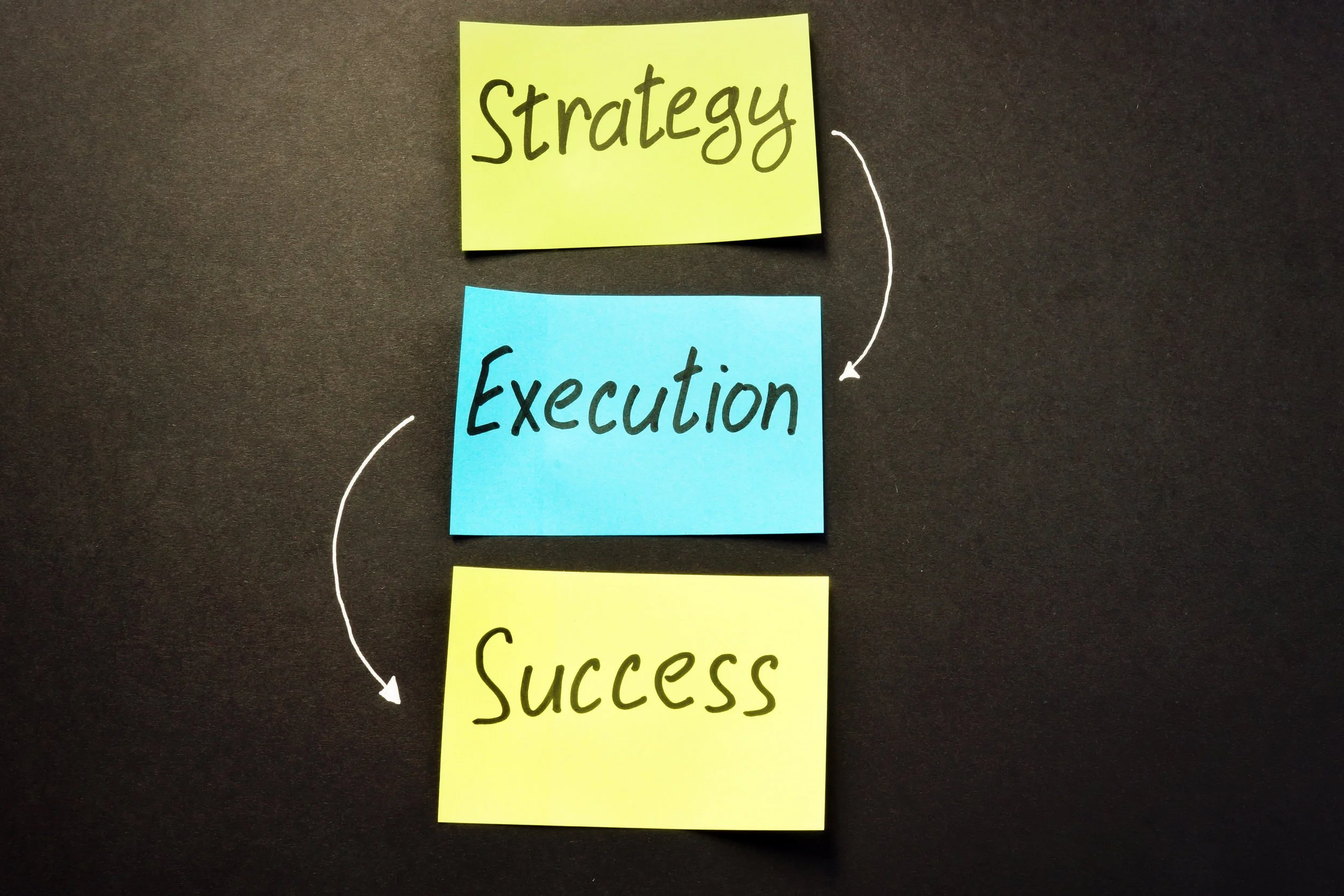
Your strategy may be perfectly understood in the boardroom and dangerously misunderstood everywhere else.
Every year, organisations invest considerable time and resources in developing strategies intended to accelerate growth, improve operational performance, strengthen competitiveness and create sustainable value.
Executive teams debate strategic priorities. Boards approve investment plans. Leadership communicates ambitious objectives. Performance targets are cascaded throughout the organisation.
Yet, somewhere between the executive boardroom and the frontline, strategic clarity begins to disappear.
Priorities become competing demands. Strategic objectives turn into operational tasks. Managers struggle to reconcile executive expectations with workforce realities. Employees remain busy, but the organisation fails to achieve the results its strategy promised.
The problem may not be the quality of the strategy.
It may be the pressure placed on the people responsible for translating that strategy into action.
These people are middle managers.
Think of an organisation as a bridge connecting strategic ambition with operational performance. Senior executives establish the destination, while frontline employees perform the activities required to reach it. Middle managers form the structural connection between the two.
When that connection is overloaded, poorly supported or weakened by conflicting expectations, the entire structure becomes vulnerable.
This is the middle management squeeze: the growing tension between what organisations expect managers to deliver and the authority, resources, capabilities and time available to fulfil those expectations.
The consequences extend beyond managerial frustration.
They affect strategic alignment, employee engagement, decision-making, organisational agility, customer experience and ultimately business performance.
The latest evidence makes this challenge increasingly difficult to ignore.
According to Gallup's State of the Global Workplace 2026 report, global manager engagement declined from 31% in 2022 to just 22% in 2025. Over the same period, engagement among non-managers moved from 20% to 19%.
Gallup also found that 79% of managers in its best-practice organisations were engaged in 2025, demonstrating that declining managerial engagement is not inevitable.
For CEOs and executive teams, these findings raise an important question:
Are your middle managers enabling strategy execution, or has your organisation unintentionally made them one of its greatest execution constraints?
Understanding the answer requires examining six organisational challenges that frequently prevent middle managers from translating strategic intent into measurable results.
1. The Strategic Translation Gap: When Executive Clarity Becomes Frontline Confusion
A strategy can be communicated throughout an organisation without being understood in a way that changes how people work.
Consider a company whose executive team announces three strategic priorities:
Accelerate profitable revenue growth.
Improve customer experience.
Increase operational efficiency.
At the executive level, these priorities appear straightforward.
However, a regional operations manager may face a different reality.
The sales department wants faster customer onboarding. Finance demands tighter cost controls. Operations must maintain service quality with limited resources. Human resources introduces new performance requirements.
Each department believes its demands support the strategy.
But who decides which objective takes precedence when the demands conflict?
That responsibility frequently falls to middle management.
The challenge is that managers may receive strategic objectives without sufficient guidance on the trade-offs required to achieve them.
They know what the organisation wants, but not necessarily how competing objectives should be reconciled.
This is where strategic translation becomes essential.
Strategy communication is not strategy translation
Communication explains what leadership intends to achieve.
Translation explains what that intention means for operational decisions, resource allocation, employee responsibilities and performance expectations.
The distinction is significant.
A strategic objective such as improving customer experience must be converted into operational choices.
For example:
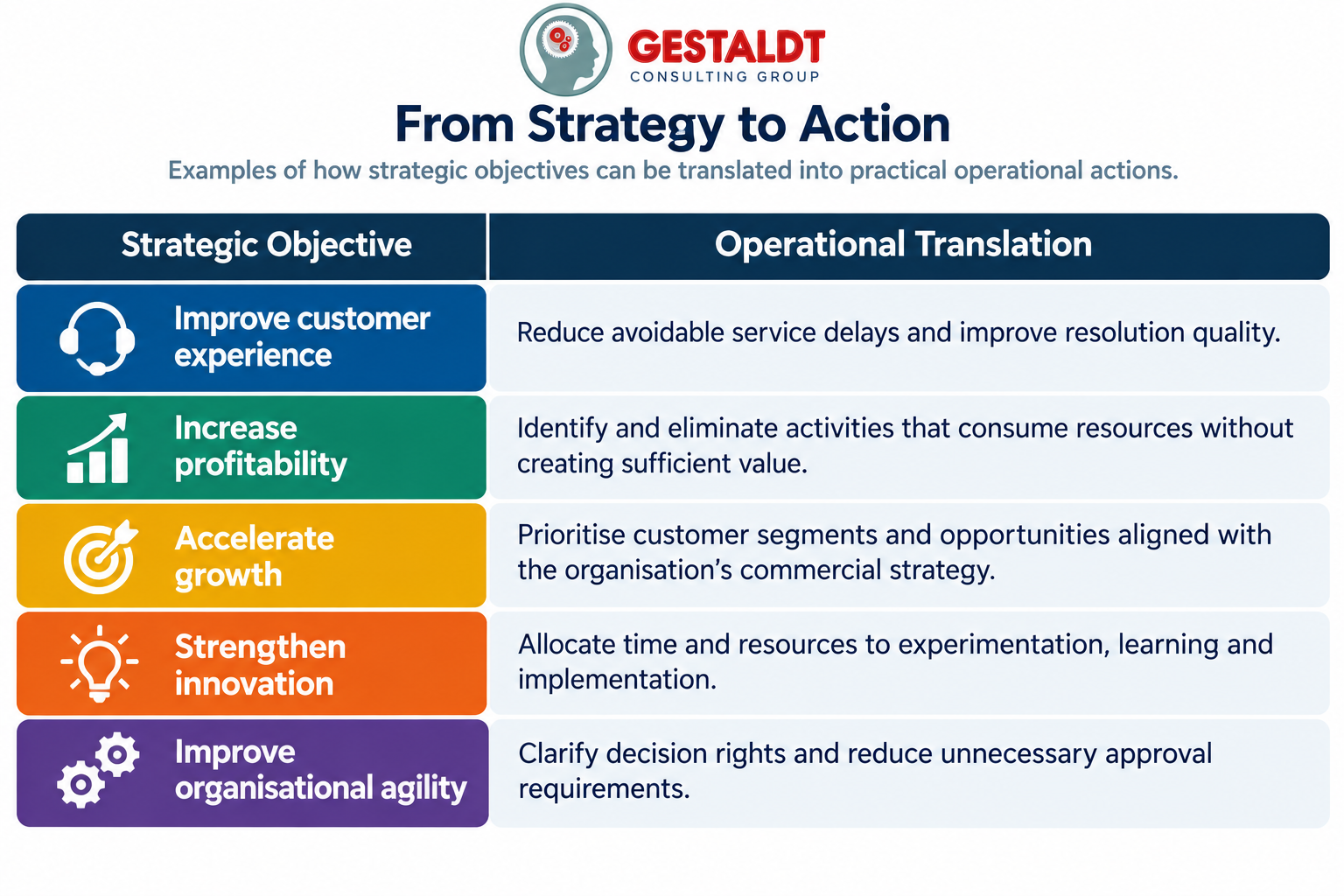
Without this translation, employees may interpret strategic priorities differently.
Managers then spend considerable time resolving inconsistencies that should have been addressed during strategic planning.
Research published in the Journal of Management & Organization, drawing on 654 responses from South African middle managers, examined their role as active participants in strategy rather than merely recipients of executive instructions. The study reinforces the importance of understanding how middle managers contribute to making strategy work.
What CEOs should do differently
Executives should require every major strategic priority to be accompanied by a clear operational interpretation.
This means defining:
The intended business outcome.
The operational changes required.
The decisions managers must make.
The resources and capabilities needed.
The trade-offs managers are authorised to make.
The performance indicators that demonstrate progress.
Managers should also be involved in testing whether the proposed approach is operationally realistic.
Practical tip: Conduct a strategic translation workshop with middle managers after approving major strategic priorities. Ask each manager to explain what the strategy means for their team's activities, decisions, resource requirements and performance measures.
If managers cannot explain how the strategy changes their operational priorities, the strategy has not yet been translated effectively.
2. The Accountability–Authority Mismatch: Why Managers Are Responsible for Results They Cannot Control
One of the most damaging organisational arrangements is holding managers accountable for outcomes without giving them sufficient authority to influence those outcomes.
Middle managers are frequently expected to deliver ambitious performance targets.
They must improve productivity, manage costs, develop employees, maintain service standards and implement strategic initiatives.
Yet their authority may be limited.
They cannot approve essential resources. They have little influence over staffing decisions. They must obtain senior approval for routine operational changes. They may even be required to deliver outcomes that depend on departments outside their control.
The result is a dangerous imbalance.
Responsibility increases while decision-making authority remains unchanged.
Managers become accountable for performance without possessing the tools necessary to manage it effectively.
How the mismatch undermines execution
Imagine a customer service manager responsible for reducing response times.
The manager identifies that outdated technology is slowing service delivery.
However, technology investment decisions sit with another department, and the required funding has not been approved.
The manager remains accountable for improving response times but cannot resolve the underlying constraint.
This creates three predictable problems.
First, decisions become slower. Managers must escalate issues that could otherwise be resolved quickly.
Second, accountability becomes blurred. When outcomes depend on multiple departments, it becomes difficult to establish who is responsible for removing obstacles.
Third, managers may become reluctant to act. Repeated experiences of limited authority can discourage initiative and reinforce dependence on senior leadership.
Over time, the organisation may develop a culture in which managers focus more on demonstrating compliance than exercising judgement.
Rebalance accountability and authority
Effective execution requires a clear relationship between responsibility, decision rights and access to resources.
Executives should distinguish between decisions that genuinely require senior oversight and those that can be delegated.
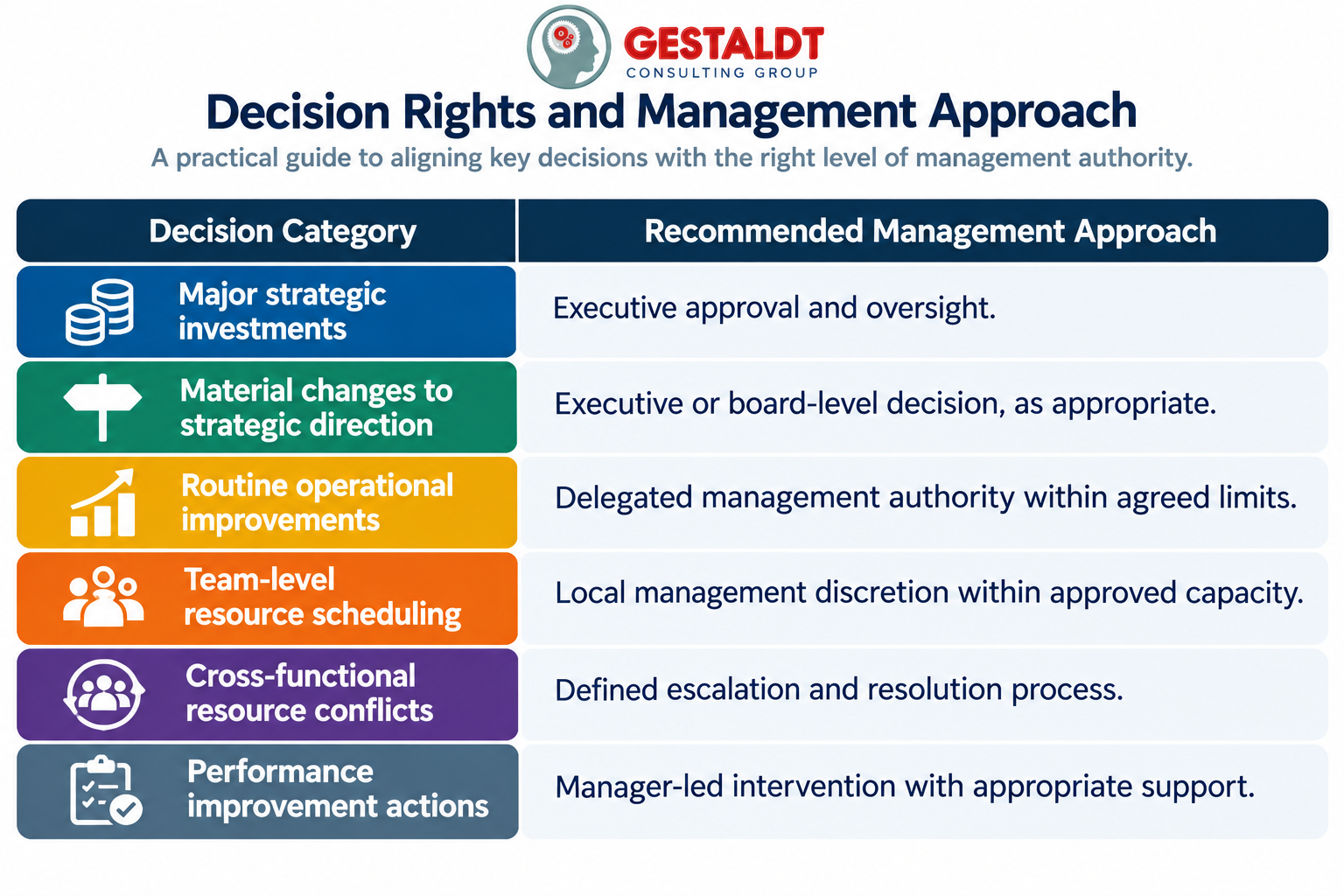
The objective is not unrestricted delegation.
It is to establish decision-making arrangements that balance accountability, operational responsiveness and risk management.
Practical tip: Identify the ten decisions most frequently escalated by middle managers. Review whether each genuinely requires executive approval or could be delegated through clearer authority limits and governance arrangements.
An organisation cannot expect managers to take ownership while denying them the authority needed to act.
3. The Operational Overload Trap: When Managers Have No Time to Lead
Your middle managers may be spending so much time managing work that they have little time left to manage performance.
Middle management roles have expanded significantly in many organisations.
Managers are expected to oversee daily operations, attend coordination meetings, prepare reports, manage employee performance, resolve customer issues, implement change programmes and contribute to strategic planning.
Technology has increased access to information, but it has also created additional reporting demands and expectations of constant availability.
The result is a role that can become dominated by administrative coordination and urgent operational problems.
This matters because management effectiveness depends on more than monitoring activities.
Managers must coach employees, identify performance barriers, develop capabilities, improve processes and create the conditions for consistent delivery.
These responsibilities require time and attention.
When managerial schedules are overwhelmed by meetings, reporting requirements and recurring escalations, the work most closely associated with improving long-term performance may be neglected.
The hidden cost of managerial overload
Operational overload affects the organisation in several ways.
Reduced employee development: Managers have less time to coach employees and address capability gaps.
Reactive decision-making: Immediate problems receive attention while longer-term improvements are postponed.
Poorer coordination: Managers struggle to resolve cross-functional dependencies before they become delays.
Weaker change adoption: Transformation initiatives receive insufficient managerial support.
Leadership fatigue: Sustained pressure can reduce managerial engagement and effectiveness.
Gallup's 2026 findings are particularly relevant. Global manager engagement fell to 22% in 2025, compared with 27% in 2024 and 31% in 2022. These results do not establish that administrative overload caused the decline, but they reinforce the importance of examining the conditions under which managers are expected to perform.
Redesign the managerial workload
Executives should examine how managers actually spend their time.
A useful assessment distinguishes between four categories:
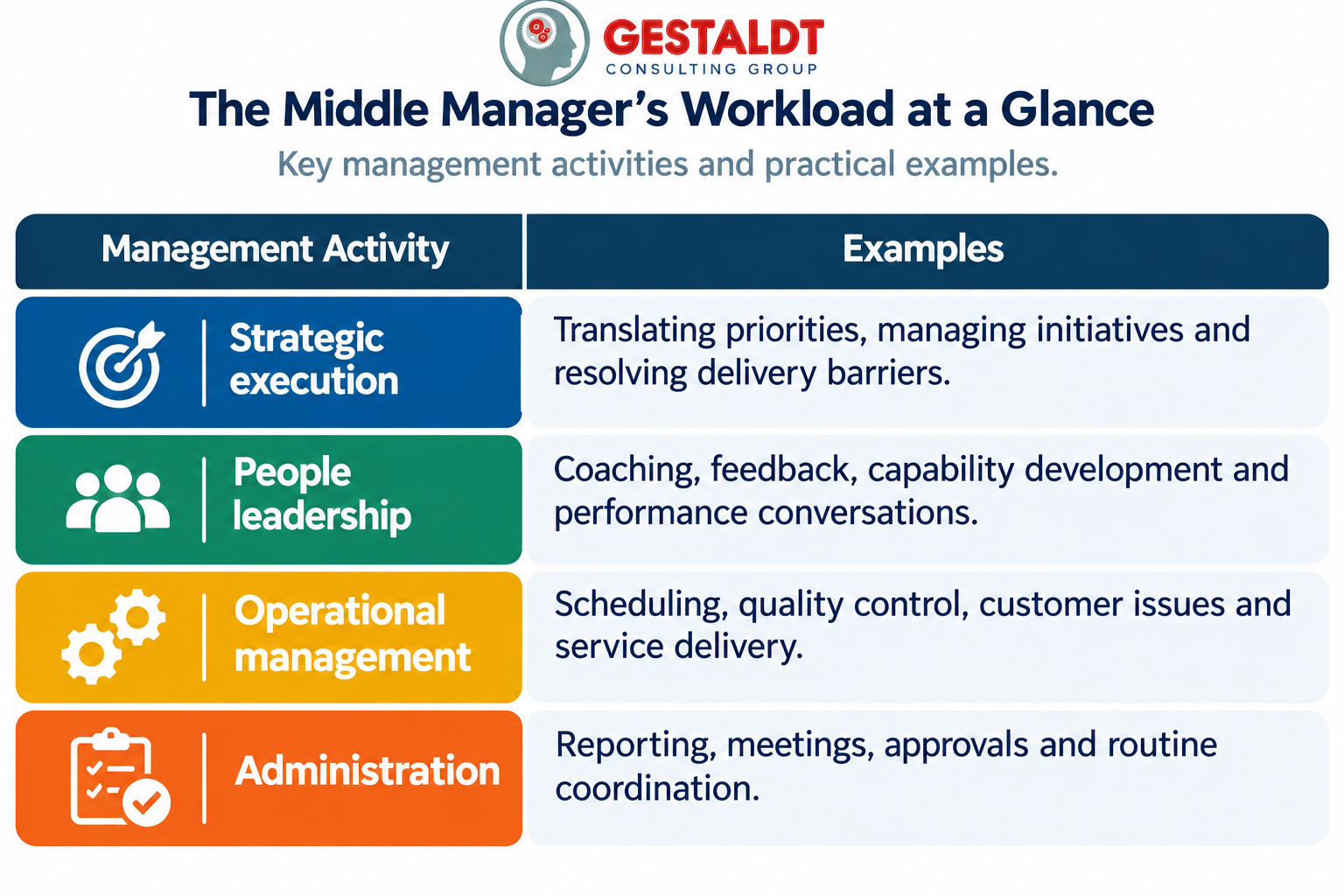
The appropriate balance will differ by role and industry.
However, executives should question arrangements in which administrative activities consistently crowd out people leadership and performance improvement.
Technology and automation may help reduce repetitive work, but process simplification is often equally important.
Automating unnecessary reporting does not make the reporting valuable.
Practical tip: Ask a representative group of middle managers to record how they spend their working time over two weeks. Identify low-value activities that can be eliminated, simplified, automated or reassigned.
The aim is not merely to make managers busier or more efficient. It is to create sufficient capacity for the leadership activities that improve organisational performance.
4. The Capability Expectation Gap: When Managers Are Promoted but Not Prepared
Being an excellent technical specialist does not automatically make someone an effective manager.
Organisations frequently promote high-performing employees into management positions because they demonstrate technical expertise, reliability and strong individual results.
The promotion may be deserved.
However, the capabilities required to succeed as an individual contributor differ from those needed to lead a team.
A technical specialist may excel at solving complex problems independently.
A manager must achieve results through other people.
This requires a different combination of capabilities, including communication, delegation, performance coaching, conflict resolution, decision-making and organisational coordination.
The gap becomes even more significant when managers are expected to implement strategic change.
They may need to lead restructuring programmes, introduce new technologies, manage uncertainty, redesign processes and support employees through unfamiliar ways of working.
Without adequate preparation, even capable managers can struggle.
Management capability is an execution requirement
Organisations should view management development as an investment in strategic execution rather than simply an employee benefit.
Managers influence how priorities are interpreted, how employees respond to change, how performance problems are addressed and how operational improvements are sustained.
Research published in Harvard Business Review by Michael Mankins and Patrick Litre argues that successful business transformations should harness the knowledge and involvement of middle managers rather than rely exclusively on top-down direction.
Their argument highlights an important point: middle managers are not merely responsible for implementing change. They can also contribute valuable operational insight to its design.
Build capabilities that support execution
A management development programme should reflect the organisation's strategic requirements.
For example:
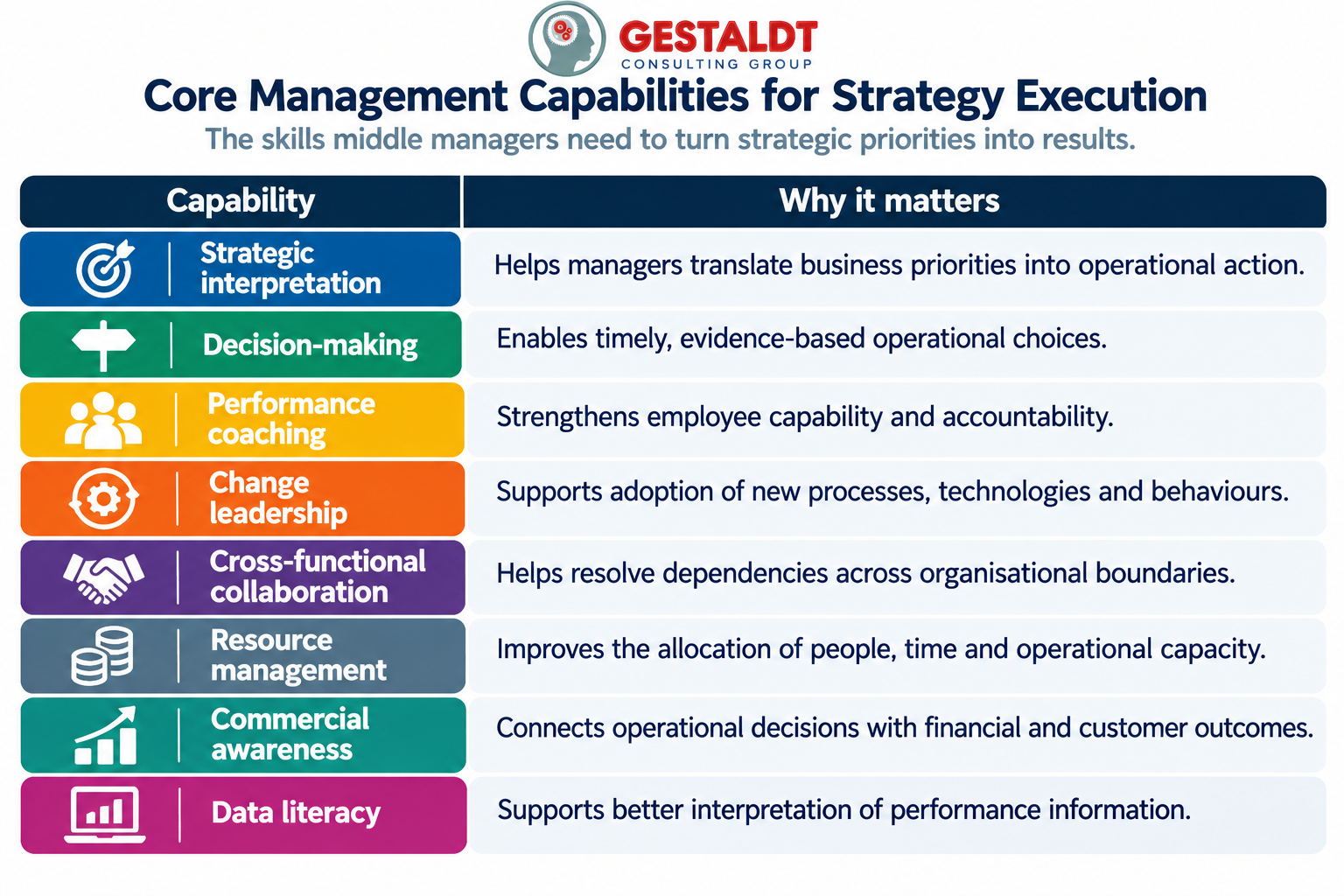
Development should combine formal learning with practical application.
Managers need opportunities to apply new skills, receive feedback and solve real organisational problems.
Practical tip: Assess middle-management capability against the organisation's five most important strategic priorities. Use the findings to design targeted development interventions rather than relying exclusively on generic management training.
The strongest management development programmes help managers become more effective at delivering the organisation's actual strategy.
5. The Feedback Disconnect: Why Executives Often Hear About Problems Too Late
One of the most valuable contributions middle managers can make is identifying strategic problems before they become visible in financial results.
Middle managers operate close to the organisation's daily activities.
They observe customer complaints, employee concerns, operational bottlenecks, process failures and emerging capability gaps.
They often recognise when a strategic initiative is creating unintended consequences.
However, this information does not always reach executive decision-makers.
In some organisations, reporting systems focus heavily on predetermined performance indicators while overlooking qualitative information about emerging risks.
In others, managers may hesitate to communicate problems because they fear being perceived as resistant, negative or ineffective.
The result is an information gap between operational reality and executive understanding.
Why upward feedback matters
Consider a company implementing a new customer relationship management system.
Executive reports indicate that implementation milestones are being achieved.
Training sessions have been completed. The technology has been deployed. User accounts are active.
From a project reporting perspective, progress appears satisfactory.
However, frontline managers notice that employees are using workarounds because the system does not adequately support certain customer processes.
If these concerns are not communicated and addressed, the organisation may discover months later that the technology has not delivered the expected productivity improvements.
The project may have been completed without achieving its intended business value.
Middle managers are often positioned to detect these problems early.
But the organisation must provide channels through which their observations can influence decisions.
Create a stronger operational intelligence loop
Executives should establish regular mechanisms for gathering and responding to managerial feedback.
These mechanisms should distinguish between:
Emerging operational risks.
Resource and capability constraints.
Customer and employee concerns.
Unintended consequences of strategic initiatives.
Opportunities for process improvement.
Strategic assumptions that no longer reflect operational reality.
The process must also include feedback to managers.
If managers repeatedly raise concerns without receiving decisions or explanations, the credibility of the system may deteriorate.
Make feedback actionable
A practical approach is to introduce a monthly strategic execution review that combines quantitative performance indicators with structured managerial insight.
The review should answer four questions:
What is progressing as expected?
What is preventing delivery?
Which assumptions may need reconsideration?
What decisions or interventions are required?
This creates a more complete picture of organisational performance.
Practical tip: Introduce a standing executive agenda item titled Operational Reality Check. Invite middle managers to present significant delivery constraints, emerging risks and improvement opportunities, supported by evidence and proposed actions.
The objective is not to create another reporting meeting. It is to shorten the distance between identifying a problem and making a decision.
6. The Strategic Leadership Reset: Turning Middle Managers Into Execution Partners
The greatest opportunity may not be to reduce the number of middle managers, but to redefine how their roles contribute to strategic performance.
Organisations increasingly seek flatter structures, faster decisions and greater operational efficiency.
These objectives can be legitimate.
However, removing management layers without redesigning responsibilities, decision rights and coordination mechanisms may simply redistribute work to fewer people.
The result can be larger spans of control, increased managerial pressure and reduced capacity for employee development.
The more useful question is not whether the organisation has too many managers.
It is whether its management structure enables strategy execution effectively.
From administrative supervision to strategic contribution
Middle managers can create value through several interconnected responsibilities.
They translate strategic priorities into operational objectives.
They coordinate people and resources.
They develop employee capabilities.
They identify and resolve performance barriers.
They support organisational change.
They communicate operational intelligence to executive leadership.
These activities position middle managers as contributors to strategy execution rather than passive intermediaries.
The challenge for CEOs is to establish an operating environment in which these contributions are possible.
That requires clarity, capability, authority, appropriate workload and effective governance.
Introducing the Gestaldt Strategic Translation Framework™
The proposed Gestaldt Strategic Translation Framework™ provides a structured way to examine how strategic intent becomes operational performance.
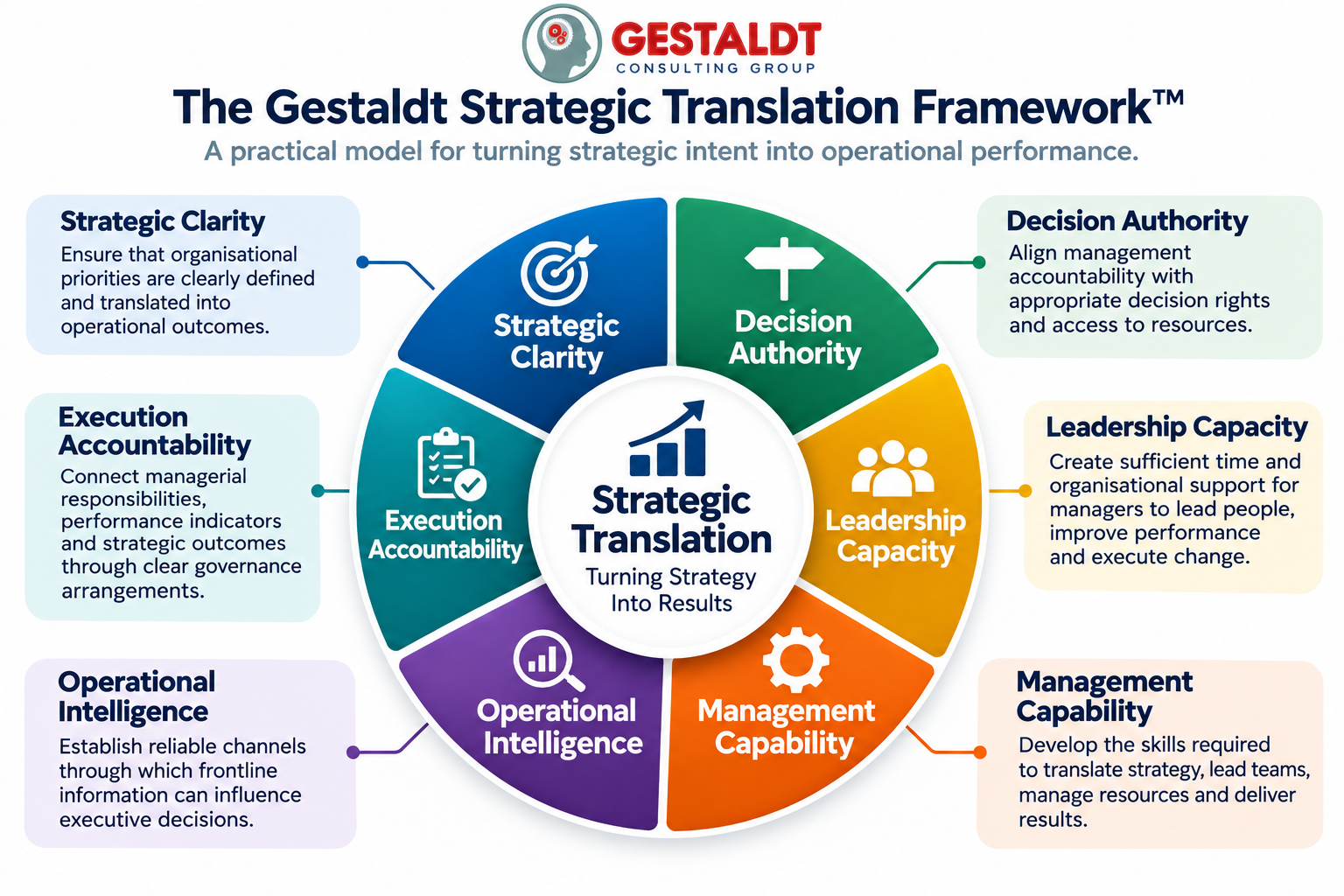
The framework can be used as a practical diagnostic and improvement model.
It should be understood as a proposed management framework rather than a scientifically validated assessment instrument.
How the six dimensions work together
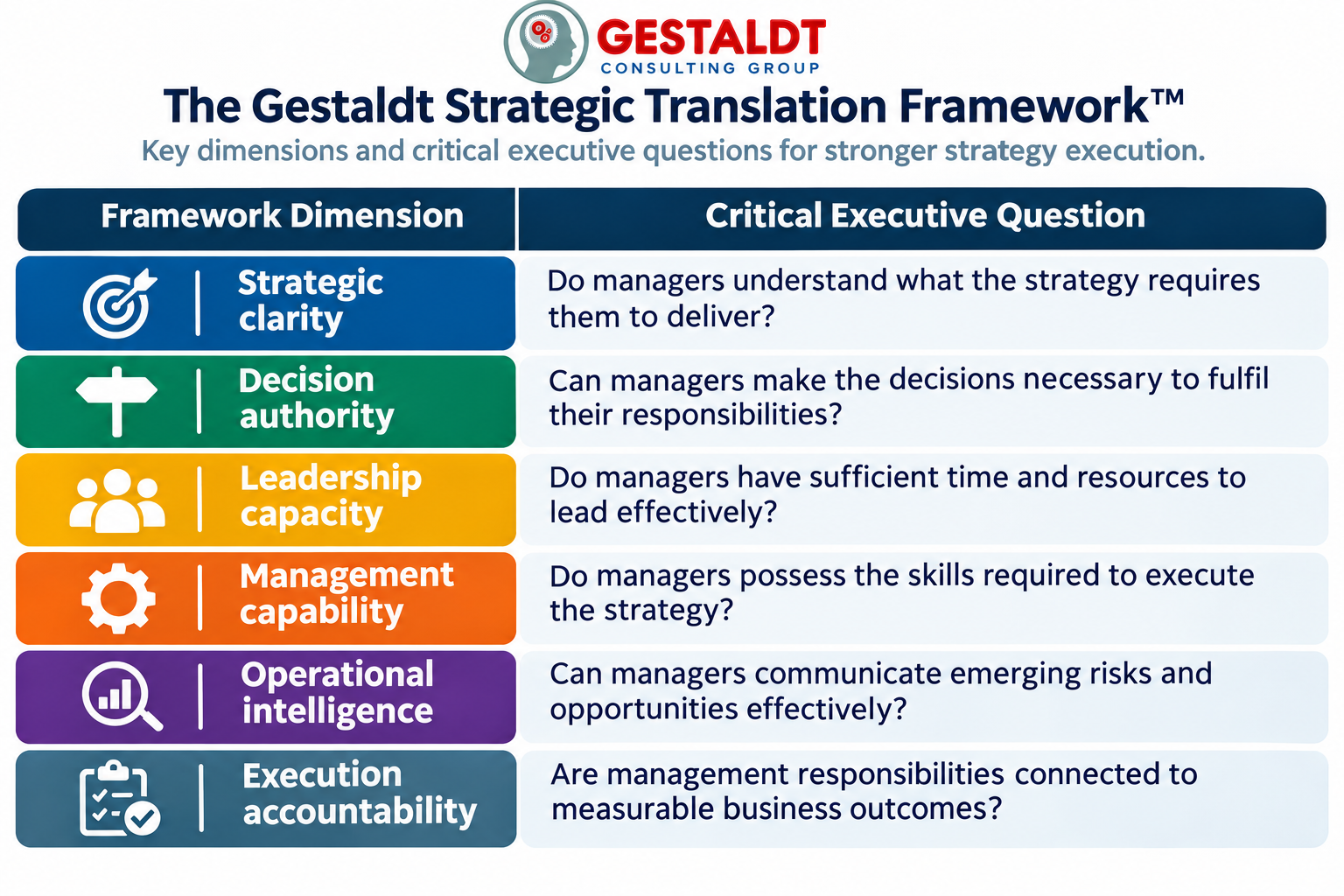
These dimensions should not be assessed independently.
For example, developing management capability will have limited impact if managers lack decision-making authority.
Similarly, increasing authority may create risk if managers lack the capabilities or information required to exercise sound judgement.
Effective execution depends on the alignment of all six dimensions.
Practical tip: Assess a representative sample of middle-management roles against the six dimensions. Identify where expectations, capabilities, authority and organisational support are misaligned, then prioritise the changes most likely to improve execution.
The objective is to build a management system that enables capable people to make sound decisions and deliver results.
A 90-Day Executive Action Plan to Strengthen Middle Management Effectiveness
Recognising the middle management squeeze is important.
Addressing it requires a deliberate programme of organisational improvement.
A focused 90-day initiative can establish the foundations for stronger strategic translation and management effectiveness.
Days 1–30: Diagnose the Management System
Objective: Understand the conditions under which middle managers are expected to deliver.
Begin by identifying the management roles most directly involved in executing strategic priorities.
Review their responsibilities, decision rights, reporting requirements, resource constraints and performance expectations.
Engage managers through structured interviews, workshops or confidential surveys.
Assess whether they understand strategic priorities and possess the authority, capability and capacity to implement them.
Particular attention should be given to recurring escalations, conflicting priorities and activities that consume significant management time without creating clear value.
Expected output: A middle-management effectiveness diagnostic identifying the most significant barriers to strategic execution.
Days 31–60: Redesign Responsibilities and Support
Objective: Address the most important sources of management friction.
Use the diagnostic findings to clarify decision rights, simplify reporting requirements and resolve accountability gaps.
Review whether management roles have realistic workloads.
Identify critical capability development requirements.
Establish clearer processes for resolving cross-functional issues and communicating operational concerns.
Where appropriate, introduce targeted coaching, management development and improved decision-support tools.
Expected output: A prioritised improvement plan covering management authority, capability, workload and execution governance.
Days 61–90: Embed Strategic Translation
Objective: Establish repeatable practices that strengthen the connection between strategy and operational delivery.
Introduce structured strategic translation sessions.
Ensure that middle managers understand how organisational priorities affect team objectives and operational decisions.
Establish regular executive reviews of significant delivery barriers.
Track improvements in decision turnaround times, management workload, employee support and strategic initiative performance.
Use the findings to refine management responsibilities and strengthen accountability.
Expected output: A repeatable strategic translation process supported by clear management responsibilities, appropriate measures and continuous improvement.
The first 90 days should establish a stronger operating discipline. They should not be treated as a guarantee that complex organisational challenges will be resolved within three months.
The CEO's Middle Management Effectiveness Diagnostic
Interpreting the results
The suggested score bands are intended to guide discussion, not provide a validated measure of management effectiveness.
Executives should examine individual dimensions rather than relying solely on the total score.
An organisation may perform well on strategic communication while experiencing serious weaknesses in decision authority or management capacity.
Such weaknesses can materially affect execution even when the overall assessment appears satisfactory.
Measuring the Impact of Stronger Middle Management
Improving management effectiveness requires evidence.
Executive teams should monitor indicators that connect management practices with organisational outcomes.
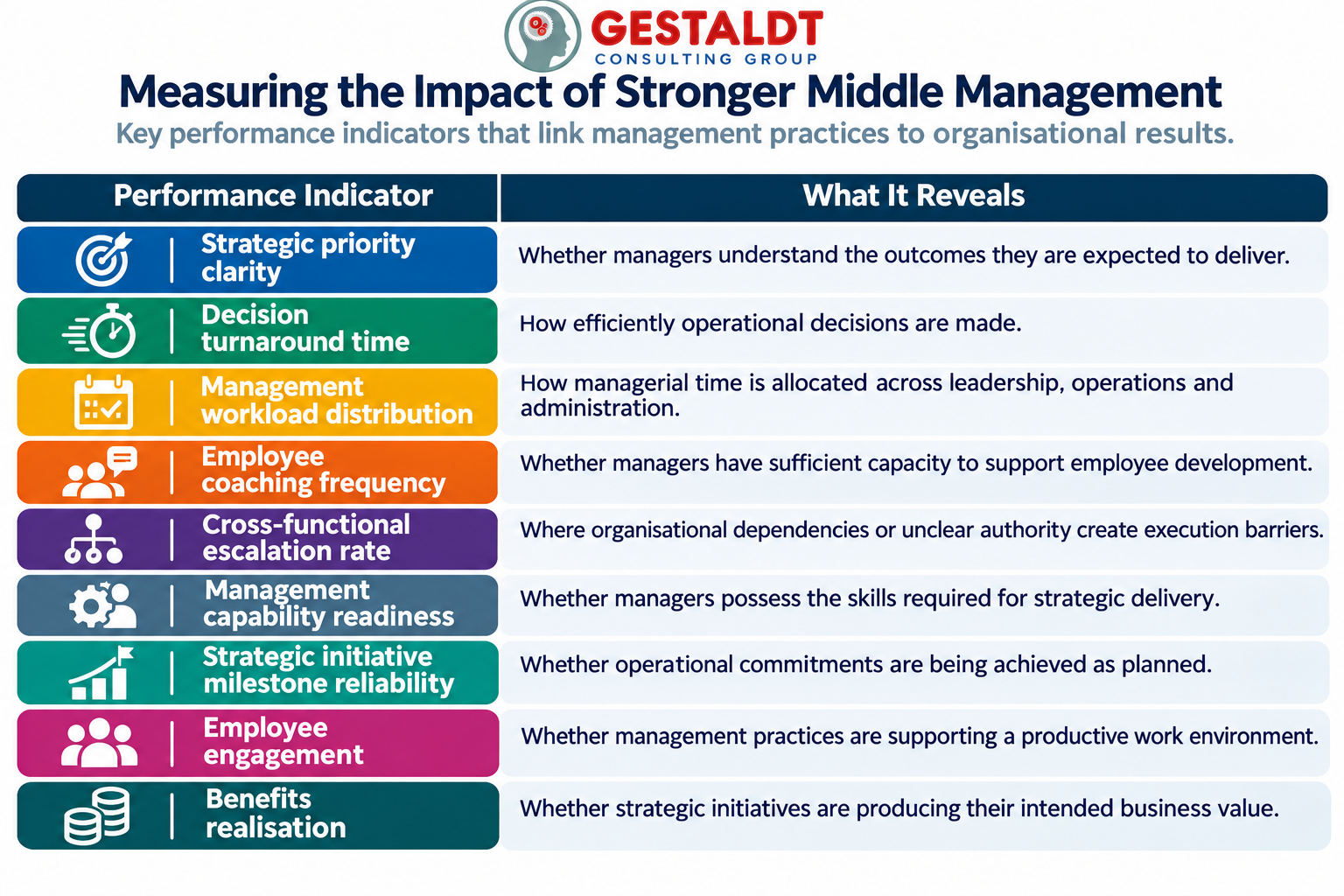
These indicators should be interpreted in context.
For example, a lower escalation rate is not automatically positive if managers have become reluctant to report problems.
Likewise, more frequent coaching conversations do not necessarily indicate improved leadership unless those conversations contribute to employee development and performance.
The objective is to evaluate whether changes in management practices are producing meaningful improvements in organisational execution.
Conclusion: The Future of Strategy Execution Depends on the Strength of the Middle
Organisations rarely struggle with strategy execution because executives lack ambition.
More often, execution becomes difficult when strategic expectations are not adequately supported by organisational capabilities, management systems and operational realities.
Middle managers operate at the centre of these challenges.
They are expected to translate strategic priorities, coordinate resources, develop employees, manage performance and implement change.
Yet many organisations continue to treat them primarily as supervisors rather than strategic contributors.
The consequences can be substantial.
When managers lack clarity, authority, capability or sufficient leadership capacity, strategic execution becomes slower, more fragmented and less predictable.
When managers are properly supported, they can help organisations identify problems earlier, make better operational decisions, strengthen employee performance and convert strategic intent into measurable outcomes.
As management thinker Peter Drucker famously observed:
"Management is doing things right; leadership is doing the right things."
For modern organisations, middle managers must increasingly do both.
They need the operational discipline to deliver consistently and the leadership judgement to make decisions that support strategic objectives.
This requires executive teams to reconsider how management roles are designed, supported and evaluated.
The critical question is no longer simply whether middle managers are delivering their targets.
It is whether the organisation has created the conditions that enable them to deliver those targets effectively.
Because strategy does not become reality when executives announce it. Strategy becomes reality when people throughout the organisation understand it, act on it and consistently deliver the outcomes it demands.
And at the centre of that transformation stands middle management.
Is Your Middle Management Structure Strengthening or Slowing Strategy Execution?
Your organisation's strategy is only as effective as its ability to translate executive ambition into operational results.
When managers face competing priorities, unclear decision rights, excessive administrative demands and insufficient leadership support, even well-designed strategies can lose momentum.
At Gestaldt Consulting Group, our focus is on helping organisations strengthen the connection between strategy, leadership, organisational capability and business performance.
Through structured organisational assessment, strategic alignment and management effectiveness improvement, businesses can identify the barriers that prevent their people from delivering meaningful results.
Strengthen the Leadership Connection Between Strategy and Performance
Are your middle managers equipped to turn strategic priorities into measurable outcomes?
Explore how Gestaldt Consulting Group can support a conversation about strengthening leadership effectiveness, clarifying management accountability and improving organisational execution.
Connect with Gestaldt Consulting Group to explore your strategy execution challenges.
Better Insights. Stronger Leaders. Lasting Impact.