Supply Chain Resilience: Lessons From Global Disruptions and Local Adaptation
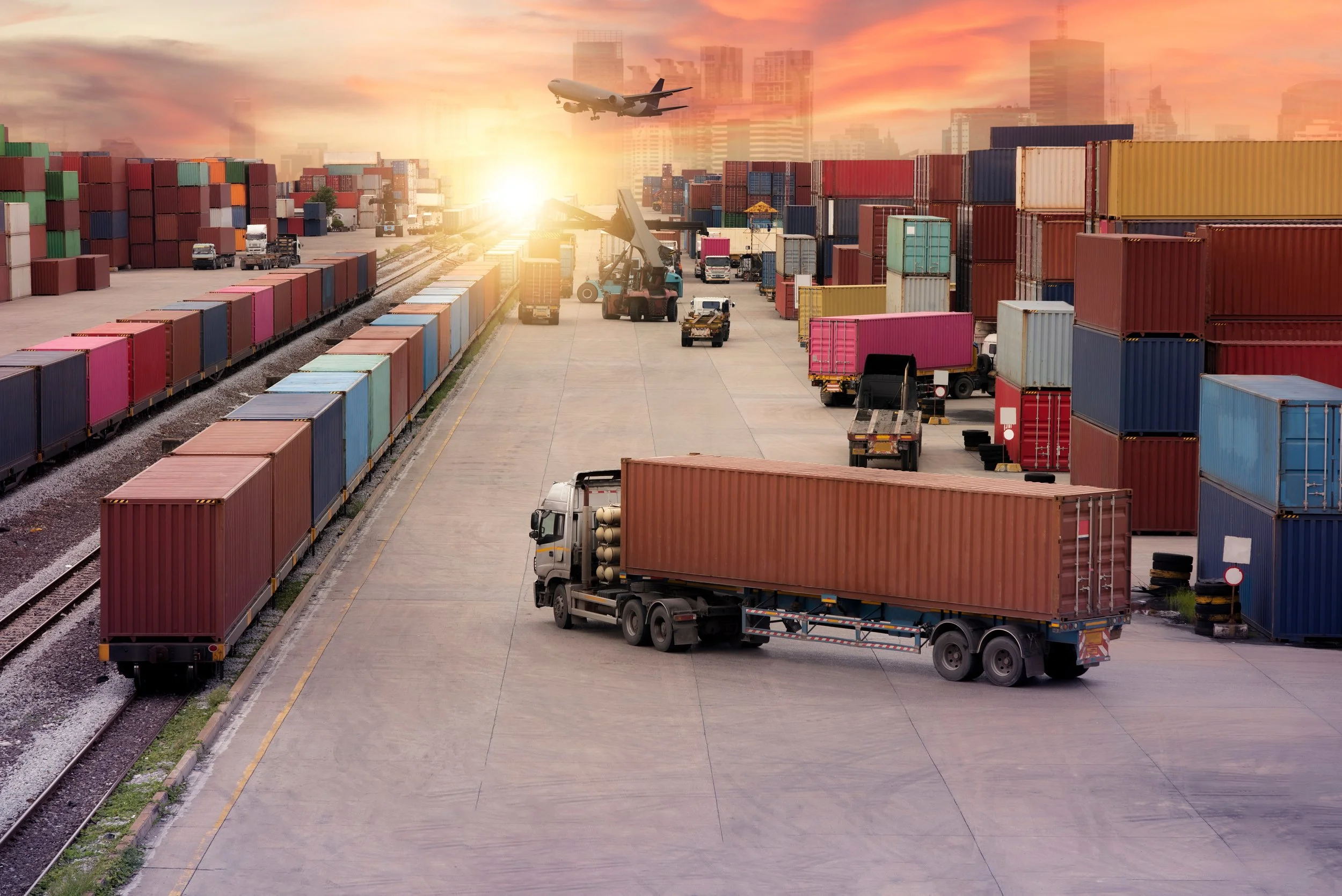
From global pandemics and geopolitical tensions to energy instability and climate shocks, supply chains have become one of the most exposed fault lines in today’s economy. What was once treated as an operational back-office function is now firmly on the strategic agenda of boards and executive teams.
For South African organisations, the lesson is clear: supply chain resilience is no longer about efficiency alone. It is about continuity, competitiveness, and long-term survival in an increasingly volatile world.
This article explores the key lessons from global supply chain disruptions — and how South African businesses can adapt locally to build resilient, future-ready supply networks.
Why Supply Chain Resilience Is Now a Strategic Priority
Recent global disruptions revealed a hard truth: highly optimised, cost-focused supply chains are often fragile under stress. Just-in-time models, single-source suppliers, and long-distance dependencies amplify risk when shocks occur.
These systemic vulnerabilities mirror the broader uncertainty explored in Global Economic Headwinds: How South African Businesses Can Stay Resilient.
For business leaders, supply chain resilience now underpins:
Revenue protection
Customer trust
Regulatory compliance
Operational continuity
In short, resilient supply chains are a strategic asset — not a cost centre.
Lesson 1: Visibility Beats Optimisation
One of the biggest failures during recent disruptions was a lack of end-to-end visibility. Many organisations simply did not know where their critical inputs originated or where bottlenecks would emerge.
Leading companies are now investing in:
Real-time supply chain analytics
Multi-tier supplier mapping
Early-warning risk indicators
This shift from optimisation to visibility aligns with the foresight-driven thinking discussed in Strategic Foresight 2026: Turning Reflection into Action.
Practical insight: You cannot manage what you cannot see.
Lesson 2: Diversification Is a Resilience Multiplier
Global disruptions exposed the danger of over-reliance on single suppliers, single regions, or single transport routes. Companies with diversified sourcing recovered faster and with less financial impact.
For South African firms, diversification can include:
Dual or multi-supplier strategies
Regional and intra-African sourcing
Blended local and global supply models
This is increasingly relevant as Africa’s trade integration accelerates, creating new regional sourcing opportunities.
Lesson 3: Local Adaptation Is a Competitive Advantage
While global reach matters, local adaptability has emerged as a decisive advantage. South African businesses that invested in local supplier development, regional manufacturing, and domestic logistics proved more resilient during shocks.
This localisation trend connects with the growth opportunities highlighted in South Africa’s Green Economy: Opportunities for Growth, where local production and sustainable infrastructure strengthen both resilience and economic impact.
Key takeaway: Global resilience is built on strong local foundations.
Lesson 4: Supply Chains Are Ultimately Human Systems
Technology enables resilience, but people sustain it. During disruptions, organisations with strong relationships — with suppliers, logistics partners, and internal teams — adapted faster.
Trust, communication, and shared problem-solving proved just as critical as digital tools. This reinforces leadership insights from The Human Side of Transformation: Keeping Purpose Alive Amid Change.
Resilient supply chains are built on:
Collaborative partnerships
Transparent communication
Empowered decision-making at the front line
Lesson 5: Leadership Must Shift From Control to Preparedness
Traditional command-and-control leadership struggles in fast-moving disruptions. Resilient organisations empower teams to make rapid, informed decisions closer to the issue.
This leadership evolution reflects themes in The Evolving Role of Leadership in 2026: From Control to Empowerment.
Preparedness-focused leaders:
Plan for multiple scenarios
Accept uncertainty as normal
Balance speed with accountability

Technology as an Enabler — Not a Silver Bullet
Digital tools play a crucial role in resilience, but only when aligned with strategy. Advanced analytics, AI forecasting, blockchain traceability, and automation can improve responsiveness — but they must support clear decision frameworks.
Bridging this gap between insight and execution mirrors challenges explored in From Strategy to Execution: Closing the Gap in Organisations.
Best practice: Technology amplifies good strategy — it cannot replace it.
Turning Resilience Into Long-Term Advantage
Supply chain resilience should not aim to “return to normal.” The goal is to emerge stronger, faster, and more adaptable than competitors.
Organisations that integrate resilience into core strategy are better positioned to:
Absorb future shocks
Capture new market opportunities
Build trust with customers and partners
These capabilities are essential in the volatile economic environment discussed in From Insight to Impact: Building Resilient Strategies for a Volatile Economy.
Conclusion
Global disruptions have permanently changed how supply chains must be designed and led. For South African organisations, resilience is no longer optional — it is a defining capability for sustainable growth.
By prioritising visibility, diversification, local adaptation, strong relationships, and empowered leadership, businesses can transform supply chains from fragile cost structures into resilient engines of competitive advantage.
In an era of constant disruption, the most resilient supply chains will belong to organisations that plan boldly, adapt locally, and lead with clarity.