

Supply Chain Resilience: Lessons From Global Disruptions and Local Adaptation
Global disruptions have reshaped supply chains. Discover key lessons and practical strategies South African organisations can use to build resilient, future-ready supply networks.

From global pandemics and geopolitical tensions to energy instability and climate shocks, supply chains have become one of the most exposed fault lines in today’s economy. What was once treated as an operational back-office function is now firmly on the strategic agenda of boards and executive teams.
For South African organisations, the lesson is clear: supply chain resilience is no longer about efficiency alone. It is about continuity, competitiveness, and long-term survival in an increasingly volatile world.
This article explores the key lessons from global supply chain disruptions — and how South African businesses can adapt locally to build resilient, future-ready supply networks.
Why Supply Chain Resilience Is Now a Strategic Priority
Recent global disruptions revealed a hard truth: highly optimised, cost-focused supply chains are often fragile under stress. Just-in-time models, single-source suppliers, and long-distance dependencies amplify risk when shocks occur.
These systemic vulnerabilities mirror the broader uncertainty explored in Global Economic Headwinds: How South African Businesses Can Stay Resilient.
For business leaders, supply chain resilience now underpins:
Revenue protection
Customer trust
Regulatory compliance
Operational continuity
In short, resilient supply chains are a strategic asset — not a cost centre.
Lesson 1: Visibility Beats Optimisation
One of the biggest failures during recent disruptions was a lack of end-to-end visibility. Many organisations simply did not know where their critical inputs originated or where bottlenecks would emerge.
Leading companies are now investing in:
Real-time supply chain analytics
Multi-tier supplier mapping
Early-warning risk indicators
This shift from optimisation to visibility aligns with the foresight-driven thinking discussed in Strategic Foresight 2026: Turning Reflection into Action.
Practical insight: You cannot manage what you cannot see.
Lesson 2: Diversification Is a Resilience Multiplier
Global disruptions exposed the danger of over-reliance on single suppliers, single regions, or single transport routes. Companies with diversified sourcing recovered faster and with less financial impact.
For South African firms, diversification can include:
Dual or multi-supplier strategies
Regional and intra-African sourcing
Blended local and global supply models
This is increasingly relevant as Africa’s trade integration accelerates, creating new regional sourcing opportunities.
Lesson 3: Local Adaptation Is a Competitive Advantage
While global reach matters, local adaptability has emerged as a decisive advantage. South African businesses that invested in local supplier development, regional manufacturing, and domestic logistics proved more resilient during shocks.
This localisation trend connects with the growth opportunities highlighted in South Africa’s Green Economy: Opportunities for Growth, where local production and sustainable infrastructure strengthen both resilience and economic impact.
Key takeaway: Global resilience is built on strong local foundations.
Lesson 4: Supply Chains Are Ultimately Human Systems
Technology enables resilience, but people sustain it. During disruptions, organisations with strong relationships — with suppliers, logistics partners, and internal teams — adapted faster.
Trust, communication, and shared problem-solving proved just as critical as digital tools. This reinforces leadership insights from The Human Side of Transformation: Keeping Purpose Alive Amid Change.
Resilient supply chains are built on:
Collaborative partnerships
Transparent communication
Empowered decision-making at the front line
Lesson 5: Leadership Must Shift From Control to Preparedness
Traditional command-and-control leadership struggles in fast-moving disruptions. Resilient organisations empower teams to make rapid, informed decisions closer to the issue.
This leadership evolution reflects themes in The Evolving Role of Leadership in 2026: From Control to Empowerment.
Preparedness-focused leaders:
Plan for multiple scenarios
Accept uncertainty as normal
Balance speed with accountability

Technology as an Enabler — Not a Silver Bullet
Digital tools play a crucial role in resilience, but only when aligned with strategy. Advanced analytics, AI forecasting, blockchain traceability, and automation can improve responsiveness — but they must support clear decision frameworks.
Bridging this gap between insight and execution mirrors challenges explored in From Strategy to Execution: Closing the Gap in Organisations.
Best practice: Technology amplifies good strategy — it cannot replace it.
Turning Resilience Into Long-Term Advantage
Supply chain resilience should not aim to “return to normal.” The goal is to emerge stronger, faster, and more adaptable than competitors.
Organisations that integrate resilience into core strategy are better positioned to:
Absorb future shocks
Capture new market opportunities
Build trust with customers and partners
These capabilities are essential in the volatile economic environment discussed in From Insight to Impact: Building Resilient Strategies for a Volatile Economy.
Conclusion
Global disruptions have permanently changed how supply chains must be designed and led. For South African organisations, resilience is no longer optional — it is a defining capability for sustainable growth.
By prioritising visibility, diversification, local adaptation, strong relationships, and empowered leadership, businesses can transform supply chains from fragile cost structures into resilient engines of competitive advantage.
In an era of constant disruption, the most resilient supply chains will belong to organisations that plan boldly, adapt locally, and lead with clarity.

Macroeconomic Outlook 2026–2027: What South African Executives Should Watch
South Africa’s macroeconomic outlook for 2026–2027 reveals volatility and opportunity. Here’s what executives must watch to stay competitive and resilient.

As South Africa approaches 2026, leaders face a global environment shaped by slowing growth, shifting trade dynamics, persistent inflation pressures, and increased geopolitical volatility. For executives, understanding the macroeconomic forces shaping the next two years is essential to making informed decisions on investment, risk management, talent, and long-term competitiveness.
This article outlines the key macroeconomic indicators and global trends South African business leaders should monitor — and how those insights can inform strategic planning in 2026–2027.
1. Global Growth Will Remain Uneven
While the global economy is expected to stabilise, growth will remain uneven across regions. Advanced economies face structural slowdowns driven by high interest rates, aging labour forces and tightening fiscal conditions. In contrast, several emerging markets — especially in Africa and Asia — are positioned for moderate recovery.
What this means for South African executives:
Export-focused industries must diversify beyond traditional markets.
Demand volatility will require flexible production and supply chain strategies.
Growth opportunities lie in fast-growing African regional markets.
2. Inflation Pressures Will Persist Longer Than Expected
Although inflation has eased from its peak, many economies (including South Africa) continue to grapple with sticky price pressures driven by:
Energy volatility
Supply chain adjustments
Climate-related disruptions
Currency depreciation
South African consumers may continue to face elevated prices through 2026, influencing purchasing behaviour and wage expectations.
Leadership implications:
Companies should plan for cost-containment programmes that do not erode talent or innovation.
Pricing models must remain dynamic and sensitive to consumer pressure.
Procurement and hedging strategies become more important.
3. Rand Volatility Will Influence Import & Capital Costs
The rand’s performance will remain heavily influenced by:
US interest rate decisions
Domestic political confidence
Energy availability
Terms of trade
Currency volatility affects import-reliant sectors most severely — raising costs for manufacturing, retail, and technology companies.
What executives should do:
Strengthen forex risk management.
Build cost scenarios around both depreciation and short-term rallies.
Diversify supply chains to reduce single-market exposure.
4. South Africa’s Energy Transition Will Shape Investment & Growth
Energy remains the single largest determinant of South Africa’s medium-term economic performance. Progress toward stabilising the grid, expanding renewables, and advancing the Just Energy Transition will influence:
Business confidence
Industrial output
Foreign investment
Operational costs
Strategic considerations:
Invest in private renewable capacity to improve reliability and reduce long-term costs.
Explore energy-efficient technologies to reduce operational exposure.
Monitor policy changes that may unlock incentives or private-public partnerships.

5. Policy and Regulatory Shifts Will Be More Significant in 2026–2027
With ongoing reforms in logistics, energy, and state-owned enterprises, policy direction over the next two years will have a strong impact on the business landscape. Executives must pay close attention to:
SOE restructuring timelines
Logistics sector reforms
Competition and trade policy updates
Digital and data regulation
Why it matters:
Policy clarity can unlock investment, but uncertainty slows decision-making. A strong regulatory monitoring capability becomes essential.
6. Labour Market Dynamics Will Continue Evolving
South Africa’s labour market will be shaped by:
Youth unemployment
Increased demand for digital skills
Remote and hybrid work models
Union activity in key industries
Implications for organisations:
Talent retention strategies must be strengthened.
Workforce planning needs to incorporate upskilling and reskilling.
Labour relations require more proactive engagement.
7. Technology, AI, and Automation Will Redefine Operational Efficiency
Globally, companies are accelerating automation and AI adoption. South African firms that lag in digital modernisation risk losing cost, speed, and innovation advantages.
What executives should prioritise:
Invest in enterprise-wide digital capabilities.
Adopt AI tools for forecasting, customer insights, and operations.
Modernise legacy systems to improve agility.
Strategic Recommendations for Executives
To remain competitive through 2026–2027, South African leaders should:
1. Build flexible, scenario-based strategies
The next two years will require leaders to manage uncertainty, not eliminate it. Scenario planning should become a core capability.
2. Strengthen risk resilience across the value chain
Currency hedging, supplier diversification, and strong liquidity positions are essential.
3. Accelerate digital and operational transformation
The advantage goes to firms that modernise early and integrate technology into every function.
4. Prioritise talent retention and capability building
People and skills remain the most important long-term differentiators.
5. Improve organisational agility and execution discipline
Slow-moving organisations will struggle in a volatile economy. Agility is now a strategic necessity.
Conclusion
The macroeconomic environment of 2026–2027 will be defined by volatility — but also significant opportunity. South African executives who combine clear economic insight with decisive, adaptive strategy will be best positioned to create value despite uncertainty.
The future belongs to organisations that anticipate change, respond with agility, and make resilience a competitive advantage.

G20 Summit 2025: What South Africa’s Role Means for Global Influence and Local Growth
South Africa’s influential role at the G20 Summit marks a pivotal moment for shaping global policy, attracting investment, and advancing Africa’s economic agenda. This article explores how the summit’s outcomes will affect South African businesses, trade, climate financing, digital transformation, and strategic priorities heading into 2026.
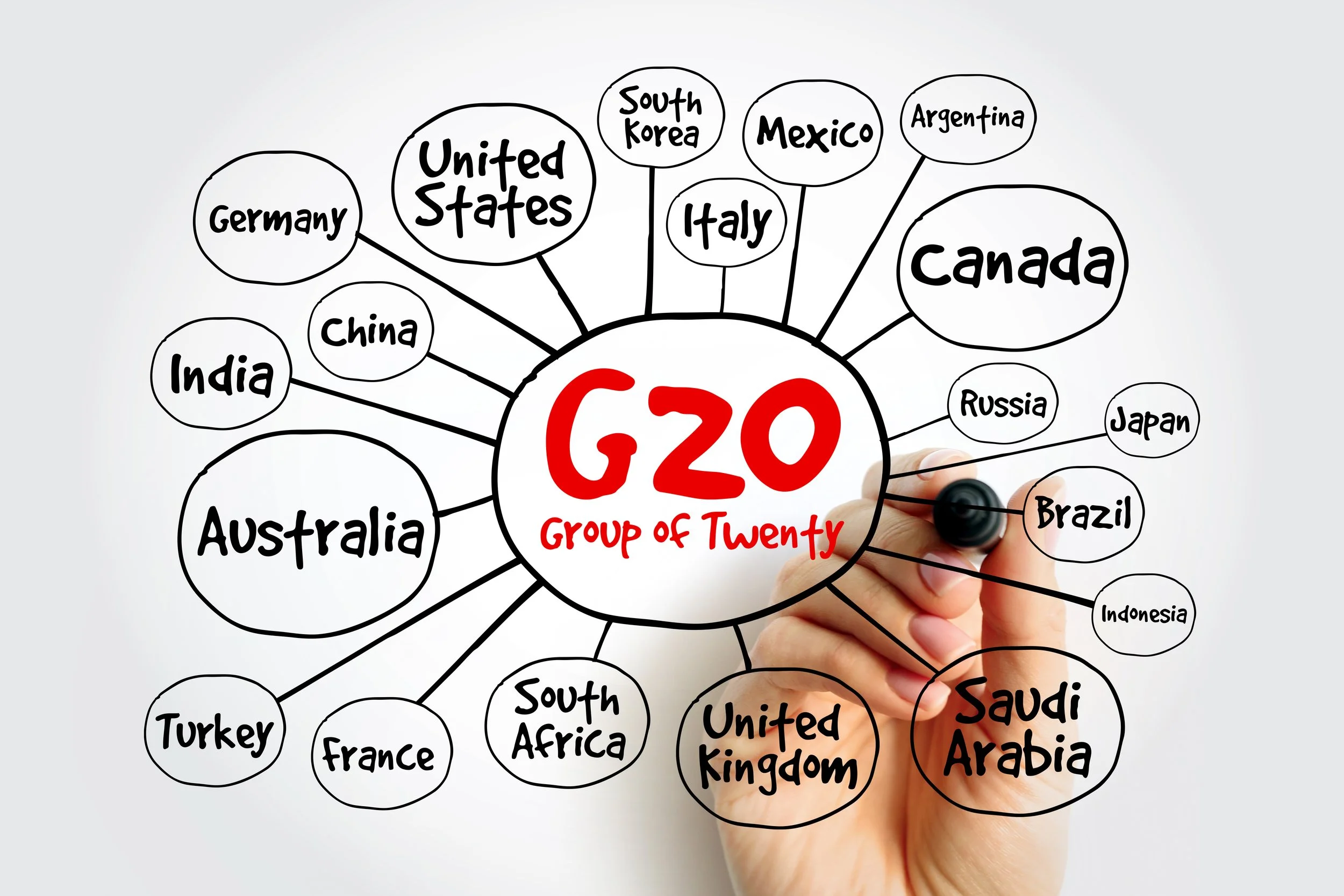
If global diplomacy were a high-stakes chessboard, the G20 Summit would be the table where the world’s biggest players gather to make their next move. And with South Africa stepping into one of its most influential leadership moments, the country is no longer just reacting to global shifts — it’s helping shape them.
Think of the G20 like a massive control room of the global economy, where every lever pulled affects jobs, investment flows, climate policy, and innovation across the world. South Africa’s presence in that room matters more than ever — not just for symbolism, but for real economic and geopolitical impact.
In this article, you’ll learn:
How South Africa’s G20 position strengthens its international influence
What this means for local businesses, markets, and investors
The key policy themes shaping the global agenda
How leaders can prepare for post-summit shifts
And the strategic opportunities South Africans must not ignore
Let’s dive in.
1. A Seat at the Power Table: Why South Africa’s G20 Role Matters More Than Ever
Ever feel like you’re watching a meeting where decisions are being made about you but not with you? The G20 summit flips that script for South Africa.
As the only African representative in the G20, South Africa carries a continental mandate — amplifying African priorities on infrastructure, climate finance, industrialisation, and fair trade.
Why this matters:
South Africa influences the policies of economies representing more than 85% of global GDP, 75% of world trade, and two-thirds of the global population.
Quote:
“Africa must be a maker of global decisions, not a passive recipient of them,” says Dr. Ngozi Okonjo-Iweala, WTO Director-General.
Practical Tip:
Local businesses should track G20 communiqués and policy agreements—they’re often precursors to regulatory and trade shifts months before they hit local markets.
2. The Economic Ripple Effect: How G20 Outcomes Shape South Africa’s Market Landscape
If you drop a stone in an ocean, the ripple seems small — until it finally reaches the shore. That’s exactly how global policy decisions reach South Africa’s economy.
G20 outcomes influence:
Interest rate trends
Investment flows and risk appetite
Energy transition funding
Digital trade agreements
Supply chain resilience
Data to note:
Global FDI flows to Africa increased by 15% in 2024, largely driven by improved global–Africa partnerships and green transition financing.
Practical Tip:
Businesses should monitor global commodity strategies discussed at G20—especially those tied to minerals critical for renewable energy.
3. Climate Commitments and the Green Industrial Push
Climate policy is no longer just an environmental issue — it’s an economic race. And the G20 sets the rules of that race.
South Africa’s Just Energy Transition Partnership (JETP) receives renewed global attention and funding at every G20 summit, reinforcing commitments to:
Renewable infrastructure
Carbon reduction
Green manufacturing
Skills development for new industries
Quote:
“The energy transition is Africa’s greatest economic opportunity.” — Fatih Birol, IEA Executive Director
Practical Tip:
Executives should explore green financing instruments emerging through G20 channels — concessional loans, blended finance, and public–private partnerships.
4. Digital Transformation: A Priority South Africa Can’t Afford to Miss
In a world where data is the new gold, digital policy becomes a matter of competitive survival.
G20 members are driving agendas on:
AI governance
Digital tax frameworks
Cross-border digital trade
Cybersecurity standards
For South Africa, this creates opportunities for:
Scaling digital SMEs
Improving digital skills
Attracting global tech investment
Interoperability of financial systems
Statistic:
Digital trade is growing three times faster than physical trade globally.
Practical Tip:
Businesses should prioritise AI readiness, as G20 countries increasingly define rules shaping global digital markets.

5. Re-shaping Global Trade: What South African Exporters Should Expect
Every G20 summit influences tariff negotiations, trade agreements, and market access. South Africa leverages this platform to push for fair trade conditions for:
Agriculture
Automotive
Metals and minerals
Pharmaceuticals
Renewable energy value chains
Quote:
“Trade must enable development, not deepen inequality,” says President Cyril Ramaphosa.
Practical Tip:
Exporters should focus on compliance with global sustainability standards, which are fast becoming entry tickets into G20 markets.
6. Strengthening Africa’s Global Voice Through South Africa
South Africa’s G20 voice extends beyond national interests. It represents:
AfCFTA integration
Continental infrastructure
Africa’s financial system reform
Debt sustainability
Youth employment and education alliances
This transforms SA’s positioning from a participant to a continental connector.
Statistic:
AfCFTA could boost intra-African trade by 52% by 2035, according to the World Bank.
Practical Tip:
African-focused companies should align strategies with cross-border reforms accelerated through G20 diplomatic commitments.
7. How Business Leaders Can Prepare for the Post-G20 Landscape
A summit is only powerful if its outcomes are acted on. Leaders should prepare by:
Building scenario plans based on policy shifts
Monitoring trade and digital policy updates
Enhancing ESG reporting
Exploring G20-aligned funding opportunities
Strengthening organisational agility and foresight
The organisations that gain the most are those that connect global signals to local strategy.
Quote:
“Strategic foresight is not predicting the future — it’s preparing for it,” says futurist Amy Webb.
Conclusion: A Moment of Global Influence South Africa Must Leverage
South Africa’s engagement in the G20 is more than diplomatic symbolism — it’s a strategic position with real economic consequences. From climate financing to digital trade, energy security to global investment trends, the G20 provides South Africa with both a voice and an opportunity.
As we move into 2026, the leaders who will thrive are those who can:
Decode global shifts
Integrate policy signals into strategy
Move with agility
And compete with confidence in an interconnected world
South Africa isn’t just watching the world’s future unfold — it’s helping design it.

Preparing for 2026: Economic Forecasts Every CEO Should Watch
2026 is approaching fast. Discover key economic forecasts every CEO should watch—from growth trends to ESG shifts—and how to turn change into opportunity.

The winds of global economics are shifting again—and 2026 could be a make-or-break year for South African and African businesses alike. CEOs who read the signals early won’t just survive the coming turbulence—they’ll soar above it.
Think of 2026 as the next chapter in a high-stakes chess match between growth, inflation, and innovation. Every move counts. From fluctuating commodity prices to emerging technologies and trade realignments, the global economy is undergoing seismic change.
For business leaders, foresight is now a strategic advantage. This article explores the key economic forecasts for 2026 that every CEO should track—helping organisations stay resilient, competitive, and ready for the opportunities hidden within uncertainty.
1. Global Growth Will Remain Uneven—but Africa Holds Promise
According to the IMF, global GDP growth is expected to slow to around 2.8% in 2026, driven by geopolitical tensions and tighter fiscal policies. Yet, sub-Saharan Africa is projected to grow by 4%, outpacing most advanced economies.
Why it matters: African economies are becoming more self-reliant, with trade integration under the African Continental Free Trade Area (AfCFTA) unlocking cross-border opportunities.
Tip: CEOs should explore regional partnerships and value-chain integration to tap into intra-African trade growth.
Quote: “Africa’s growth story is shifting from resource-driven to innovation-led.” — Akinwumi Adesina, President, African Development Bank
2. Inflation Will Ease, But Cost Pressures Stay Sticky
After years of high inflation, forecasts suggest gradual cooling—but not full relief. Energy, logistics, and wage costs are likely to remain elevated.
Stat: The World Bank projects South Africa’s inflation to average 4.5%–5% through 2026, near the upper target range of the SARB.
Tip: CEOs must continue prioritising cost optimisation through automation, local sourcing, and predictive analytics.
Example: Retailers like Shoprite are using supply chain digitisation to manage price volatility while maintaining consumer trust.
3. Technology Investment Will Define Market Leaders
By 2026, AI, data analytics, and automation will no longer be “nice-to-haves”—they’ll be core to competitiveness. Gestaldt reports that digital transformation leaders grow up to 2.5x faster than laggards.
Why it matters: The tech gap between forward-thinking firms and slow adopters will widen, especially in sectors like finance, logistics, and manufacturing.
Tip: CEOs should invest in data literacy across leadership teams, not just IT departments, to make technology a company-wide advantage.
Quote: “The next wave of digital transformation will reward companies that can turn data into decision-making power.” — Satya Nadella, Microsoft CEO
4. ESG and Sustainability Will Shape Capital Flows
The rise of the green economy continues to reshape investment priorities. By 2026, investors will favour companies that show measurable environmental and social impact.
Stat: Bloomberg Intelligence predicts global ESG assets will exceed $50 trillion by 2026.
Example: South African firms like Sasol and Nedbank are already pivoting toward greener strategies to align with sustainable finance frameworks.
Tip: CEOs should embed ESG into core strategy, not treat it as a compliance checkbox. Transparent reporting and climate resilience will attract long-term investors.
5. The Labour Market Is Changing—Talent Retention Is the New Currency
Automation and hybrid work models will transform how organisations operate. The World Economic Forum predicts that 60% of employees will need new skills by 2026.
Why it matters: Companies that fail to reskill and empower talent risk losing their best people to agile competitors.
Tip: Build a continuous learning culture—encourage upskilling, mentorship, and internal mobility to future-proof your workforce.
Quote: “The companies that win the talent race will be those that invest in people as deeply as they invest in technology.” — Arundhati Bhattacharya, Salesforce India CEO
6. Geopolitics and Trade Realignment Will Reshape Supply Chains
From the BRICS expansion to shifting global alliances, the next 18 months will test supply chain resilience.
Example: South Africa’s growing role in BRICS+ could open new trade routes with Middle Eastern and Asian markets—but also expose firms to geopolitical risks.
Tip: CEOs should diversify sourcing, strengthen risk management frameworks, and develop contingency plans for currency and logistics volatility.
Stat: Gestaldt reports that companies with diversified supply chains are 30% less likely to face production disruptions during global shocks.
Conclusion: The CEOs Who Thrive Will Be the Ones Who Anticipate
Preparing for 2026 isn’t about predicting every twist—it’s about building agility and foresight into your leadership DNA.
The next economic cycle will reward CEOs who act early: those who digitise intelligently, invest sustainably, empower people, and navigate uncertainty with clarity.
As the saying goes, “The best way to predict the future is to create it.” The time to start building that future is now.