

South Africa & Africa 2026: Opportunities in Regional Trade and AfCFTA
AfCFTA is reshaping Africa’s trade landscape. Explore the biggest regional trade opportunities for South African businesses in 2026 — from manufacturing and services to logistics, SMEs, and cross-border growth strategies.

As global trade fragments and traditional supply chains weaken, Africa is quietly positioning itself for a new era of regional growth. At the centre of this shift stands the African Continental Free Trade Area (AfCFTA) — one of the most ambitious trade agreements in the world.
For South African leaders, 2026 represents a pivotal moment. AfCFTA is no longer theoretical; it is moving into an execution phase. The question is no longer whether opportunities exist, but who is ready to capture them.
This article explores the most significant regional trade opportunities emerging across Africa, what AfCFTA means in practice for South African businesses, and how executives can position their organisations to benefit from deeper continental integration.
Why AfCFTA Matters More Than Ever in 2026
AfCFTA brings together 54 African countries, creating a single market of over 1.4 billion people with a combined GDP exceeding US$3.4 trillion. By reducing tariffs, harmonising regulations, and simplifying cross-border trade, AfCFTA aims to boost intra-African trade by more than 50% over the next decade.
For South Africa — already one of the continent’s most industrialised economies — AfCFTA offers a strategic platform to:
Expand exports beyond traditional markets
Diversify supply chains
Strengthen regional manufacturing hubs
Reduce dependence on volatile global trade routes
In a world of rising protectionism, regional trade resilience is fast becoming a competitive advantage.
Key Regional Trade Opportunities for South African Businesses
1. Manufacturing and Value-Added Exports
One of AfCFTA’s biggest opportunities lies in shifting Africa from exporting raw materials to producing value-added goods. South Africa’s manufacturing base positions it well to supply:
Automotive components
Machinery and equipment
Processed foods and agro-products
Chemicals and pharmaceuticals
As tariffs fall, regional markets become more accessible — particularly in East and West Africa, where demand for manufactured goods is rising.
Strategic Insight: Firms that localise production or partner with regional distributors will outperform pure export models.
2. Intra-African Services Trade
Trade is not just about goods. AfCFTA also opens opportunities in services, including:
Financial services
Professional and consulting services
Logistics and supply chain management
South African firms with strong expertise in banking, insurance, engineering, and business services can scale rapidly across borders as regulatory barriers ease.
3. Regional Infrastructure and Logistics
Infrastructure remains one of Africa’s biggest growth constraints — and one of its largest opportunities. AfCFTA is accelerating investment in:
Transport corridors
Ports and rail networks
Energy infrastructure
Cross-border logistics platforms
South African construction, engineering, and logistics firms are well positioned to participate in large-scale regional projects, particularly through public-private partnerships.
4. Agriculture and Agro-Processing
Agriculture sits at the heart of AfCFTA’s development goals. Reduced tariffs and harmonised standards make it easier for South African agribusinesses to access new markets for:
Processed foods
Agricultural inputs
Cold-chain and logistics services
As food security becomes a continental priority, regional trade in agricultural goods is expected to accelerate significantly by 2026.
5. SMEs and Regional Market Entry
AfCFTA is not just for large corporates. In fact, SMEs stand to gain the most — provided they are supported with the right capabilities.
Digital trade platforms, improved customs processes, and regional e-commerce are lowering entry barriers for smaller firms. South African SMEs that embrace regional expansion early can build first-mover advantage.

Challenges Leaders Must Navigate
While the opportunities are significant, execution remains complex. Leaders must be prepared to manage:
Regulatory inconsistencies between countries
Infrastructure gaps
Currency and payment risks
Skills and capability shortages
AfCFTA success will depend on strategic patience, strong partnerships, and regional intelligence — not quick wins.
Strategic Priorities for South African Executives in 2026
To unlock AfCFTA value, leaders should focus on:
Regional market prioritisation — not all countries offer equal opportunity
Local partnerships to navigate regulatory and cultural complexity
Supply chain diversification within Africa
Digital enablement of trade, logistics, and payments
Talent development with continental experience
Conclusion
AfCFTA represents one of the most powerful growth levers available to South African businesses in the coming decade. By 2026, the organisations that succeed will be those that move beyond awareness into action — investing in regional capabilities, building partnerships, and embedding Africa into their long-term strategy.
In a fragmented global economy, Africa’s greatest strength may be its ability to trade with itself. For South African leaders, the future of growth is increasingly regional — and the window to lead is now.

Digital Transformation in South Africa: What Leaders Should Prioritise in 2026
South African organisations face rapid digital disruption. Discover the key digital priorities leaders must focus on in 2026 — from data strategy and AI to talent, cybersecurity, and customer experience — to drive resilience, competitiveness, and long-term growth.

Digital transformation is no longer a long-term ambition — it’s the engine powering competitive advantage. And in South Africa, where economic pressure meets rapid technological change, the organisations that prioritise the right digital capabilities in 2026 will be the ones that accelerate past their competitors.
Think of South Africa’s digital landscape like an evolving ecosystem — adaptable species thrive, rigid ones disappear. The organisations that survive 2026 and beyond will be those that evolve quickly, build digital muscle, and rewire their operations for speed, intelligence, and resilience.
In this article, leaders will learn the top digital priorities to focus on in 2026 — from AI adoption and data strategy to talent transformation and cybersecurity — and how to build a digital roadmap that drives real value.
1. Build an Enterprise-Wide Data Strategy (Not Just Tools)
Data is the foundation of digital transformation — but many organisations treat it as a technology problem rather than a strategic capability.
South African leaders need an enterprise-wide view of data: where it lives, how it’s collected, how it flows, and how it supports decision-making. Gestaldt Consultants report that companies that integrate data across functions are 25% more likely to outperform in profitability.
As Satya Nadella puts it: “Every company is a software company. You have to start thinking and operating like a digital company.”
Practical Tip: Build a data governance framework with clear ownership, quality standards, and value outcomes.
2. Prioritise AI and Intelligent Automation for Efficiency Gains
AI adoption is accelerating in South Africa, and 2026 will be the year leaders move from experimentation to execution.
From customer service automation to predictive analytics, AI is becoming the backbone of cost efficiency and faster decision cycles. According to Gestaldt Management Consultants, AI could contribute up to R1.5 trillion to South Africa’s economy by 2030, making it one of the biggest growth levers.
Practical Tip: Start by automating one high-volume workflow — billing, supply chain updates, customer insights, or HR.
3. Build Digital Skills Through People-Centred Transformation
Technology means nothing without people who can use it confidently. South African organisations continue to face talent shortages in digital capabilities — cloud engineering, data science, cybersecurity, and digital product management.
Gestaldt IT Consultants note that companies investing in up-skilling are 2.8 times more likely to succeed in digital transformation.
Practical Tip: Launch a 3–6 month digital capability uplift program focused on data literacy, automation, and digital leadership.
4. Strengthen Cybersecurity and Digital Trust
As digital adoption grows, cyberattacks are increasing across Africa — with South Africa now ranking among the top three most targeted countries on the continent.
Leaders must focus on cybersecurity as a strategic priority, not just an IT cost. This includes cyber hygiene, employee awareness, risk assessments, and incident readiness.
Practical Tip: Conduct quarterly cybersecurity simulations and implement zero-trust security architecture.
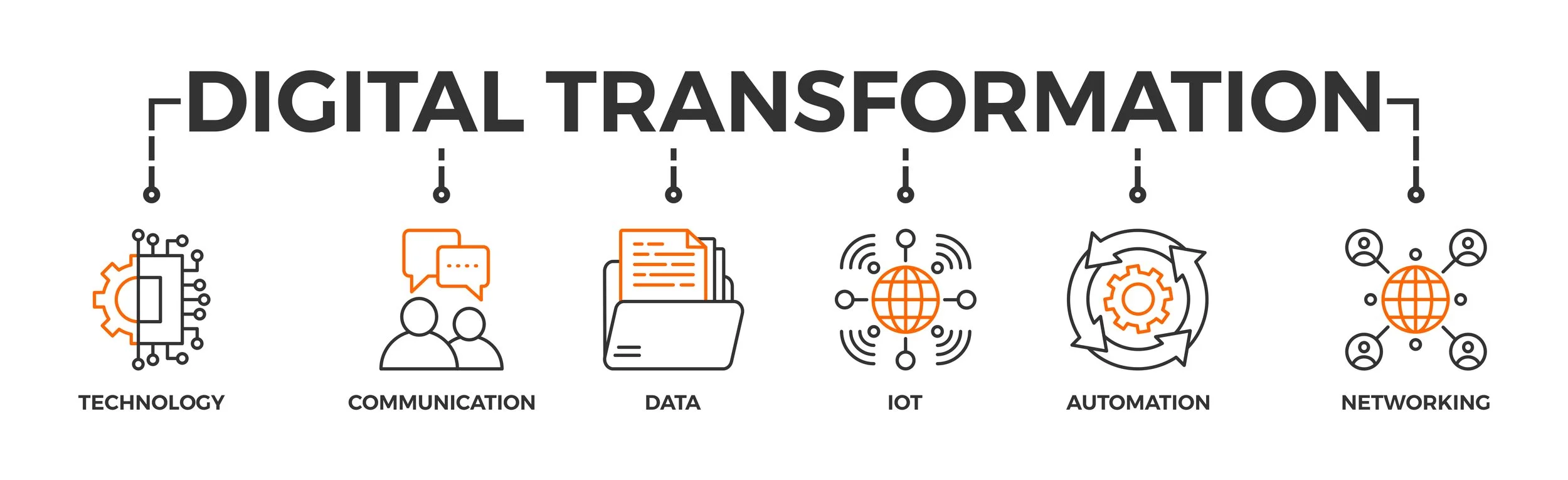
5. Modernise Legacy Systems to Enable Speed and Integration
Outdated systems slow down decision-making, block innovation, and make organisations vulnerable. In 2026, modernisation will shift from optional to urgent.
Companies with modern cloud-based architecture report up to 45% faster product rollout cycles, according to Gartner.
Practical Tip: Start with a system architecture review, prioritising high-friction processes and legacy bottlenecks.
6. Create Seamless Digital Customer Experiences
South African consumers expect fast, personalised, omnichannel digital experiences — and businesses that deliver them gain the competitive edge.
A Salesforce report notes that 73% of customers expect companies to understand their needs. Leaders must rethink their customer journeys through digital-first experiences.
Practical Tip: Map your customer journey and identify digital touch-points that reduce friction and increase loyalty.
7. Use Digital Transformation to Unlock Growth and New Business Models
Digital transformation is not just about efficiency — it’s a growth engine. Leaders who embrace digital innovation unlock new revenue streams, business lines, and markets.
Innovation becomes more than a project — it becomes a capability.
Practical Tip: Run quarterly innovation sprints where teams solve real operational or customer challenges using digital solutions.
Conclusion
Digital transformation in South Africa is accelerating, and leaders who act decisively in 2026 will define the next decade of competitiveness. By prioritising data mastery, AI adoption, digital talent, cybersecurity, and modernisation, organisations can unlock agility and resilience in a rapidly evolving market.
The future belongs to companies that embrace digital change with purpose, clarity, and speed. In 2026, transformation won’t be about keeping up — it will be about taking the lead.