

Future-Proofing Organisations: Scenario Planning for 2027–2030
Future-proofing organisations requires more than predicting trends—it demands structured scenario planning. Learn how leaders can prepare for 2027–2030 with strategic foresight, digital intelligence, and resilient decision-making frameworks.

The future rarely sends a calendar invite.
One moment business feels predictable, and the next, a technological breakthrough, geopolitical shift, or market disruption changes everything overnight. The organisations that survive—and thrive—aren’t the ones that try to predict the future perfectly. They’re the ones prepared for multiple futures.
Think of scenario planning as building several bridges before the river changes course. Instead of betting everything on one forecast, leaders explore different possibilities and design strategies flexible enough to adapt.
In this guide, you’ll learn how forward-thinking organisations prepare for 2027–2030 using scenario planning, emerging technology insights, and strategic resilience frameworks.
1. Why Scenario Planning Is the New Strategic Superpower
Here’s a hard truth: traditional long-term planning is becoming obsolete.
For decades, companies relied on linear forecasting—projecting current trends into the future. But in an era shaped by AI, climate pressures, and rapid digital disruption, that model breaks down.
Scenario planning, popularised by energy giant Royal Dutch Shell in the 1970s, helps leaders explore multiple plausible futures instead of relying on a single prediction.
According to research by the World Economic Forum, businesses that incorporate scenario planning into strategy processes adapt significantly faster during global disruptions.
Futurist Peter Schwartz explains it well: “Scenarios are not predictions. They are tools to help us understand what might happen.”
Practical Tip:
Create three baseline scenarios for your organisation: optimistic growth, moderate change, and disruptive transformation.
You can explore complementary strategy frameworks in our guide:
Strategic Decision-Making in the Digital Age
https://gestaldt.com/strategic-decision-making-in-the-digital-age/
2. Identifying the Mega Trends Shaping 2027–2030
Before building scenarios, leaders must understand the forces shaping the future.
Consulting experts and the World Economic Forum consistently highlight several mega-trends expected to dominate the late 2020s:
Artificial intelligence integration
Climate adaptation policies
Global supply chain realignment
Demographic shifts and talent shortages
The rise of digital economies
Studies suggest AI alone could add $15 trillion to global GDP by 2030.
Technology entrepreneur Elon Musk once said, “Some people don’t like change, but you need to embrace change if the alternative is disaster.”
Understanding these forces helps organisations construct realistic future scenarios rather than speculative guesses.
Practical Tip:
Assign a “trend radar team” that monitors emerging technologies, policy shifts, and consumer behaviour quarterly.
3. Building Multiple Strategic Scenarios
Once key trends are identified, organisations can design structured future scenarios.
Most effective scenario planning frameworks use three to four possible futures built around two major uncertainties—for example:
Speed of AI adoption
Global economic stability
Institutions like Harvard Business School recommend developing narratives for each scenario describing how markets, technology, and customers might behave.
These narratives help leaders stress-test strategy.
Leadership thinker Roger Martin argues that great strategy isn’t about certainty—it’s about preparing for competing possibilities.
Practical Tip:
For each scenario, ask one key question: “What strategic move would we make today if this future became reality?”
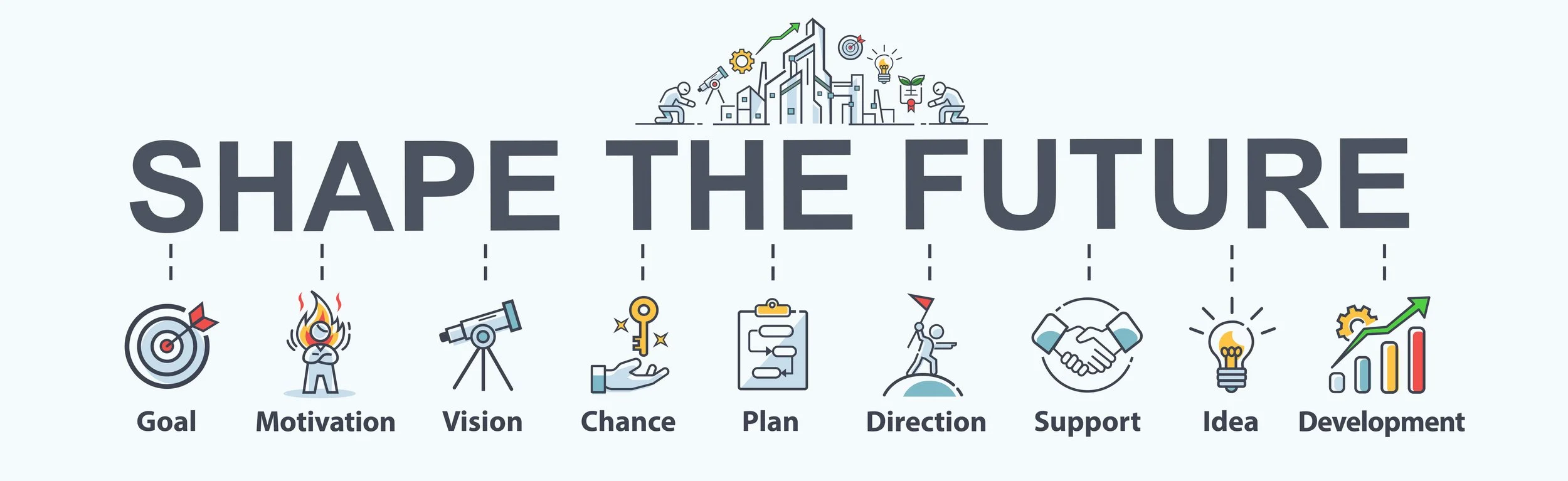
4. Using Digital Tools to Simulate the Future
Here’s where technology supercharges scenario planning.
Modern predictive analytics platforms allow organisations to simulate economic shifts, market demand, and operational risk.
Technology leaders such as IBM and Microsoft are developing AI-powered forecasting tools that analyze massive datasets in real time.
According to Gestaldt Consultants, organisations using advanced analytics for planning are six times more likely to make faster strategic decisions.
As AI researcher Andrew Ng notes, “Artificial intelligence is the new electricity.”
Just as electricity powered the industrial age, AI-powered forecasting will power future strategy.
Practical Tip:
Integrate predictive analytics into quarterly strategic reviews rather than relying solely on annual planning cycles.
5. Building Organisational Resilience
Scenario planning is only valuable if organisations can respond quickly when change happens.
That requires resilience—structures, cultures, and systems designed for adaptability.
Research from Gestaldt Management Consultants shows resilient companies outperform competitors during crises by maintaining operational flexibility and diversified revenue streams.
Leadership author Simon Sinek reminds us: “Leadership is not about being in charge. It is about taking care of those in your charge.”
Resilient organisations prioritise employee well-being, transparent communication, and continuous learning.
Practical Tip:
Develop contingency plans for critical operations—supply chains, workforce capacity, and cybersecurity.
For leadership strategies that support resilience, read:
Leadership 2.0: Augmenting Human Skills with Digital Tools
https://gestaldt.com/leadership-2-0-augmenting-human-skills-with-digital-tools/
6. Turning Scenarios Into Strategic Action
The final step in scenario planning is turning insight into action.
Too many organisations build impressive reports that sit on digital shelves. Effective companies translate scenarios into clear strategic triggers.
For example:
If AI adoption reaches a certain level → increase automation investment
If supply chain disruptions rise → diversify suppliers
If remote work expands → redesign workplace culture
Our consultants report that organisations that embed foresight into strategy cycles are significantly more agile in volatile markets.
Futurist Amy Webb summarises it well: “The future doesn’t just happen—we build it through the decisions we make today.”
Practical Tip:
Attach measurable indicators to each scenario so leadership teams know when to activate specific strategies.
Conclusion: Preparing for the Futures Ahead
The years between 2027 and 2030 will likely bring more change than many organisations experienced in the previous decade.
Scenario planning gives leaders a powerful advantage: the ability to think beyond a single forecast and prepare for multiple realities.
In this article, we explored how scenario planning strengthens strategic foresight, how mega-trends shape possible futures, how digital tools simulate outcomes, and how resilient organisations turn uncertainty into opportunity.
The truth is, the future can’t be predicted with perfect accuracy. But it can be prepared for.
Organisations that embrace foresight today won’t just survive tomorrow’s disruptions—they’ll lead the way into whatever future unfolds.

Digital Transformation in South Africa: What Leaders Should Prioritise in 2026
South African organisations face rapid digital disruption. Discover the key digital priorities leaders must focus on in 2026 — from data strategy and AI to talent, cybersecurity, and customer experience — to drive resilience, competitiveness, and long-term growth.

Digital transformation is no longer a long-term ambition — it’s the engine powering competitive advantage. And in South Africa, where economic pressure meets rapid technological change, the organisations that prioritise the right digital capabilities in 2026 will be the ones that accelerate past their competitors.
Think of South Africa’s digital landscape like an evolving ecosystem — adaptable species thrive, rigid ones disappear. The organisations that survive 2026 and beyond will be those that evolve quickly, build digital muscle, and rewire their operations for speed, intelligence, and resilience.
In this article, leaders will learn the top digital priorities to focus on in 2026 — from AI adoption and data strategy to talent transformation and cybersecurity — and how to build a digital roadmap that drives real value.
1. Build an Enterprise-Wide Data Strategy (Not Just Tools)
Data is the foundation of digital transformation — but many organisations treat it as a technology problem rather than a strategic capability.
South African leaders need an enterprise-wide view of data: where it lives, how it’s collected, how it flows, and how it supports decision-making. Gestaldt Consultants report that companies that integrate data across functions are 25% more likely to outperform in profitability.
As Satya Nadella puts it: “Every company is a software company. You have to start thinking and operating like a digital company.”
Practical Tip: Build a data governance framework with clear ownership, quality standards, and value outcomes.
2. Prioritise AI and Intelligent Automation for Efficiency Gains
AI adoption is accelerating in South Africa, and 2026 will be the year leaders move from experimentation to execution.
From customer service automation to predictive analytics, AI is becoming the backbone of cost efficiency and faster decision cycles. According to Gestaldt Management Consultants, AI could contribute up to R1.5 trillion to South Africa’s economy by 2030, making it one of the biggest growth levers.
Practical Tip: Start by automating one high-volume workflow — billing, supply chain updates, customer insights, or HR.
3. Build Digital Skills Through People-Centred Transformation
Technology means nothing without people who can use it confidently. South African organisations continue to face talent shortages in digital capabilities — cloud engineering, data science, cybersecurity, and digital product management.
Gestaldt IT Consultants note that companies investing in up-skilling are 2.8 times more likely to succeed in digital transformation.
Practical Tip: Launch a 3–6 month digital capability uplift program focused on data literacy, automation, and digital leadership.
4. Strengthen Cybersecurity and Digital Trust
As digital adoption grows, cyberattacks are increasing across Africa — with South Africa now ranking among the top three most targeted countries on the continent.
Leaders must focus on cybersecurity as a strategic priority, not just an IT cost. This includes cyber hygiene, employee awareness, risk assessments, and incident readiness.
Practical Tip: Conduct quarterly cybersecurity simulations and implement zero-trust security architecture.
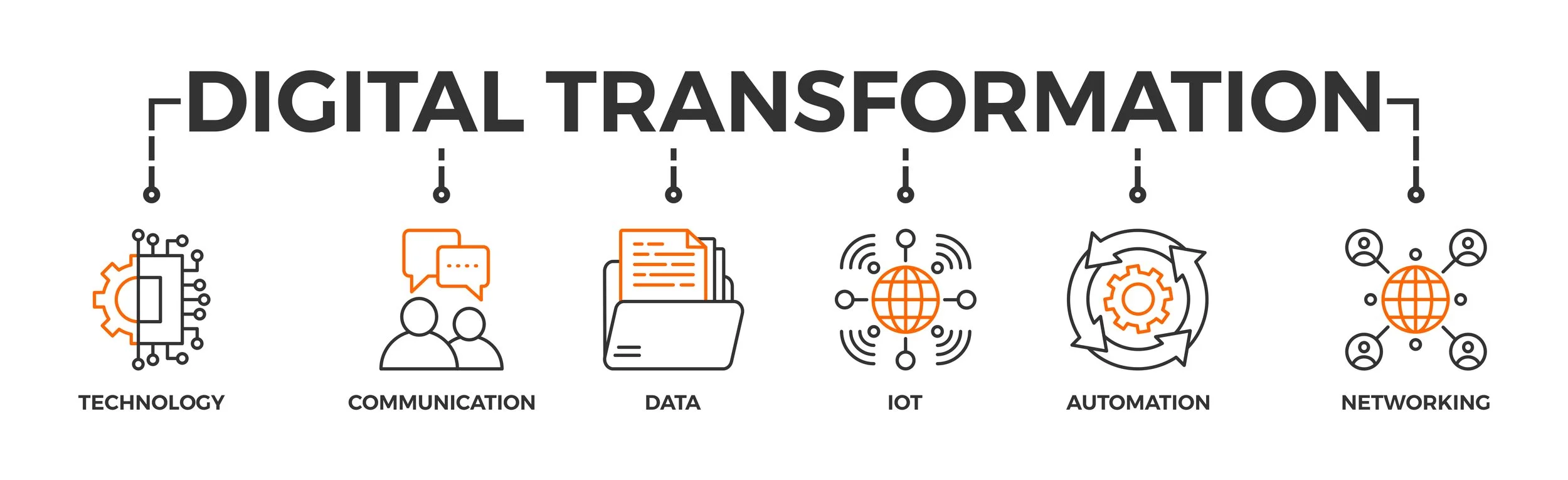
5. Modernise Legacy Systems to Enable Speed and Integration
Outdated systems slow down decision-making, block innovation, and make organisations vulnerable. In 2026, modernisation will shift from optional to urgent.
Companies with modern cloud-based architecture report up to 45% faster product rollout cycles, according to Gartner.
Practical Tip: Start with a system architecture review, prioritising high-friction processes and legacy bottlenecks.
6. Create Seamless Digital Customer Experiences
South African consumers expect fast, personalised, omnichannel digital experiences — and businesses that deliver them gain the competitive edge.
A Salesforce report notes that 73% of customers expect companies to understand their needs. Leaders must rethink their customer journeys through digital-first experiences.
Practical Tip: Map your customer journey and identify digital touch-points that reduce friction and increase loyalty.
7. Use Digital Transformation to Unlock Growth and New Business Models
Digital transformation is not just about efficiency — it’s a growth engine. Leaders who embrace digital innovation unlock new revenue streams, business lines, and markets.
Innovation becomes more than a project — it becomes a capability.
Practical Tip: Run quarterly innovation sprints where teams solve real operational or customer challenges using digital solutions.
Conclusion
Digital transformation in South Africa is accelerating, and leaders who act decisively in 2026 will define the next decade of competitiveness. By prioritising data mastery, AI adoption, digital talent, cybersecurity, and modernisation, organisations can unlock agility and resilience in a rapidly evolving market.
The future belongs to companies that embrace digital change with purpose, clarity, and speed. In 2026, transformation won’t be about keeping up — it will be about taking the lead.

Strategic Diplomacy in Action: How South Africa Can Convert G20 Influence into Real Economic Gains
South Africa’s rising influence in the G20 presents a unique opportunity to convert global diplomacy into real economic impact. This article explores how leaders can leverage global partnerships, climate finance, trade networks, and strategic execution to drive national growth and competitiveness in 2026.

If 2025 was about stepping onto the global stage, 2026 will be about proving South Africa belongs in the front row. The world is watching—now the question is: how do we turn global influence into measurable national progress?
Think of South Africa’s G20 participation as a bridge. On one side lies global cooperation and political clout; on the other sits local economic priorities, jobs, energy security, and competitiveness. The strength of this bridge—how well it’s built and maintained—will determine whether global engagement leads to real domestic transformation.
In this article, we unpack how South Africa can translate diplomatic visibility into tangible economic value, the strategic moves leaders need to prioritise, and the opportunities emerging as global power dynamics shift.
1. Global Influence Isn’t Enough — It Must Convert into Local Advantage
When a country enters global forums like the G20, the spotlight can feel like success. But the real win comes from converting reputation into investment, partnerships, and policy alignment.
Why this matters:
Global recognition does not automatically attract capital. Investors respond to clarity, consistency, and country competitiveness.
➡ Stat: According to UNCTAD, countries that align domestic priorities with global economic agendas see up to 30% faster foreign investment growth.
➡ Quote: “Diplomacy is strategy in slow motion,” says former UN Secretary-General Ban Ki-Moon. “It must link global conversations with national development.”
Practical Tip:
Map which G20 working groups most closely align with South Africa’s priorities—energy, trade, digital, and skills—and focus national resources there.
2. Infrastructure Partnerships: The Fastest Path to Economic Momentum
Global forums open doors to infrastructure finance, climate funds, and multilateral investment—critical for a country still struggling with ports, logistics, and energy constraints.
Why this matters:
Without modern infrastructure, South Africa cannot unlock trade competitiveness or lower the cost of doing business.
➡ Stat: The African Development Bank estimates South Africa needs R411 billion annually in infrastructure investment to remain competitive.
➡ Quote: “Infrastructure is the backbone of economic freedom,” notes economist Mariana Mazzucato.
Practical Tip:
Co-develop investment-ready infrastructure proposals to present at G20 Investment Outreach events.
3. Energy Transition: A G20 Platform for Negotiating Better Deals
South Africa’s energy transition is costly—but the G20 presents opportunities for more favourable financing, technology transfers, and green partnerships.
Why this matters:
A stable, diversified energy system is the single biggest lever for economic growth.
➡ Stat: Power disruptions have reduced South Africa’s GDP growth potential by 2–3% annually.
➡ Quote: “Energy is the currency of modern economies,” says Fatih Birol, Executive Director of the IEA.
Practical Tip:
Prioritise G20 climate finance mechanisms that support both renewable expansion and grid modernisation—not just generation.
4. SME Development: Using Global Playbooks to Grow Local Champions
Big summits often focus on macroeconomics—but the real leverage lies in empowering SMEs to scale, digitise, and access new markets.
Why this matters:
SMEs contribute over 60% of employment but struggle with access to capital and global market reach.
➡ Stat: World Bank data shows SMEs integrated into global supply chains grow revenues 20–30% faster.
➡ Quote: “Small businesses are the world’s most powerful engines of inclusive growth,” says Indra Nooyi.
Practical Tip:
Adopt G20’s SME digitalisation frameworks to modernise South Africa’s SME ecosystem.

5. Leadership Capacity: Turning Diplomacy into Execution
Government leaders, SOEs, and corporate executives must work in sync—otherwise global commitments break down during implementation.
Why this matters:
National competitiveness depends on aligned priorities, fast decision-making, and a professional, capable public sector.
➡ Stat: Countries with high-quality public sector leadership experience 2x faster socioeconomic reform cycles (OECD).
➡ Quote: “Execution is where strategy goes to live or die,” notes management thinker Larry Bossidy.
Practical Tip:
Create joint task teams to convert G20 commitments into actionable national programmes.
6. Trade Expansion: Using G20 Networks to Open African and Global Markets
South Africa can use G20 diplomatic platforms to expand trade corridors, diversify exports, and secure markets for key sectors.
Why this matters:
A more competitive export mix reduces economic vulnerability.
➡ Stat: Diversified export economies experience 50% lower earnings volatility.
➡ Quote: “Trade is the ultimate equaliser,” says WTO Director-General Ngozi Okonjo-Iweala.
Practical Tip:
Use G20 bilateral forums to negotiate long-term trade access for manufacturing, agriculture, energy components, and services.
Conclusion: Turning Momentum into Measurable Impact
South Africa’s G20 elevation is more than symbolism—it’s a strategic moment. But global engagement only matters when it leads to local transformation: better energy security, competitive industries, stronger institutions, and more opportunities for citizens.
The next chapter isn’t about global presence—it’s about strategic conversion.
South Africa now has a seat at one of the world’s most powerful tables. The leaders who succeed will be the ones who use that seat not for prestige, but for progress.

G20 Summit 2025: What South Africa’s Role Means for Global Influence and Local Growth
South Africa’s influential role at the G20 Summit marks a pivotal moment for shaping global policy, attracting investment, and advancing Africa’s economic agenda. This article explores how the summit’s outcomes will affect South African businesses, trade, climate financing, digital transformation, and strategic priorities heading into 2026.
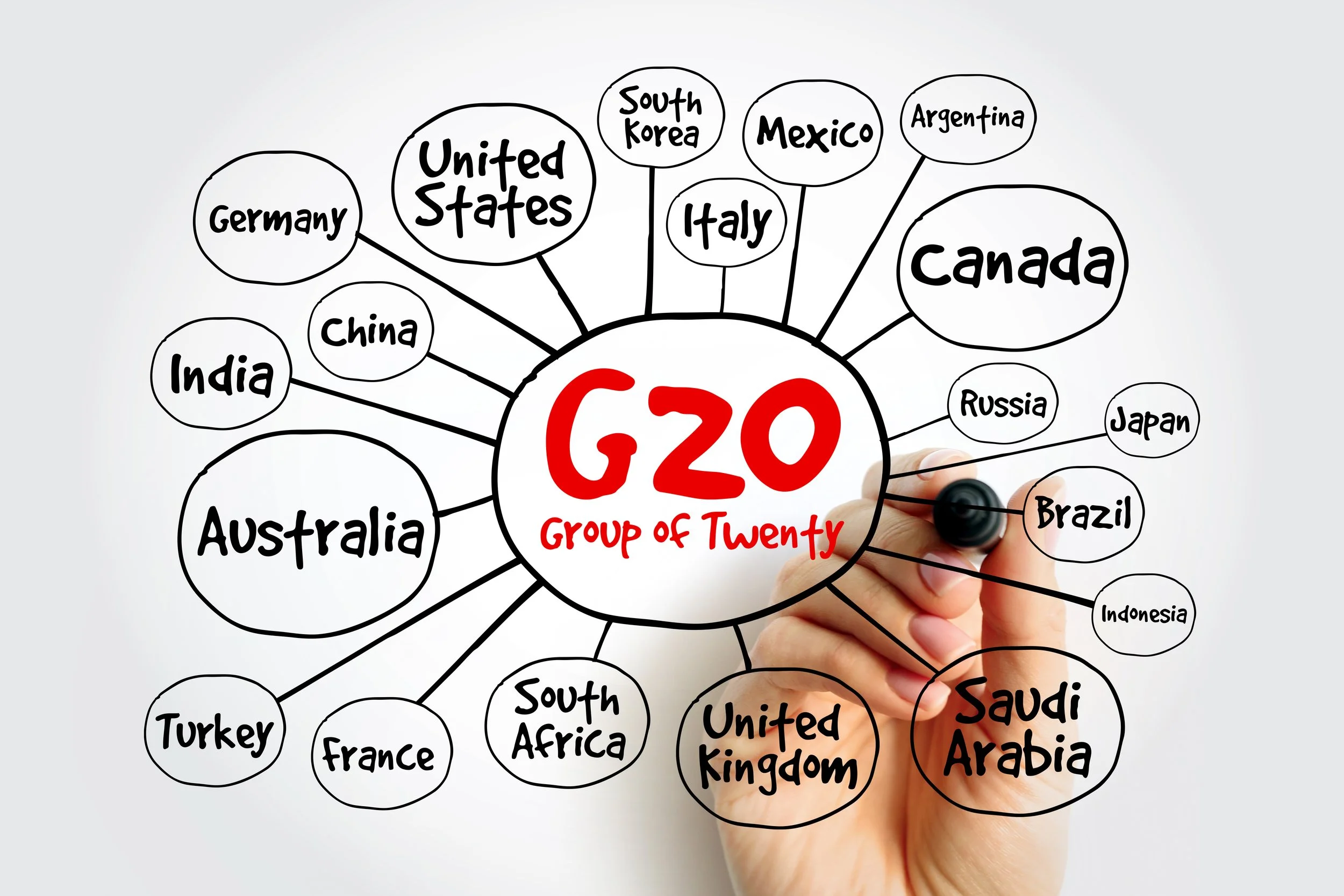
If global diplomacy were a high-stakes chessboard, the G20 Summit would be the table where the world’s biggest players gather to make their next move. And with South Africa stepping into one of its most influential leadership moments, the country is no longer just reacting to global shifts — it’s helping shape them.
Think of the G20 like a massive control room of the global economy, where every lever pulled affects jobs, investment flows, climate policy, and innovation across the world. South Africa’s presence in that room matters more than ever — not just for symbolism, but for real economic and geopolitical impact.
In this article, you’ll learn:
How South Africa’s G20 position strengthens its international influence
What this means for local businesses, markets, and investors
The key policy themes shaping the global agenda
How leaders can prepare for post-summit shifts
And the strategic opportunities South Africans must not ignore
Let’s dive in.
1. A Seat at the Power Table: Why South Africa’s G20 Role Matters More Than Ever
Ever feel like you’re watching a meeting where decisions are being made about you but not with you? The G20 summit flips that script for South Africa.
As the only African representative in the G20, South Africa carries a continental mandate — amplifying African priorities on infrastructure, climate finance, industrialisation, and fair trade.
Why this matters:
South Africa influences the policies of economies representing more than 85% of global GDP, 75% of world trade, and two-thirds of the global population.
Quote:
“Africa must be a maker of global decisions, not a passive recipient of them,” says Dr. Ngozi Okonjo-Iweala, WTO Director-General.
Practical Tip:
Local businesses should track G20 communiqués and policy agreements—they’re often precursors to regulatory and trade shifts months before they hit local markets.
2. The Economic Ripple Effect: How G20 Outcomes Shape South Africa’s Market Landscape
If you drop a stone in an ocean, the ripple seems small — until it finally reaches the shore. That’s exactly how global policy decisions reach South Africa’s economy.
G20 outcomes influence:
Interest rate trends
Investment flows and risk appetite
Energy transition funding
Digital trade agreements
Supply chain resilience
Data to note:
Global FDI flows to Africa increased by 15% in 2024, largely driven by improved global–Africa partnerships and green transition financing.
Practical Tip:
Businesses should monitor global commodity strategies discussed at G20—especially those tied to minerals critical for renewable energy.
3. Climate Commitments and the Green Industrial Push
Climate policy is no longer just an environmental issue — it’s an economic race. And the G20 sets the rules of that race.
South Africa’s Just Energy Transition Partnership (JETP) receives renewed global attention and funding at every G20 summit, reinforcing commitments to:
Renewable infrastructure
Carbon reduction
Green manufacturing
Skills development for new industries
Quote:
“The energy transition is Africa’s greatest economic opportunity.” — Fatih Birol, IEA Executive Director
Practical Tip:
Executives should explore green financing instruments emerging through G20 channels — concessional loans, blended finance, and public–private partnerships.
4. Digital Transformation: A Priority South Africa Can’t Afford to Miss
In a world where data is the new gold, digital policy becomes a matter of competitive survival.
G20 members are driving agendas on:
AI governance
Digital tax frameworks
Cross-border digital trade
Cybersecurity standards
For South Africa, this creates opportunities for:
Scaling digital SMEs
Improving digital skills
Attracting global tech investment
Interoperability of financial systems
Statistic:
Digital trade is growing three times faster than physical trade globally.
Practical Tip:
Businesses should prioritise AI readiness, as G20 countries increasingly define rules shaping global digital markets.

5. Re-shaping Global Trade: What South African Exporters Should Expect
Every G20 summit influences tariff negotiations, trade agreements, and market access. South Africa leverages this platform to push for fair trade conditions for:
Agriculture
Automotive
Metals and minerals
Pharmaceuticals
Renewable energy value chains
Quote:
“Trade must enable development, not deepen inequality,” says President Cyril Ramaphosa.
Practical Tip:
Exporters should focus on compliance with global sustainability standards, which are fast becoming entry tickets into G20 markets.
6. Strengthening Africa’s Global Voice Through South Africa
South Africa’s G20 voice extends beyond national interests. It represents:
AfCFTA integration
Continental infrastructure
Africa’s financial system reform
Debt sustainability
Youth employment and education alliances
This transforms SA’s positioning from a participant to a continental connector.
Statistic:
AfCFTA could boost intra-African trade by 52% by 2035, according to the World Bank.
Practical Tip:
African-focused companies should align strategies with cross-border reforms accelerated through G20 diplomatic commitments.
7. How Business Leaders Can Prepare for the Post-G20 Landscape
A summit is only powerful if its outcomes are acted on. Leaders should prepare by:
Building scenario plans based on policy shifts
Monitoring trade and digital policy updates
Enhancing ESG reporting
Exploring G20-aligned funding opportunities
Strengthening organisational agility and foresight
The organisations that gain the most are those that connect global signals to local strategy.
Quote:
“Strategic foresight is not predicting the future — it’s preparing for it,” says futurist Amy Webb.
Conclusion: A Moment of Global Influence South Africa Must Leverage
South Africa’s engagement in the G20 is more than diplomatic symbolism — it’s a strategic position with real economic consequences. From climate financing to digital trade, energy security to global investment trends, the G20 provides South Africa with both a voice and an opportunity.
As we move into 2026, the leaders who will thrive are those who can:
Decode global shifts
Integrate policy signals into strategy
Move with agility
And compete with confidence in an interconnected world
South Africa isn’t just watching the world’s future unfold — it’s helping design it.

From Insight to Impact: Building Resilient Strategies for a Volatile Economy
Discover how to build resilient strategies for a volatile economy. Learn how foresight, agility, and culture can turn uncertainty into opportunity and position your organisation for long-term success in 2026.

When markets shake and forecasts blur, only one kind of organisation stands tall — the one built to bend, not break.
If 2025 taught leaders anything, it’s that economic volatility isn’t an event — it’s the new environment. Inflation pressures, policy shifts, and global instability continue to test the limits of strategy and leadership. Yet amid the turbulence, some organisations aren’t just surviving — they’re adapting, innovating, and growing.
Think of resilience as the shock absorber of business — it doesn’t stop the bumps, but it ensures you stay on the road. In this article, we’ll explore how organisations can translate insight into impact — building strategic resilience that allows them to thrive in uncertainty and seize new opportunities in 2026.
1. Resilience Starts with Clarity, Not Control
In unpredictable markets, control is an illusion. What leaders need instead is clarity — a clear understanding of purpose, priorities, and risk tolerance.
According to Gestaldt, resilient organisations are three times more likely to achieve long-term growth because they plan for flexibility rather than precision. This means designing strategies that can pivot without losing sight of long-term goals.
💡 Tip: Build “strategic clarity dashboards” that highlight non-negotiable objectives while allowing tactical fluidity in execution.
2. Data-Driven Foresight: Anticipate Before You React
Volatility doesn’t arrive unannounced — it leaves data breadcrumbs. The challenge lies in seeing the signals before they become shocks.
A global survey found that 68% of resilient companies rely on predictive analytics to anticipate disruption. By transforming raw data into foresight, leaders can turn uncertainty into informed decision-making.
💡 Tip: Combine internal performance metrics with external indicators — such as commodity prices, interest rates, or consumer sentiment — to anticipate market shifts early.
3. Diversify to Strengthen the Core
Resilience isn’t about doing more; it’s about spreading risk intelligently. Diversification — in products, markets, or supply chains — gives organisations more shock absorbers when one area falters.
Take MTN Group, for example. By expanding across 20+ African markets, the company mitigated local economic risks and achieved stable growth despite currency volatility and regulatory uncertainty.
💡 Tip: Conduct a “dependency audit” — identify areas where your business relies too heavily on one supplier, client, or market, and develop alternatives.

4. Culture as a Competitive Shield
Resilience isn’t built in strategy documents; it’s built in culture. Teams that trust leadership, communicate openly, and embrace change recover faster from setbacks.
A Gallup study revealed that companies with highly engaged teams outperform competitors by 21% in profitability and recover 2x faster from market disruptions. Empowered employees are the strongest line of defense against volatility.
💡 Tip: Encourage transparent communication about risks and changes — employees who understand the “why” behind shifts are more likely to stay engaged.
5. Financial Agility: Flexibility is the New Efficiency
Resilient organisations treat liquidity like oxygen — essential for survival and growth. Instead of chasing short-term efficiency, they build financial agility that supports long-term adaptability.
According to the Resilience Barometer, 60% of leading organisations now prioritise maintaining flexible capital structures and access to alternative funding sources.
💡 Tip: Regularly stress-test your financial models under different economic scenarios to identify weak points before they become crises.
6. Leadership That Balances Optimism with Realism
In turbulent times, leaders must balance optimism with clear-eyed realism. The best leaders acknowledge risks while inspiring confidence and purpose.
As author Jim Collins notes in Good to Great, great leaders “confront the brutal facts, yet never lose faith.” In 2026’s volatile economy, that mindset is the cornerstone of strategic resilience.
💡 Tip: Adopt the “Stockdale Paradox” — be brutally honest about current challenges while remaining unwaveringly confident in long-term success.
Conclusion: Turning Insight into Impact
Resilience isn’t a static trait — it’s a strategic muscle built through foresight, adaptability, and empowered leadership. The most successful organisations of 2026 will be those that can absorb shocks, respond intelligently, and act with purpose.
As Peter Drucker famously said, “The greatest danger in times of turbulence is not the turbulence itself, but to act with yesterday’s logic.” Turning insight into impact means rethinking what strength looks like — less rigidity, more agility; less control, more clarity.
In a volatile economy, resilience isn’t just the ability to bounce back — it’s the power to bounce forward.

Strategic Reflections: Lessons from a Year of Transformation
As 2025 ends, discover key lessons from a year of transformation—how leaders, markets, and organisations can enter 2026 with renewed strategic focus.

As 2025 draws to a close, one thing is clear—this was no ordinary year. From shifting global markets to digital acceleration and renewed focus on purpose, organisations across South Africa and beyond have been tested, stretched, and transformed. Now comes the crucial question: what have we learned, and how can these lessons shape a stronger 2026?
Think of 2025 as a crucible—one where leaders, teams, and entire industries were refined through uncertainty. The past twelve months have forced organisations to rethink what agility, leadership, and resilience truly mean.
As we look toward 2026, reflection isn’t just a ritual—it’s a strategic imperative. By pausing to evaluate what worked, what didn’t, and where opportunities now lie, businesses can recalibrate for the year ahead with sharper focus and renewed purpose.
In this article, we’ll unpack the key leadership lessons, market trends, and transformation insights from 2025—and explore how organisations can enter 2026 with a more deliberate and future-fit strategy.
1. Leadership in Flux: The Rise of Adaptive Decision-Making
2025 proved that leadership isn’t about having all the answers—it’s about asking better questions.
Executives faced volatile markets, shifting regulations, and geopolitical uncertainty. Those who thrived were not necessarily the most experienced, but the most adaptive. They embraced uncertainty as a learning opportunity rather than a setback.
Insight: Gestaldt research shows that organisations with adaptive leaders are 1.8x more likely to outperform peers in volatile markets.
Lesson for 2026: Build leadership teams capable of fast, informed decision-making. Encourage leaders to balance long-term vision with the agility to pivot when conditions change.
Quote: “In times of rapid change, it’s not the strongest that survive, but those most responsive to change.” — Charles Darwin
2. Market Shifts: From Growth at All Costs to Sustainable Performance
The global economic landscape in 2025 was marked by tightening capital flows and cautious optimism. Companies began prioritising sustainable profitability over breakneck expansion.
In South Africa, sectors like renewable energy, fintech, and healthcare showed resilience, while traditional industries leaned into digital transformation to stay relevant.
Lesson for 2026: Focus on value creation, not volume growth. Companies that balance innovation with financial discipline will thrive in a cautious but opportunity-rich 2026.
Tip: Reassess your growth metrics—shift from measuring output to tracking impact, efficiency, and long-term viability.
3. Organisational Agility: Moving from Projects to Purpose
In 2025, many organisations learned the hard way that agility isn’t just about fast projects—it’s about clear purpose.
Teams that understood the “why” behind their work were more engaged, aligned, and effective under pressure. As hybrid work models and AI-driven tools matured, organisations with a strong sense of purpose found it easier to adapt and maintain cohesion.
Stat: According to Gestaldt, purpose-driven organisations experience 40% higher employee retention and 30% faster innovation cycles.
Lesson for 2026: Reconnect strategy to purpose. Ensure every initiative—whether digital, operational, or cultural—ties back to your core mission.

4. Technology and Human Capital: Striking the Balance
The explosion of AI and automation in 2025 accelerated productivity—but it also raised new questions about workforce readiness.
The most successful organisations recognised that technology alone isn’t the differentiator—people are. They invested in re-skilling, emotional intelligence, and collaborative capabilities to complement digital tools.
Lesson for 2026: Don’t just digitise—humanise your transformation. Equip teams to work smarter alongside technology, not beneath it.
Tip: Launch an internal “skills forecast” for 2026—identify emerging capabilities your business will need and start building them now.
5. Strategic Focus: From Annual Planning to Continuous Evolution
The era of rigid, annual strategic plans is fading fast. In 2025, many firms shifted to continuous strategy cycles, where planning and execution evolved in tandem.
This fluid approach allowed organisations to respond to external shocks without losing sight of long-term goals.
Lesson for 2026: Treat strategy as a living system. Review and recalibrate quarterly, not yearly. Embed real-time data and feedback loops into your decision-making process.
Quote: “Strategy is a process, not an event.” — Henry Mintzberg
6. The Cultural Factor: Trust, Transparency, and Engagement
One of the biggest differentiators in 2025 was culture. Organisations that fostered open communication, psychological safety, and trust saw stronger engagement and faster recovery from setbacks.
Lesson for 2026: Build a culture that thrives on transparency and shared accountability. Encourage teams to speak up, challenge ideas, and contribute to continuous improvement.
Stat: Gallup found that teams with high trust levels are 2.5x more likely to exceed performance expectations.
Conclusion: Entering 2026 with Clarity and Confidence
As 2025 comes to a close, it’s clear that transformation is no longer a phase—it’s the new normal.
The year taught us that success lies not in predicting the future, but in preparing for it. By embracing adaptability, purpose, and culture-driven strategy, organisations can navigate uncertainty with confidence and clarity.
So, as you set your sights on 2026, take time to reflect. The insights from a year of transformation are not just lessons—they’re a leadership compass for the road ahead.
Final Thought: The organisations that thrive in 2026 won’t be those that plan the most—they’ll be the ones that learn, adapt, and act the fastest.