

The Evolving Role of Leadership in 2026: From Control to Empowerment
Leadership in 2026 is shifting from control to empowerment. Discover how emotional intelligence, trust, and digital collaboration are redefining what it means to lead — and how forward-thinking leaders can thrive in the next era.

Gone are the days when leadership meant calling the shots from the corner office. In 2026, the world’s best leaders aren’t commanding — they’re connecting.
Leadership today is undergoing a profound transformation. Think of it like shifting from driving a car manually to guiding a self-driving vehicle — the leader’s role moves from control to calibration, from directing every move to ensuring the system stays aligned.
As organisations prepare for 2026, empowerment has replaced control as the cornerstone of effective leadership. It’s no longer about authority but about enabling people, fostering trust, and driving collaboration. In this article, we’ll explore what this new era of leadership looks like, why it matters, and how leaders can adapt to thrive in the years ahead.
1. From Command-and-Control to Empower-and-Enable
Traditional leadership structures were built on hierarchy and compliance. But in the hybrid, hyper-connected workplaces of 2026, agility outperforms authority.
According to the 2025 Global Human Capital Trends report, 82% of organisations now prioritise empowerment and trust-based leadership models over traditional control structures. This shift has proven to boost innovation, morale, and employee retention.
💡 Tip: Replace rigid approval processes with decision-making autonomy at team levels. Empowered employees move faster — and think smarter.
2. Emotional Intelligence: The New Core Competency
In the AI-driven age, emotional intelligence (EQ) has become the defining skill that separates good leaders from exceptional ones. Leaders who lead with empathy, active listening, and authenticity inspire greater loyalty and creativity.
Harvard Business Review found that teams led by emotionally intelligent managers experience 20% higher engagement and 30% lower turnover. As automation takes over routine work, human connection becomes the true competitive advantage.
💡 Tip: Begin each team meeting with check-ins that focus on people, not just projects. It builds trust — the foundation of empowerment.
3. Leading Through Trust and Transparency
In times of uncertainty, control creates resistance; trust creates alignment. Leaders in 2026 must communicate transparently — sharing not only the “what” but the “why” behind decisions.
Gestaldt’s Future of Leadership study revealed that 95% of employees are more likely to stay with an organisation when leadership communicates openly and honestly about business direction. Transparency fuels empowerment, while secrecy breeds disengagement.
💡 Tip: Use data dashboards and all-hands meetings to keep teams informed about company performance and strategic goals.

4. Empowerment as a Driver of Innovation
Empowered employees are innovators. When leaders remove unnecessary barriers, teams take ownership — and creativity flourishes.
Case in point: Microsoft’s cultural shift under Satya Nadella. By replacing a culture of control with one of “learn-it-all” curiosity, Microsoft reignited its innovation engine and saw its market value triple within a decade.
💡 Tip: Encourage teams to experiment and reward learning from failures. Empowerment without psychological safety leads to hesitation, not innovation.
5. The Digital Dimension of Empowered Leadership
Technology is not just a tool — it’s a leadership amplifier. Digital platforms enable transparency, collaboration, and real-time feedback. Leaders who leverage these tools can empower distributed teams while maintaining clarity and cohesion.
Gartner predicts that by 2026, 75% of high-performing leaders will use digital engagement analytics to understand team dynamics and performance in real time. Empowerment now includes enabling technology that allows teams to self-manage effectively.
💡 Tip: Adopt collaborative platforms like Microsoft Teams, Miro, or Notion to create transparent workflows and visible progress.
6. The Future: Collective Leadership Over Heroic Leadership
The age of the “heroic leader” is fading. The future belongs to collective leadership — networks of empowered individuals aligned around a shared purpose.
As management thinker Margaret Heffernan notes, “Leadership is no longer about one person knowing everything — it’s about everyone contributing their best.” This philosophy creates resilient, adaptive organisations that can navigate complexity with confidence.
💡 Tip: Establish cross-functional leadership councils or innovation task forces where decision-making is shared across disciplines.
Conclusion: Leadership for the Next Decade
The evolving role of leadership in 2026 is defined not by control but by connection. Empowered leaders trust their teams, value emotional intelligence, and use technology to enhance collaboration rather than micromanage it.
As Simon Sinek reminds us, “Leadership is not about being in charge. It’s about taking care of those in your charge.” In this new era, success will belong to leaders who trade authority for authenticity and command for empowerment.
By embracing this shift, organisations won’t just survive the next wave of transformation — they’ll lead it.

Strategic Foresight 2026: Turning Reflection into Action
As 2025 ends, organisations must turn reflection into strategy. Learn how to use foresight, agility, and data-driven leadership to build momentum for 2026 and beyond.

As the dust settles on a year of disruption and recalibration, one question lingers in every boardroom: What now? Reflection is valuable — but foresight turns insight into progress.
Think of 2025 as a mirror — it revealed both the strengths and blind spots of organisations navigating global volatility. But mirrors alone don’t drive motion; windshields do. As leaders look toward 2026, strategic foresight becomes that windshield — offering clarity, direction, and confidence to move forward.
In this article, we’ll explore how businesses can translate the lessons of 2025 into agile strategies, actionable priorities, and measurable growth. You’ll discover how to turn reflection into execution and foresight into a competitive edge.
1. From Retrospection to Roadmap: The Power of Applied Insight
Reflection without follow-through is like charting a course and never setting sail. Organisations must shift from analysis to action — distilling lessons from 2025 into actionable goals and KPIs for 2026.
According to Gestaldt, companies that continuously align strategic plans with post-year reviews outperform peers by up to 45% in long-term growth metrics. Reflection is no longer a box-ticking exercise; it’s a blueprint for the next phase.
💡 Tip: Begin with a short “strategy sprint” — a focused workshop that turns year-end reviews into clear 90-day priorities.
2. Embracing Agility in Strategy Execution
Rigid strategies sink fast in unpredictable markets. Agile execution empowers leaders to pivot when necessary — without losing sight of long-term goals.
Gestaldt reports that 73% of high-performing organisations employ agile frameworks in strategy implementation. This doesn’t mean abandoning structure; it means balancing discipline with adaptability.
💡 Tip: Introduce quarterly “strategy recalibration” sessions to assess progress, identify market shifts, and adjust priorities accordingly.
3. Leveraging Data for Forward-Looking Decisions
2026 won’t reward intuition; it will reward information. Organisations that embed data analytics into decision-making cycles can predict market trends, spot inefficiencies, and act faster.
Gartner forecasts that by 2026, 70% of successful strategies will be powered by advanced analytics and real-time insights. This shift makes foresight measurable — and strategy accountable.
💡 Tip: Combine data dashboards with scenario planning to simulate outcomes and guide more confident strategic choices.

4. Leadership Alignment: From Vision to Collective Ownership
Even the sharpest foresight fails without alignment. Executives must ensure that leadership teams not only understand the vision for 2026 but share ownership of execution.
As Harvard Business Review notes, aligned leadership teams are 1.9x more likely to exceed revenue and profit targets. Foresight is not about predicting the future alone — it’s about preparing people to shape it.
💡 Tip: Host an annual “leadership foresight forum” to co-create strategic priorities and reaffirm collective accountability.
5. Building Organisational Resilience Through Strategic Foresight
The true test of strategy lies not in smooth sailing but in rough seas. Resilient organisations embed flexibility into their DNA — creating systems that adapt under stress.
World Economic Forum data shows that resilient companies recover 30% faster from market shocks and retain greater investor confidence. Strategic foresight isn’t a luxury; it’s a survival skill.
💡 Tip: Conduct resilience audits to identify potential vulnerabilities — operational, financial, or cultural — before they become crises.
Conclusion: Seeing Beyond the Horizon
Strategic foresight is not about predicting the future — it’s about preparing to thrive in it. The reflections of 2025 offer a treasure trove of insights, but the power lies in how organisations act on them.
As Peter Drucker once said, “The best way to predict the future is to create it.” By turning reflection into deliberate action, leaders can guide their organisations through uncertainty with confidence — and enter 2026 not as spectators of change, but as architects of it.

Strategic Reflections: Lessons from a Year of Transformation
As 2025 ends, discover key lessons from a year of transformation—how leaders, markets, and organisations can enter 2026 with renewed strategic focus.

As 2025 draws to a close, one thing is clear—this was no ordinary year. From shifting global markets to digital acceleration and renewed focus on purpose, organisations across South Africa and beyond have been tested, stretched, and transformed. Now comes the crucial question: what have we learned, and how can these lessons shape a stronger 2026?
Think of 2025 as a crucible—one where leaders, teams, and entire industries were refined through uncertainty. The past twelve months have forced organisations to rethink what agility, leadership, and resilience truly mean.
As we look toward 2026, reflection isn’t just a ritual—it’s a strategic imperative. By pausing to evaluate what worked, what didn’t, and where opportunities now lie, businesses can recalibrate for the year ahead with sharper focus and renewed purpose.
In this article, we’ll unpack the key leadership lessons, market trends, and transformation insights from 2025—and explore how organisations can enter 2026 with a more deliberate and future-fit strategy.
1. Leadership in Flux: The Rise of Adaptive Decision-Making
2025 proved that leadership isn’t about having all the answers—it’s about asking better questions.
Executives faced volatile markets, shifting regulations, and geopolitical uncertainty. Those who thrived were not necessarily the most experienced, but the most adaptive. They embraced uncertainty as a learning opportunity rather than a setback.
Insight: Gestaldt research shows that organisations with adaptive leaders are 1.8x more likely to outperform peers in volatile markets.
Lesson for 2026: Build leadership teams capable of fast, informed decision-making. Encourage leaders to balance long-term vision with the agility to pivot when conditions change.
Quote: “In times of rapid change, it’s not the strongest that survive, but those most responsive to change.” — Charles Darwin
2. Market Shifts: From Growth at All Costs to Sustainable Performance
The global economic landscape in 2025 was marked by tightening capital flows and cautious optimism. Companies began prioritising sustainable profitability over breakneck expansion.
In South Africa, sectors like renewable energy, fintech, and healthcare showed resilience, while traditional industries leaned into digital transformation to stay relevant.
Lesson for 2026: Focus on value creation, not volume growth. Companies that balance innovation with financial discipline will thrive in a cautious but opportunity-rich 2026.
Tip: Reassess your growth metrics—shift from measuring output to tracking impact, efficiency, and long-term viability.
3. Organisational Agility: Moving from Projects to Purpose
In 2025, many organisations learned the hard way that agility isn’t just about fast projects—it’s about clear purpose.
Teams that understood the “why” behind their work were more engaged, aligned, and effective under pressure. As hybrid work models and AI-driven tools matured, organisations with a strong sense of purpose found it easier to adapt and maintain cohesion.
Stat: According to Gestaldt, purpose-driven organisations experience 40% higher employee retention and 30% faster innovation cycles.
Lesson for 2026: Reconnect strategy to purpose. Ensure every initiative—whether digital, operational, or cultural—ties back to your core mission.

4. Technology and Human Capital: Striking the Balance
The explosion of AI and automation in 2025 accelerated productivity—but it also raised new questions about workforce readiness.
The most successful organisations recognised that technology alone isn’t the differentiator—people are. They invested in re-skilling, emotional intelligence, and collaborative capabilities to complement digital tools.
Lesson for 2026: Don’t just digitise—humanise your transformation. Equip teams to work smarter alongside technology, not beneath it.
Tip: Launch an internal “skills forecast” for 2026—identify emerging capabilities your business will need and start building them now.
5. Strategic Focus: From Annual Planning to Continuous Evolution
The era of rigid, annual strategic plans is fading fast. In 2025, many firms shifted to continuous strategy cycles, where planning and execution evolved in tandem.
This fluid approach allowed organisations to respond to external shocks without losing sight of long-term goals.
Lesson for 2026: Treat strategy as a living system. Review and recalibrate quarterly, not yearly. Embed real-time data and feedback loops into your decision-making process.
Quote: “Strategy is a process, not an event.” — Henry Mintzberg
6. The Cultural Factor: Trust, Transparency, and Engagement
One of the biggest differentiators in 2025 was culture. Organisations that fostered open communication, psychological safety, and trust saw stronger engagement and faster recovery from setbacks.
Lesson for 2026: Build a culture that thrives on transparency and shared accountability. Encourage teams to speak up, challenge ideas, and contribute to continuous improvement.
Stat: Gallup found that teams with high trust levels are 2.5x more likely to exceed performance expectations.
Conclusion: Entering 2026 with Clarity and Confidence
As 2025 comes to a close, it’s clear that transformation is no longer a phase—it’s the new normal.
The year taught us that success lies not in predicting the future, but in preparing for it. By embracing adaptability, purpose, and culture-driven strategy, organisations can navigate uncertainty with confidence and clarity.
So, as you set your sights on 2026, take time to reflect. The insights from a year of transformation are not just lessons—they’re a leadership compass for the road ahead.
Final Thought: The organisations that thrive in 2026 won’t be those that plan the most—they’ll be the ones that learn, adapt, and act the fastest.

From Strategy to Execution: Closing the Gap in Organisations
Bridging the gap between strategy and execution is the key to lasting success. Learn how to turn great plans into measurable results that drive performance.

You’ve got a brilliant strategy on paper—visionary, data-backed, and full of promise. But when it comes to execution, things stall, teams lose momentum, and results fall short. Sound familiar? You’re not alone. The strategy–execution gap is one of the biggest silent killers of organisational performance.
Think of a strategy as a blueprint for a skyscraper—it’s elegant and ambitious. But without skilled builders, the right materials, and clear direction, it remains just that: a drawing.
Bridging the gap between strategy and execution is what separates thriving organisations from those stuck in perpetual “planning mode.” In this article, we’ll unpack why execution so often fails, what leading companies are doing differently, and how leaders can turn strategic vision into measurable action.
By the end, you’ll have a roadmap to close the gap and build a culture that delivers—consistently.
1. Why the Strategy–Execution Gap Exists
It’s estimated that over 60% of strategies fail at the execution stage, according to Harvard Business Review. The problem isn’t the lack of good ideas—it’s the lack of alignment and follow-through.
Common culprits include:
Poor communication between leadership and frontline teams
Lack of clarity on ownership and accountability
Misaligned KPIs and incentives
Limited capacity or resources to deliver on goals
Tip: Translate every strategic objective into specific, measurable outcomes. Make sure every team member knows how their work contributes to the bigger picture.
Quote: “Strategy without execution is hallucination.” — Thomas Edison
2. Turning Strategy into Actionable Goals
A vision is inspiring—but it’s not actionable until it’s broken down into achievable milestones.
High-performing organisations use OKRs (Objectives and Key Results) or similar frameworks to make strategies tangible. Each department defines outcomes linked directly to corporate priorities, ensuring visibility and accountability across all levels.
Example: When a South African financial services firm adopted OKRs, it reduced project overlap by 25% and improved cross-team collaboration dramatically within six months.
Tip: Start with a simple rule—every strategy session should end with a clear execution plan, not just ideas.
3. Empowering Middle Management—the Real Bridge Builders
Middle managers are often the unsung heroes in translating vision into results. Yet they’re also the first to be overwhelmed by conflicting priorities.
To empower them, leadership must provide decision-making autonomy, resources, and training. When middle management understands the “why” behind strategy, they can effectively communicate and motivate their teams to act.
Stat: Research by Gestaldt found that organisations with empowered middle managers are 75% more likely to achieve their strategic goals.
Tip: Encourage two-way communication—let insights from the ground inform strategic adjustments.

4. Building a Culture of Accountability
Culture eats strategy for breakfast—and accountability is its main course.
Without a culture of ownership, even the best execution frameworks crumble. The key is to establish shared responsibility, where success and failure are collective outcomes.
Practical Step: Incorporate performance dashboards that are visible across teams. Public transparency encourages commitment and shared progress tracking.
Quote: “When everyone owns the results, everyone strives to improve them.” — Indra Nooyi, former PepsiCo CEO
5. Leveraging Technology to Drive Execution
Technology is the great enabler of execution. From project management tools like Asana and Monday.com to advanced performance analytics, digital systems bring visibility, coordination, and accountability.
Stat: Companies using integrated performance management tools are 33% more likely to hit their strategic goals (Gestaldt).
Tip: Use data dashboards to monitor progress in real time, helping leaders make fast, informed decisions when plans veer off course.
6. Continuous Feedback and Adaptation
Execution is not static—it evolves. Continuous feedback loops help organisations pivot when market conditions, technologies, or customer needs shift.
Adopting an agile mindset ensures strategies remain relevant while execution stays dynamic.
Example: A retail group in Johannesburg used real-time customer data to adjust its product strategy mid-year, boosting quarterly revenue by 18%.
Tip: Schedule regular strategy “pulse checks” to review what’s working and what needs to change.
Conclusion: Bridging Vision and Reality
The true test of leadership isn’t crafting a winning strategy—it’s turning that strategy into sustained performance.
When organisations align people, processes, and technology around a shared vision, strategy transforms from a document into a living, breathing force.
Closing the gap requires relentless clarity, accountability, and adaptability. As Peter Drucker famously said, “Plans are only good intentions unless they immediately degenerate into hard work.”
In 2025 and beyond, success will belong to those who not only dream big but also execute relentlessly.

Preparing for 2026: Economic Forecasts Every CEO Should Watch
2026 is approaching fast. Discover key economic forecasts every CEO should watch—from growth trends to ESG shifts—and how to turn change into opportunity.

The winds of global economics are shifting again—and 2026 could be a make-or-break year for South African and African businesses alike. CEOs who read the signals early won’t just survive the coming turbulence—they’ll soar above it.
Think of 2026 as the next chapter in a high-stakes chess match between growth, inflation, and innovation. Every move counts. From fluctuating commodity prices to emerging technologies and trade realignments, the global economy is undergoing seismic change.
For business leaders, foresight is now a strategic advantage. This article explores the key economic forecasts for 2026 that every CEO should track—helping organisations stay resilient, competitive, and ready for the opportunities hidden within uncertainty.
1. Global Growth Will Remain Uneven—but Africa Holds Promise
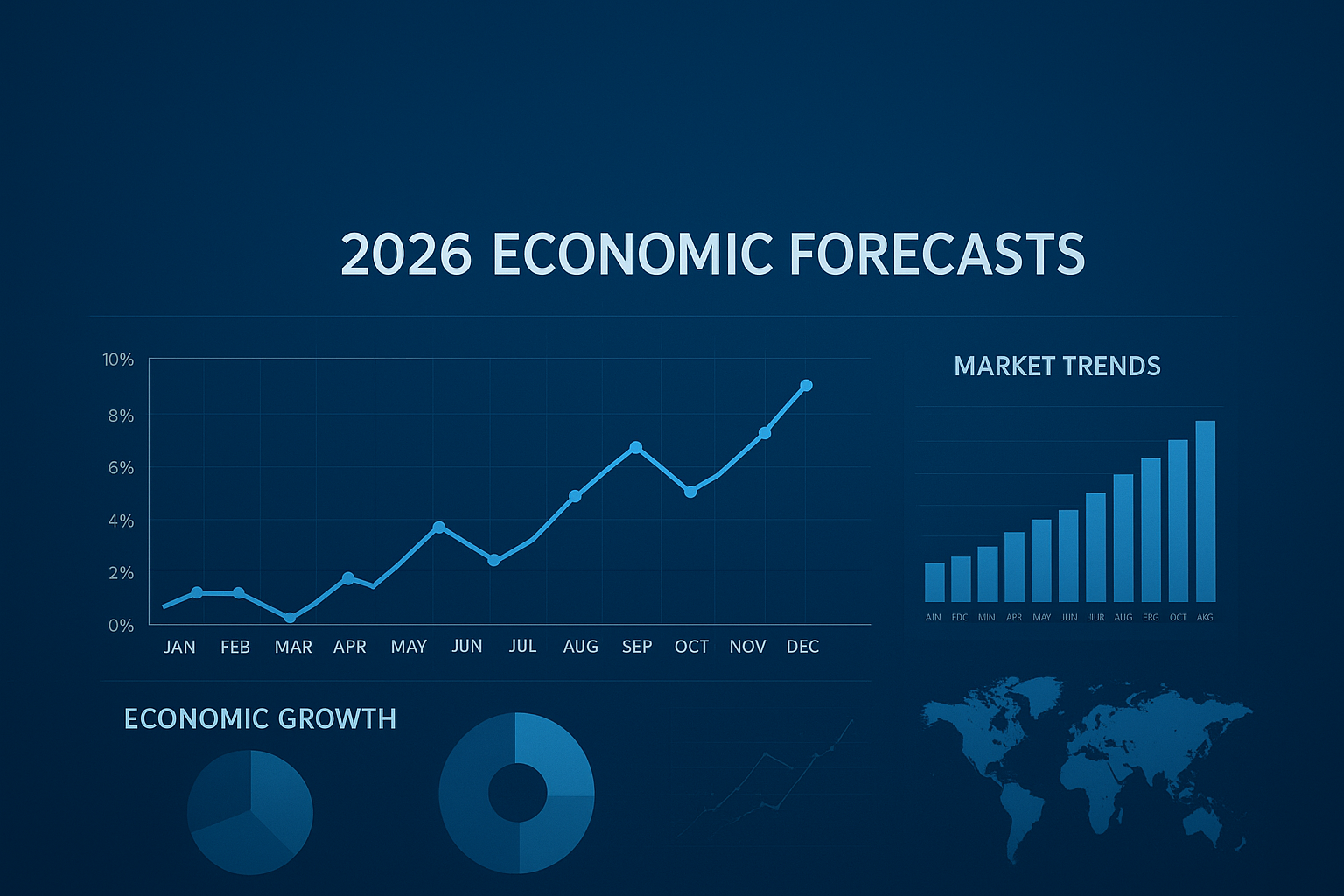
According to the IMF, global GDP growth is expected to slow to around 2.8% in 2026, driven by geopolitical tensions and tighter fiscal policies. Yet, sub-Saharan Africa is projected to grow by 4%, outpacing most advanced economies.
Why it matters: African economies are becoming more self-reliant, with trade integration under the African Continental Free Trade Area (AfCFTA) unlocking cross-border opportunities.
Tip: CEOs should explore regional partnerships and value-chain integration to tap into intra-African trade growth.
Quote: “Africa’s growth story is shifting from resource-driven to innovation-led.” — Akinwumi Adesina, President, African Development Bank
2. Inflation Will Ease, But Cost Pressures Stay Sticky
After years of high inflation, forecasts suggest gradual cooling—but not full relief. Energy, logistics, and wage costs are likely to remain elevated.
Stat: The World Bank projects South Africa’s inflation to average 4.5%–5% through 2026, near the upper target range of the SARB.
Tip: CEOs must continue prioritising cost optimisation through automation, local sourcing, and predictive analytics.
Example: Retailers like Shoprite are using supply chain digitisation to manage price volatility while maintaining consumer trust.
3. Technology Investment Will Define Market Leaders
By 2026, AI, data analytics, and automation will no longer be “nice-to-haves”—they’ll be core to competitiveness. Gestaldt reports that digital transformation leaders grow up to 2.5x faster than laggards.
Why it matters: The tech gap between forward-thinking firms and slow adopters will widen, especially in sectors like finance, logistics, and manufacturing.
Tip: CEOs should invest in data literacy across leadership teams, not just IT departments, to make technology a company-wide advantage.
Quote: “The next wave of digital transformation will reward companies that can turn data into decision-making power.” — Satya Nadella, Microsoft CEO
4. ESG and Sustainability Will Shape Capital Flows
The rise of the green economy continues to reshape investment priorities. By 2026, investors will favour companies that show measurable environmental and social impact.
Stat: Bloomberg Intelligence predicts global ESG assets will exceed $50 trillion by 2026.
Example: South African firms like Sasol and Nedbank are already pivoting toward greener strategies to align with sustainable finance frameworks.
Tip: CEOs should embed ESG into core strategy, not treat it as a compliance checkbox. Transparent reporting and climate resilience will attract long-term investors.
5. The Labour Market Is Changing—Talent Retention Is the New Currency
Automation and hybrid work models will transform how organisations operate. The World Economic Forum predicts that 60% of employees will need new skills by 2026.
Why it matters: Companies that fail to reskill and empower talent risk losing their best people to agile competitors.
Tip: Build a continuous learning culture—encourage upskilling, mentorship, and internal mobility to future-proof your workforce.
Quote: “The companies that win the talent race will be those that invest in people as deeply as they invest in technology.” — Arundhati Bhattacharya, Salesforce India CEO
6. Geopolitics and Trade Realignment Will Reshape Supply Chains
From the BRICS expansion to shifting global alliances, the next 18 months will test supply chain resilience.
Example: South Africa’s growing role in BRICS+ could open new trade routes with Middle Eastern and Asian markets—but also expose firms to geopolitical risks.
Tip: CEOs should diversify sourcing, strengthen risk management frameworks, and develop contingency plans for currency and logistics volatility.
Stat: Gestaldt reports that companies with diversified supply chains are 30% less likely to face production disruptions during global shocks.
Conclusion: The CEOs Who Thrive Will Be the Ones Who Anticipate
Preparing for 2026 isn’t about predicting every twist—it’s about building agility and foresight into your leadership DNA.
The next economic cycle will reward CEOs who act early: those who digitise intelligently, invest sustainably, empower people, and navigate uncertainty with clarity.
As the saying goes, “The best way to predict the future is to create it.” The time to start building that future is now.

Leadership Lessons from Africa’s Fastest-Growing Startups
Africa’s fastest-growing startups are redefining leadership. Learn key lessons from visionary founders who turn challenges into innovation and impact.

What do Africa’s fastest-growing startups have in common? It’s not just bold ideas or big funding—it’s the leaders steering them. From Lagos to Nairobi to Cape Town, visionary founders are rewriting the playbook for leadership in emerging markets.
Think of Africa’s startup ecosystem as a wildfire—rapid, unpredictable, and unstoppable. In the past decade, the continent has produced some of the world’s most dynamic ventures, from fintech powerhouses like Flutterwave and Chipper Cash to health-tech and agritech innovators.
But behind every successful startup is a leader who turns uncertainty into opportunity. This article explores the leadership lessons driving Africa’s entrepreneurial boom—insights that established executives and aspiring founders alike can apply to build resilient, high-growth organisations.
1. Lead with Purpose, Not Just Profit
African startups are proving that purpose fuels profit. Founders are solving real-world problems—access to finance, energy, and healthcare—while building sustainable businesses.
Take M-Pesa, for example. What started as a mobile payment solution for Kenya’s unbanked population is now a global model for financial inclusion.
Quote: “We didn’t set out to create a fintech revolution; we wanted to solve a problem.” — Nick Hughes, M-Pesa co-founder
Tip: Anchor your leadership around purpose. When teams believe in the “why,” they’ll push harder, innovate faster, and stay committed longer.
2. Adaptability Is the New Competitive Advantage
In Africa’s fast-changing markets, agility isn’t optional—it’s survival. Leaders who can pivot quickly and make data-informed decisions thrive even amid volatility.
During the pandemic, Nigerian edtech firm uLesson pivoted from in-person tutoring to a fully digital learning platform, doubling its user base within a year.
Statistic: According to Partech Africa, startups that adapted business models during crises grew 1.5x faster than those that didn’t.
Tip: Build adaptability into your company DNA—create flexible strategies, decentralised teams, and rapid feedback loops.
3. Empower Your Team and Trust Local Talent
African startup leaders understand that success is a team sport. The best founders hire smart, local talent who understand the nuances of their markets.
Flutterwave’s CEO, Olugbenga Agboola, attributes the company’s success to empowering employees to take ownership and make decisions.
Tip: Delegate authority, not just tasks. Give teams autonomy to solve problems, experiment, and lead from within. Empowered teams move faster and innovate more.
4. Build Resilience Through Resourcefulness
Limited resources don’t stop African founders—they spark creativity. Many successful startups thrive because leaders turn constraints into innovation.
For instance, Twiga Foods in Kenya built a tech-enabled supply chain to connect farmers directly with retailers, cutting waste and costs in a fragmented market.
Quote: “Africa teaches you to do more with less—and that’s the ultimate startup advantage.” — Peter Njonjo, Twiga Foods CEO
Tip: Encourage a culture of problem-solving and frugality. Constraints can drive your team to find smarter, more efficient solutions.

5. Prioritise Community and Collaboration
Unlike in some hyper-competitive markets, African startups often win by collaborating. Partnerships with governments, NGOs, and corporates create shared value and open doors to scale.
Yoco, a South African fintech company, built partnerships with local banks to bring digital payment solutions to small businesses, helping expand financial inclusion while growing its customer base.
Statistic: Ecosystem collaboration has helped African startups raise over $6.5 billion in 2022, a 55% increase from the previous year (Disrupt Africa).
Tip: Look beyond competition. Build alliances that amplify your reach, credibility, and impact.
6. Stay Customer-Centric—Always
African entrepreneurs know that customer empathy drives loyalty and innovation. Leaders who listen closely to their users adapt products faster and build lasting relationships.
Example: South Africa’s SweepSouth continually refines its home services app based on direct feedback from users and domestic workers—turning insights into better customer experiences.
Tip: Implement continuous feedback mechanisms—user surveys, social media monitoring, and in-app analytics—to keep customer needs at the heart of your growth strategy.
7. Scale with Vision, Not Chaos
Growth is thrilling—but without structure, it can unravel. Successful African startups scale by balancing entrepreneurial hustle with disciplined execution.
Andela, for instance, transformed from a talent-matching startup into a global tech network by refining its processes and leadership systems at every stage.
Tip: Build scalable frameworks early—clear communication channels, decision-making structures, and measurable goals. Vision without structure breeds burnout.
Conclusion: Redefining Leadership for a New Era
Africa’s fastest-growing startups are more than business success stories—they’re leadership case studies. Their founders show that purpose, adaptability, empowerment, and community aren’t buzzwords; they’re the foundations of sustainable growth.
As global investors increasingly turn their eyes toward Africa, one thing is clear: leadership, not luck, will define the continent’s next wave of innovation.
“The future of business leadership is being written in Africa—by those who dare to reimagine what’s possible.” - Thapelo Mahlangu, Gestaldt Consulting Group MD.

South Africa’s Green Economy: Opportunities for Growth
South Africa’s green economy offers vast potential for job creation, innovation, and sustainable growth. Discover how businesses can lead the green transition.

As the world races toward sustainability, South Africa stands at a crossroads. The question isn’t whether to go green—it’s how fast we can move. The green economy isn’t just about saving the planet; it’s about unlocking the next wave of growth, jobs, and innovation.
Think of South Africa’s economy as a garden that’s ready for renewal. For decades, growth has relied heavily on carbon-intensive industries. But as global markets shift toward sustainability, there’s fertile ground for new kinds of investment—clean energy, green manufacturing, and sustainable agriculture.
The green economy represents a trillion-rand opportunity for South Africa to reinvent itself. This article explores how businesses, investors, and policymakers can capitalise on the transition—turning environmental responsibility into long-term economic gain.
1. Defining South Africa’s Green Economy
The green economy refers to economic activities that result in improved human well-being and social equity, while significantly reducing environmental risks and ecological scarcities.
In South Africa, this means transitioning from fossil-fuel dependency to renewable energy sources, sustainable agriculture, green construction, and circular manufacturing systems.
According to the Department of Forestry, Fisheries and the Environment (DFFE), the green economy could create over 460,000 new jobs by 2030, particularly in renewable energy, waste management, and sustainable transport.
Tip: Businesses that align with national sustainability goals—like those in the Just Energy Transition Framework—will gain early-mover advantages and stronger investor confidence.
2. Renewable Energy: Powering the Transition
South Africa’s energy future is increasingly green. With load-shedding hampering productivity, renewable energy isn’t just ethical—it’s essential.
The country’s solar and wind potential is among the highest in the world. Initiatives like the Renewable Energy Independent Power Producer Procurement Programme (REIPPPP) are attracting billions in investment.
Quote: “Renewables aren’t the future—they’re the present,” says Pravin Gordhan, former South Africa’s Minister of Public Enterprises.
Tip: SMEs can explore solar-as-a-service models and energy efficiency projects to reduce costs and carbon footprints while gaining sustainability credentials.
3. Circular Economy: Waste as Wealth
The linear “take, make, dispose” model is out; circularity is in. South African companies are turning waste into opportunity—from recycled plastics in manufacturing to biogas energy projects.
The National Waste Management Strategy (NWMS) encourages businesses to adopt circular principles. This not only reduces landfill costs but opens new income streams through recycling and materials recovery.
Statistic: The circular economy could add R500 billion to Africa’s GDP by 2030 (World Bank).
Tip: Companies can start small—introducing product recycling, reuse initiatives, or waste audits to identify hidden efficiencies.
4. Sustainable Agriculture and Food Security
Agriculture is at the heart of South Africa’s economy, but it’s also vulnerable to climate change. Droughts, water scarcity, and soil degradation threaten long-term food security.
However, green innovations like precision farming, drip irrigation, and agroforestry are helping farmers increase yield while conserving resources.
Example: The Western Cape’s SmartAgri programme has supported hundreds of farmers in adopting climate-smart techniques, boosting both productivity and resilience.
Tip: Agribusinesses should invest in digital agriculture and sustainable supply chains to attract ESG-focused investors.

5. Green Finance and Investment Opportunities
Sustainability is no longer just an ethical checkbox—it’s a financial driver. The Johannesburg Stock Exchange (JSE) now lists green bonds and sustainability-linked instruments that fund renewable and eco-friendly projects.
Global investors are increasingly directing funds toward businesses that meet ESG (Environmental, Social, and Governance) criteria. For South African companies, this means better access to international capital and lower risk premiums.
Statistic: ESG-focused investments are projected to reach US$50 trillion globally by 2025 (Bloomberg Intelligence).
Tip: To attract green investors, ensure transparent sustainability reporting aligned with frameworks like GRI or TCFD.
6. Policy and Public-Private Collaboration
Government policy plays a crucial role in scaling the green economy. South Africa’s National Development Plan (NDP) 2030 highlights green growth as a pillar for inclusive prosperity.
Public-private partnerships (PPPs) have already proven effective in renewable energy, waste management, and water infrastructure. As collaboration grows, businesses can play an active role in co-developing green solutions that deliver both social and economic impact.
Quote: “A green economy is not a luxury—it’s the foundation for sustainable competitiveness,” says Barbara Creecy, former Minister of Environment.
Tip: Businesses should engage in multi-stakeholder platforms to stay ahead of regulatory changes and funding opportunities.
7. Building Skills for the Green Future
To fully unlock the green economy, South Africa needs a workforce ready to power it. Skills in renewable energy installation, environmental engineering, green design, and sustainable logistics are in growing demand.
Training initiatives like Green Skills SA and YES4Youth are bridging this gap, equipping young professionals with the expertise to thrive in a sustainability-driven economy.
Tip: Organisations should partner with educational institutions to design vocational training and re-skilling programmes tailored for green sectors.
Conclusion: Turning Sustainability into Strategy
The green economy isn’t a side project—it’s the next growth frontier for South Africa. By investing in renewable energy, circular systems, sustainable agriculture, and green finance, businesses can create jobs, attract capital, and future-proof their operations.
In the words of Ban Ki-moon, former UN Secretary-General:
“Saving our planet, lifting people out of poverty, advancing economic growth—these are one and the same fight.”
South Africa’s path to prosperity runs through sustainability. The time to act—and invest—is now.

The Power of Organisational Culture in Driving Performance
A strong organisational culture drives performance, engagement, and innovation. Discover how values, leadership, and trust shape business success.

You can have the sharpest strategy, the best tech, and the most talented people—but without the right culture, it all falls flat. Culture isn’t just a “nice-to-have”—it’s the invisible engine that drives performance, innovation, and growth.
Imagine your organisation as a living organism. The structure is the skeleton, strategy is the brain—but culture? That’s the heartbeat. It shapes how people behave, collaborate, and make decisions, even when no one’s watching.
In today’s fast-paced world, where change is constant, culture has become the ultimate differentiator. This article explores how a strong organisational culture fuels high performance—and how leaders can shape it intentionally rather than by accident.
1. Culture Defines “How Things Get Done”
Every organisation has a culture, whether it’s intentional or not. It’s reflected in daily habits, unspoken rules, and how teams respond to challenges.
According to Gestaldt, 95% of executives and 88% of employees believe a distinct workplace culture is crucial to business success.
A healthy culture aligns people with purpose—it ensures everyone rows in the same direction.
Tip: Audit your current culture by asking employees what behaviours are rewarded, ignored, or punished. Their answers will reveal your true culture—not the one written in your mission statement.
2. The Link Between Culture and Performance
Strong cultures don’t just make people feel good—they drive measurable results. Companies with healthy cultures see up to 4x higher revenue growth, according to Gestaldt.
When employees feel connected to their work, productivity, innovation, and retention all skyrocket.
Quote: “Culture eats strategy for breakfast.” – Peter Drucker
Tip: Make culture part of your performance metrics. Track engagement, retention, and collaboration just like financial KPIs.
3. Leadership: The Culture Carriers
Leaders are the custodians of culture. Their actions—more than their words—shape what’s normal and acceptable. When leaders embody company values, employees mirror that behaviour.
Gallup reports that 70% of the variance in team engagement is attributable to the manager. Leadership consistency, empathy, and transparency set the tone for the entire organisation.
Tip: Train leaders to coach, not command. The best cultures grow from empowerment, not control.

4. Communication Builds Connection
Open communication turns culture from abstract ideals into daily reality. Transparency builds trust, and trust builds performance.
Microsoft’s post-2020 transformation is a prime example—CEO Satya Nadella’s focus on empathy and open dialogue revived collaboration and innovation across the company.
Tip: Encourage two-way communication. Hold regular “culture conversations” where employees can share what’s working and what’s not.
5. Recognition Reinforces Values
What gets recognised gets repeated. Recognition doesn’t have to mean bonuses—it can be public praise, peer shoutouts, or growth opportunities.
A study by OC Tanner found that companies with strong recognition cultures have 31% lower turnover and 12x higher engagement.
Tip: Align recognition with your core values. Celebrate behaviour that reflects the culture you want to strengthen.
6. Adaptability: Keeping Culture Alive During Change
Culture isn’t static—it evolves with your organisation. As markets shift and teams grow, adaptability becomes key.
Spotify’s “squad” model shows how culture can scale without losing its essence. Their values—trust, autonomy, and innovation—remain intact even as they grow globally.
Tip: Revisit your cultural values annually. Make sure they still resonate with your mission and people.
Conclusion: Culture as the Competitive Edge
A thriving culture doesn’t just boost morale—it builds momentum. It turns employees into ambassadors, fuels innovation, and keeps organisations resilient in uncertain times.
Leaders who prioritise culture don’t just create workplaces—they create legacies.
As author Daniel Coyle writes in The Culture Code, “Culture is not something you are. It’s something you do.”
The real power of culture lies not in posters or slogans, but in everyday actions that inspire performance, loyalty, and shared success.

Innovation in Uncertain Times: Turning Constraints into Creativity
Uncertainty breeds innovation. Learn how organisations can turn constraints into creativity, build resilience, and thrive through economic and market turbulence.

When the world feels unpredictable, creativity often becomes our greatest currency. History shows that the boldest ideas don’t emerge in comfort—they’re born from constraint.
Think of uncertainty as a storm. While some freeze in fear, innovators learn to dance in the rain. Economic volatility, shifting markets, and technological disruptions can cripple unprepared organisations—but for the adaptable, these same pressures ignite ingenuity.
In this article, we explore how businesses can transform limitations into opportunities for innovation, drawing lessons from global leaders who turned adversity into advantage.
1. Rethinking the Role of Constraints
Constraints aren’t roadblocks—they’re springboards. Research from Harvard Business School reveals that companies facing resource limitations often outperform their peers in innovation because necessity drives focus and creativity.
Instead of lamenting what’s missing, high-performing teams ask, “What can we do with what we have?”
Tip: Challenge your team to create solutions under specific limits—time, budget, or materials. It fosters sharper thinking.
Quote: “Creativity loves constraints.” – Marissa Mayer, former Yahoo! CEO
2. Build a Culture That Rewards Experimentation
Fear of failure kills innovation faster than a recession ever could. When uncertainty rises, organisations often tighten control—but that’s when they should loosen it. Encourage experimentation and treat every setback as data, not defeat.
A Gestaldt study found that companies with strong innovation cultures are 3x more likely to outperform competitors during economic downturns.
Tip: Introduce “micro-innovation” challenges—small-scale experiments with low risk and quick feedback loops.
3. Leverage Technology as an Enabler, Not a Crutch
Digital tools are no longer optional—they’re the backbone of resilience. From AI to cloud collaboration, technology amplifies creativity by removing logistical barriers. But innovation happens when people, not platforms, drive change.
Example: South African SMEs using cloud-based collaboration tools have cut project turnaround times by 25% despite limited resources.
Tip: Use technology to simplify workflows and empower decision-making, not to overcomplicate processes.
4. Collaborate Beyond Boundaries
When times are tough, partnerships become powerful. Cross-sector collaboration allows organisations to pool resources, share risk, and tap into diverse perspectives.
A Gestaldt report found that 75% of breakthrough innovations emerge from collaboration between teams, industries, or external partners.
Tip: Build “innovation coalitions” with suppliers, clients, or even competitors to co-create new solutions.

5. Keep People at the Heart of Innovation
Behind every great idea is a motivated person. During uncertain times, employees crave purpose and stability. Empower them with autonomy, trust, and recognition, and innovation follows naturally.
Quote: “Innovation distinguishes between a leader and a follower.” – Steve Jobs
Tip: Host regular idea-sharing sessions and celebrate the best concepts—no matter how small.
6. Measure What Matters
In a crisis, vanity metrics don’t cut it. Innovation should tie back to business value—customer satisfaction, efficiency, and long-term growth. By tracking meaningful outcomes, you can ensure creativity delivers tangible results.
Tip: Establish KPIs that balance experimentation with accountability, such as “time to prototype” or “idea-to-implementation ratio.”
Conclusion: The Bright Side of Uncertainty
Uncertain times test more than strategy—they test spirit. The organisations that thrive aren’t necessarily the biggest or richest, but the most adaptive. Constraints push us to prioritise, to think differently, and to act boldly.
Innovation, at its core, isn’t about abundance—it’s about ingenuity. When leaders nurture creativity amid chaos, they transform challenges into catalysts for growth.
As Albert Einstein famously said, “In the middle of difficulty lies opportunity.”

A Practical Guide to Building High-Performance Teams
Build high-performance teams with purpose, trust, and clear communication. Learn practical habits that drive productivity, innovation, and loyalty.

Ever wonder why some teams seem unstoppable while others struggle to gain momentum? The secret isn’t magic—it’s method. High-performance teams aren’t born; they’re built through clarity, trust, and relentless focus.
Think of a high-performing team like a finely tuned orchestra—every member plays a unique role, but harmony only happens when everyone listens, collaborates, and adapts. In business, that harmony translates into innovation, speed, and results.
This guide unpacks the essential habits, structures, and leadership practices that transform ordinary groups into extraordinary teams—backed by research, strategy, and practical steps.
1. Define the Vision and Purpose — The North Star of Performance
A team without a clear purpose is like a ship without a compass. Harvard Business Review found that teams with a shared purpose are 42% more effective at achieving goals. A strong vision gives every member a reason to care, connect, and contribute.
Tip: Keep your purpose simple and memorable—something that unites your people beyond KPIs.
Quote: “When everyone understands the why, the how becomes easier.” – Simon Sinek
2. Hire for Culture, Not Just Skill
Talent is vital, but alignment is non-negotiable. Skills can be taught; shared values cannot. Google’s Project Aristotle revealed that psychological safety and shared norms matter more than technical ability in top-performing teams.
Tip: During hiring, look for curiosity, accountability, and collaboration—traits that sustain long-term team success.
3. Empower Through Trust and Autonomy
Micromanagement kills momentum. Give your team autonomy and watch innovation flourish. Studies by Gallup show that employees who feel trusted are 12% more productive and stay nine times longer with their employers.
Tip: Replace control with clarity—set outcomes, not methods.
4. Foster Open Communication and Feedback Loops
Communication is the glue of performance. Encourage honest dialogue and create systems where feedback flows both ways. Atlassian found that teams with regular feedback cycles outperform others by 25% in project success rates.
Tip: Make feedback a weekly ritual—short, specific, and focused on growth, not blame.

5. Recognise, Reward, and Celebrate Progress
Recognition fuels morale. Even small wins deserve attention. Gestaldt research shows that companies with strong recognition cultures see 32% lower turnover.
Tip: Celebrate milestones publicly. It reinforces commitment and shows that progress—no matter how small—matters.
6. Prioritise Continuous Learning and Adaptability
In an age of rapid change, learning agility separates good teams from great ones. Encourage upskilling, experimentation, and cross-functional collaboration.
Quote: “The only sustainable competitive advantage is an organisation’s ability to learn faster than the competition.” – Peter Senge
Tip: Allocate time each month for learning initiatives or skill-sharing sessions.
7. Lead by Example
Leaders set the tone. A leader who listens, learns, and lifts others creates a ripple effect across the organisation. Leadership consistency—especially in uncertain times—builds trust and emotional safety.
Tip: Be transparent about challenges and inclusive in problem-solving. Vulnerability, when authentic, inspires loyalty.
Conclusion: Building Teams That Thrive, Not Just Survive
High-performance teams aren’t a corporate myth—they’re the product of intentional design and daily discipline. When purpose aligns with trust, communication, and recognition, performance naturally follows.
Invest in your people, and they’ll invest in your mission. As the saying goes, “If you want to go fast, go alone. If you want to go far, go together.”

Global Economic Headwinds: How South African Businesses Can Stay Resilient
Discover how South African businesses can stay resilient amid global economic headwinds through agility, digital transformation, and smart financial strategy.

The global economy is facing turbulence once again—rising interest rates, supply chain disruptions, inflation, and geopolitical tensions are creating waves that reach every corner of the world. For South African businesses, these headwinds pose real challenges. Yet, with the right strategies, they also present opportunities for resilience and reinvention.
Think of the economy as a shifting ocean: while some ships struggle against the current, others adjust their sails and find new routes forward. South African leaders must now do the same—adapt, diversify, and innovate to weather uncertainty and thrive in changing conditions.
In this article, we’ll unpack the key global pressures impacting South Africa and explore actionable ways local businesses can stay resilient in 2025 and beyond.
1. Understand the Headwinds: Inflation, Rates & Global Demand
Global inflation remains sticky, with central banks keeping interest rates higher for longer. This environment raises costs and tightens liquidity for South African companies.
Pro tip: Reassess your pricing and cash flow strategies regularly. Focus on operational efficiency and negotiate flexible financing terms with lenders.
Stat: The IMF projects global growth at just 2.9% for 2025—below the long-term average.
2. Strengthen Local Supply Chains
Supply chain fragility continues to challenge businesses worldwide. South African firms that depend heavily on imports must localise and diversify their suppliers to avoid disruptions.
Example: Retailers sourcing regionally within Africa are reducing costs and ensuring faster turnaround times.
Quote: “Don’t put all your eggs in one supply chain basket.” – Warren Buffett.
3. Embrace Digital Transformation
Technology remains one of the strongest shields against economic uncertainty. Automation, data analytics, and AI-driven insights can streamline operations and improve customer experience.
Pro tip: Invest in digital tools that enhance decision-making and build resilience—especially cloud-based systems and predictive analytics.
4. Focus on Customer Retention Over Expansion
In tough times, loyalty pays off. Instead of chasing new markets, focus on deepening relationships with existing customers. Consistent communication, reliability, and value-added services build long-term trust.
Stat: Gestaldt reports that increasing customer retention by 6% can boost profits by up to 97%.

5. Build Financial Agility
Resilient businesses are financially flexible. Keep debt levels manageable, maintain liquidity buffers, and review financial models under different scenarios.
Pro tip: Use scenario planning to stress-test your financial assumptions under different market conditions.
6. Prioritise Talent and Culture
Economic headwinds often lead to cost-cutting, but organisations that invest in people during downturns emerge stronger. Empower teams, maintain transparent communication, and reward innovation.
Insight: According to Gestaldt, purpose-led and engaged workforces recover faster during crises.
7. Leverage Regional Opportunities
South Africa’s proximity to growing African markets presents a unique resilience opportunity. The African Continental Free Trade Area (AfCFTA) opens access to over 1.3 billion consumers and promotes intra-African trade.
Pro tip: Expand regionally through strategic partnerships or export-focused initiatives.
Conclusion: Turning Headwinds into Tailwinds
The global economy’s unpredictability isn’t going away, but resilient South African businesses can adapt and thrive. By focusing on agility, digital transformation, financial discipline, and a strong organisational culture, leaders can navigate uncertainty with confidence.
Resilience isn’t about avoiding the storm—it’s about learning to sail better through it. The businesses that embrace this mindset will not only survive global headwinds but use them to propel forward into a more competitive, future-ready South Africa.

Why Purpose-Driven Organisations Outperform Their Peers
Discover why purpose-driven organisations attract talent, inspire customers, and deliver stronger financial results compared to profit-only peers.

In today’s competitive marketplace, companies can no longer thrive by focusing solely on profits. Employees, customers, and investors are increasingly drawn to organisations with a clear sense of purpose—one that goes beyond financial returns to create real impact in society.
Think of purpose as a company’s North Star: it provides direction, builds trust, and inspires action. Businesses that embrace purpose not only attract loyal customers and top talent but also consistently outperform peers that remain solely profit-driven.
In this article, we’ll explore why purpose-driven organisations are winning and how leaders can harness purpose as a powerful business strategy.
1. Purpose Builds Stronger Employee Engagement
When employees feel connected to a greater mission, their commitment skyrockets. Purpose fosters belonging and boosts morale, leading to higher productivity.
Stat: Gallup reports that highly engaged teams show 21% greater profitability.
Pro tip: Regularly communicate how employees’ work contributes to the organisation’s broader mission.
2. Customers Choose Brands That Stand for Something
Today’s consumers want more than just products; they want values. Brands that demonstrate authenticity and social impact earn deeper trust and loyalty.
Insight: Gestaldt found that 63% of global consumers want companies to take a stand on sustainability and transparency.
3. Purpose Attracts and Retains Top Talent
Millennials and Gen Z especially prioritise working for companies with a meaningful mission. Purpose-driven organisations can compete with larger firms for talent by offering meaningful work rather than just higher pay.
Quote: “People don’t buy what you do; they buy why you do it.” – Simon Sinek.

4. Purpose Drives Innovation
When organisations align with a mission, innovation often flourishes. Teams are motivated to create solutions that solve real-world challenges, not just maximise profit.
Example: African fintech start-ups addressing financial inclusion are thriving because they combine purpose with innovation.
5. Investors Reward Purpose-Driven Growth
Environmental, Social, and Governance (ESG) metrics are becoming critical for investors. Companies with a strong purpose are perceived as more resilient and forward-looking.
Stat: Harvard Business Review found that purpose-driven firms see 10–15% higher growth rates compared to peers.
Conclusion: Purpose as a Competitive Advantage
Purpose is more than a buzzword—it’s a proven growth engine. Organisations that lead with purpose build trust, spark innovation, and inspire loyalty from employees, customers, and investors alike.
In a business environment defined by uncertainty, purpose provides clarity. It is the compass that helps companies outperform competitors and create lasting value.
For leaders ready to future-proof their organisations, the path forward is clear: embrace purpose, and watch performance follow.

Decoding South Africa’s Policy Shifts: What Executives Need to Know
South Africa’s shifting policies are reshaping business. Learn what executives must know to stay ahead on energy, trade, labour, and innovation.

South Africa’s economic and political landscape is never static—it’s a shifting tide shaped by new policies, global market pressures, and domestic realities. For executives, keeping pace with these changes isn’t just smart—it’s survival. Policy shifts can reshape industries overnight, impact profitability, and open new growth opportunities.
Think of it as navigating a river: policies change the current, and executives who fail to adapt risk being swept off course. In this article, we’ll decode South Africa’s latest policy trends and outline what leaders need to know to steer their organisations with confidence.
1. Economic Policy Adjustments: The Balancing Act
South Africa continues to juggle fiscal consolidation with the need to stimulate growth. Policy updates on taxation, investment incentives, and state spending can directly affect corporate planning.
Pro tip: Executives should stress-test budgets against potential tax reforms and shifting government incentives.
2. Energy Transition & Climate Commitments
The country’s shift toward renewable energy and commitments under global climate agreements are reshaping industries from mining to manufacturing. Load shedding challenges persist, but new policy incentives for green energy investment are on the rise.
Stat: South Africa aims to add more than 6 GW of renewable energy capacity by 2030.
Quote: “Sustainability is no longer about doing less harm. It’s about doing more good.” – Jochen Zeitz.
3. Labour Market & Skills Development Policies
Skills shortages and labour regulations remain top-of-mind for executives. Recent policies emphasise upskilling, youth employment, and transformation in the workforce.
Pro tip: Align HR strategies with government training programmes to access incentives while building a future-ready workforce.

4. Trade & Investment Climate
Trade agreements and regional integration initiatives like the African Continental Free Trade Area (AfCFTA) are shifting the playing field. Executives need to assess how tariff changes and cross-border collaboration affect their supply chains.
Example: Companies tapping into AfCFTA markets gain access to over 1.3 billion consumers.
5. Digital Economy & Innovation Policy
South Africa is rolling out frameworks for digital infrastructure, fintech regulation, and data protection. Executives should view these not as hurdles but as opportunities to innovate responsibly.
Pro tip: Ensure compliance with the Protection of Personal Information Act (POPIA) while exploring new digital revenue streams.
6. Governance, Transparency & SOE Reform
Reforms in state-owned enterprises (SOEs) like Eskom and Transnet remain a critical focus area. Policy outcomes here have wide-reaching effects on logistics, energy, and investor confidence.
Insight: Executives should track reform progress closely to anticipate operational disruptions and opportunities.
Conclusion: Navigating Policy for Competitive Advantage
For executives in South Africa, policy isn’t background noise—it’s a compass. Whether it’s energy reform, digital regulation, or fiscal policy, every shift carries implications. By staying proactive, aligning corporate strategies with evolving frameworks, and engaging with policymakers, businesses can turn uncertainty into competitive advantage.
The message is clear: decode the policies, anticipate the shifts, and lead with foresight.

10 Ways SMEs Can Compete with Giants in 2025
Discover 10 practical strategies SMEs can use in 2025 to compete with large corporations through agility, innovation, and customer-centric growth.

The business landscape in 2025 is fierce, with multinational corporations holding deep pockets and vast resources. But here’s the good news—small and medium-sized enterprises (SMEs) don’t have to sit on the sidelines. Agility, innovation, and a people-first approach can help SMEs punch well above their weight.
Think of David versus Goliath: size matters, but strategy wins the battle. This article explores ten powerful ways SMEs can outsmart the giants and carve out a competitive edge.
1. Leverage Agility as a Superpower
Unlike large corporations weighed down by bureaucracy, SMEs can pivot quickly. In 2025, speed in decision-making and execution is a crucial differentiator.
Pro tip: Regularly review market shifts and be ready to adjust your offerings faster than big players.
2. Double Down on Customer Experience
Customers today want personalisation, not a one-size-fits-all approach. SMEs can deliver tailored service that giants struggle to replicate.
Stat: According to Gestaldt Marketing Consultants, 74% of consumers say customer experience is a key factor in their purchasing decisions.
3. Embrace Niche Markets
Rather than competing everywhere, SMEs can thrive by dominating a specialised niche. Focus on solving unique problems for a specific audience.
Example: African fintech start-ups are winning by targeting underbanked communities overlooked by traditional banks.
4. Harness Technology & AI Tools
Affordable AI platforms in 2025 allow SMEs to automate customer service, analyse data, and even predict trends. Giants have scale, but SMEs have speed in adopting tech.
Pro tip: Start small with AI-driven chatbots or predictive analytics to streamline operations.
5. Build Strategic Partnerships
SMEs can expand reach by collaborating with other businesses, start-ups, or even larger firms. Partnerships reduce costs and open new markets.

6. Leverage Digital Marketing Smartly
Digital channels level the playing field. SMEs can use hyper-targeted campaigns, influencer collaborations, and social media storytelling to attract loyal customers.
Stat: HubSpot reports that companies using blogs see 55% more website visitors than those that don’t.
7. Attract & Retain Top Talent with Culture
Giants can offer bigger salaries, but SMEs can attract talent with flexibility, growth opportunities, and purpose-driven work.
Quote: “Culture eats strategy for breakfast.” – Peter Drucker.
8. Prioritise Sustainability
Consumers increasingly choose brands that align with their values. SMEs can integrate eco-friendly practices faster than larger competitors burdened by legacy systems.
9. Be Financially Lean and Creative
SMEs must embrace lean models, reducing waste and focusing on high-ROI activities. Creative financing options like crowdfunding are also more accessible in 2025.
10. Tell an Authentic Story
People buy into people. SMEs can connect through authenticity, something giants often lose in corporate layers. Storytelling builds trust, brand loyalty, and emotional connection.
Conclusion: Competing on Your Own Terms
In 2025, SMEs don’t need to outspend or outmuscle the giants. By leveraging agility, authenticity, technology, and customer-centric strategies, they can not only compete but win. The playing field may not be equal, but the opportunities are real for businesses bold enough to seize them.

Unlocking Shared Value: Lessons from Leading African Companies
Leading African companies show how shared value strategies drive growth while empowering communities. Learn key lessons for lasting success.

In today’s competitive landscape, companies can no longer measure success purely in profit margins. Across Africa, leading businesses are proving that the path to sustainable growth lies in creating shared value—business strategies that deliver economic returns while solving pressing social and environmental challenges.
Think of it as planting a tree: while the company enjoys the fruits, communities benefit from the shade, oxygen, and fertile soil it creates. In this article, we’ll explore how African companies are unlocking shared value, the lessons we can learn from their journeys, and how your business can follow suit.
1. Redefining Profit: Why Shared Value Matters
For too long, corporate success was defined by shareholder returns alone. But in Africa, where social challenges and growth opportunities are deeply intertwined, businesses are realising that creating solutions for communities also drives profitability.
💡 Tip: Align your corporate strategy with national development priorities and the UN Sustainable Development Goals. According to Harvard Business School, companies with shared value strategies see innovation rates rise by up to 30%.
“The business of business should not just be about money, it should be about responsibility. It should be about public good.” – Strive Masiyiwa
2. MTN: Connecting Growth with Inclusion
Telecom giant MTN has invested heavily in expanding mobile and internet access across Africa, bridging the digital divide. Beyond connectivity, its mobile money platforms empower millions of unbanked individuals with financial inclusion.
💡 Lesson: Shared value thrives when companies identify systemic barriers—like access to finance—and turn them into opportunities for growth.
3. Safaricom: Building Prosperity Through M-Pesa
Safaricom’s M-Pesa revolutionised mobile payments in Kenya, lifting households out of poverty by enabling secure transactions and small business growth. A World Bank study found that M-Pesa helped reduce extreme poverty in Kenya by 2%.
💡 Lesson: Innovating with purpose creates lasting economic and social impact while strengthening customer loyalty.
4. Dangote Group: Investing in Communities
As one of Africa’s largest conglomerates, Dangote Group links industrial growth with community development. From building schools and hospitals to supporting local farmers, it demonstrates how large-scale business can directly improve livelihoods.
💡 Lesson: Embedding corporate social investment into core business operations magnifies impact and builds trust.
5. Standard Bank: Financing a Sustainable Future
Standard Bank is actively funding renewable energy and green infrastructure projects across the continent. This not only supports Africa’s transition to cleaner energy but also creates long-term economic resilience.
💡 Lesson: Shared value can emerge from financing solutions that balance profitability with long-term sustainability.
6. How Your Business Can Unlock Shared Value
The examples above show that shared value isn’t limited to multinationals. Even small and medium-sized enterprises can create impact by aligning business goals with social needs.
💡 Tip: Start by asking: Where do our business strengths intersect with community challenges? Whether it’s skills training, supply chain localisation, or green innovation, there’s always a path to shared value.

Conclusion: Profit with Purpose
Leading African companies are showing the world that profitability and social impact aren’t mutually exclusive—they are deeply connected. By embedding shared value into core strategy, businesses can achieve sustainable growth while empowering the communities they serve.
The future of African business lies in this balance: creating wealth, building trust, and leaving a legacy that uplifts generations.

How to Keep Employees Engaged in Times of Economic Uncertainty
Discover five proven strategies to keep employees engaged during economic uncertainty, from clear communication to growth opportunities.

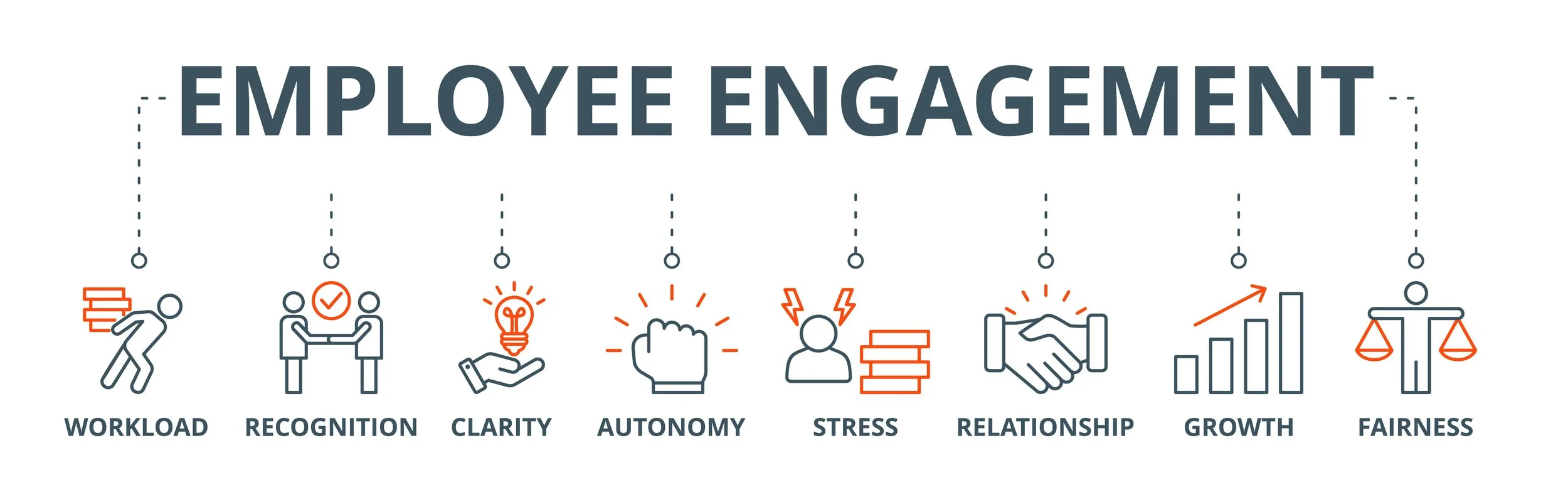
When the economy wobbles, so does employee confidence. Job security fears, tighter budgets, and shifting priorities can all dampen morale. Yet, history shows that companies investing in employee engagement during turbulent times not only weather the storm but often emerge stronger.
Think of employee engagement like the anchor of a ship. Even in rough waters, it steadies the organisation, keeping talent focused, motivated, and committed to the journey ahead. In this article, we’ll explore practical ways to keep employees engaged when uncertainty is at its peak.
1. Communicate with Clarity and Consistency
Silence breeds fear. When leaders fail to communicate, employees often assume the worst. Regular, transparent updates help employees feel informed and valued—even if the news isn’t always positive.
💡 Tip: Hold weekly check-ins, publish internal newsletters, or use digital platforms to keep teams updated. A Gestaldt Business Review study found that 75% of employees feel more engaged when leadership communicates openly during crises.
“In times of turbulence, the biggest danger is not the turbulence—it’s to act with yesterday’s logic.” – Peter Drucker
2. Prioritise Employee Wellbeing
Stress and burnout escalate when uncertainty rises. Companies that proactively support employee wellbeing—mental, physical, and financial—strengthen loyalty and resilience.
💡 Tip: Introduce wellbeing initiatives like virtual wellness sessions, flexible work policies, or access to counselling. According to Gallup, employees who feel cared for are 69% less likely to actively seek another job.
3. Empower Through Involvement
When employees feel powerless, disengagement grows. By involving teams in problem-solving and decision-making, leaders build trust and ownership.
💡 Tip: Create cross-functional task forces or hold brainstorming sessions where employees can contribute ideas. Research from Gestaldt shows that companies with highly inclusive cultures are twice as likely to meet or exceed financial targets.
4. Recognise and Celebrate Small Wins
During tough times, big milestones may feel scarce. Recognising everyday contributions can keep morale high and reinforce a sense of progress.
💡 Tip: Implement peer-to-peer recognition programs or highlight achievements in team meetings. A Workhuman study revealed that regular recognition leads to a 31% increase in employee engagement.
5. Offer Growth Opportunities Despite Constraints
Even with limited budgets, employees still value learning and development. Career growth signals that the organisation sees a future beyond the crisis.
💡 Tip: Provide access to online courses, mentorship, or job rotations. LinkedIn’s Workplace Learning Report shows that 94% of employees would stay longer at a company that invests in their career development.
Conclusion: Turning Crisis Into Commitment
Economic uncertainty doesn’t have to mean disengaged employees. By focusing on communication, wellbeing, empowerment, recognition, and growth, organisations can transform uncertainty into opportunity. Engaged employees become advocates, problem-solvers, and the driving force behind long-term resilience.
In challenging times, remember: it’s not just about surviving—it’s about keeping your people inspired to thrive.

The Future of State-Owned Enterprises: Reform or Reinvention?
State-owned enterprises stand at a crossroads. Explore whether reform or reinvention is the key to unlocking efficiency, growth, and public trust.

State-owned enterprises (SOEs) are often described as the backbone of a nation’s economy, but in many countries, their pulse is irregular. Burdened with inefficiencies, corruption scandals, and mounting debt, SOEs stand at a crossroads: should they be reformed within their current structures, or does the future call for full reinvention? For governments, businesses, and citizens alike, the answer carries high stakes.
In this article, we’ll unpack the current state of SOEs, explore global case studies of reform and reinvention, weigh the pros and cons of each path, and outline what the future could look like. By the end, you’ll have a clear sense of the opportunities and risks tied to SOE transformation.
1. The Current Reality of SOEs
SOEs play a critical role in sectors like energy, transport, and finance. Yet, many are underperforming, becoming fiscal burdens rather than growth drivers. Mismanagement, political interference, and lack of accountability often plague them.
Stat: In South Africa, SOEs such as Eskom and Transnet together account for over R1 trillion in government guarantees, straining public finances.
Quote: “SOEs were designed to be strategic assets, but too many have become liabilities.” – Economist at the World Bank
Tip for leaders: Understand the health of SOEs in your industry, as their performance can directly impact supply chains, infrastructure, and investment.
2. Reform: Fixing the Foundations
Reform means repairing the existing structure of SOEs without fundamentally changing their role. This can include better governance, improved oversight, and stronger financial controls.
Case example: Singapore’s Temasek Holdings shows how effective governance and transparency can turn SOEs into globally competitive companies.
Stat: Countries that implemented SOE reforms saw productivity gains of up to 15% within a decade (OECD).
Practical tip: Governments considering reform should prioritise professionalising boards, separating politics from operations, and enhancing accountability.
3. Reinvention: Redefining the Role of SOEs
Reinvention goes beyond tweaks – it reimagines the role of SOEs in the economy. This could mean partial privatisation, public-private partnerships (PPPs), or transitioning SOEs into entirely new models.
Case example: Brazil’s Embraer shifted from being a state-owned enterprise to a privatised aerospace leader, now competing globally.
Quote: “Reinvention requires courage. It’s about asking whether the state should be doing this at all.” – Former UK Treasury Official
Tip for policymakers: Reinvention works best when SOEs operate in competitive markets where private players can drive innovation and efficiency.
4. Risks and Challenges on Both Paths
Neither reform nor reinvention is a silver bullet. Reform may fail if political will is lacking, while reinvention risks social backlash if jobs and public access are disrupted.
Stat: The African Development Bank notes that over 60% of SOE reform efforts stall due to political resistance or lack of capacity.
Practical tip for businesses: Stay agile by scenario-planning. Anticipate how SOE reform or reinvention could impact pricing, supply, and regulation in your sector.
5. The Future Outlook: Hybrid Models
The likely future of SOEs lies in hybrid approaches – blending reform and reinvention. Governments may retain strategic control while opening space for private investment and innovation.
Case example: Ethiopia’s decision to partially privatise its telecom giant Ethio Telecom illustrates how governments can unlock capital while keeping oversight.
Quote: “The future of SOEs is not about choosing between reform or reinvention, but about designing models fit for purpose.” – IMF Policy Paper
Tip for leaders: Advocate for public-private collaboration that balances accountability with innovation.
Conclusion: Reform or Reinvention?
The debate over SOEs isn’t just academic – it’s about economic resilience, fiscal health, and national competitiveness. Some SOEs will benefit from reform, others will require reinvention, and many will follow a hybrid path. What matters most is building governance, transparency, and accountability into whatever model emerges.
For businesses, this means staying alert to shifts in policy, anticipating ripple effects, and seeking opportunities to collaborate in reshaping critical industries. The future of SOEs won’t be defined by reform or reinvention alone, but by the willingness to adapt boldly to a changing economic landscape.

5 Practical Leadership Habits That Boost Organisational Value
Discover 5 leadership habits that build trust, empower teams, and drive sustainable organisational value in today’s fast-changing business world.

Great leadership isn’t just about big-picture vision – it’s also about the small, consistent habits that create lasting impact. Just like compound interest, these daily actions add up over time, driving team performance, shaping culture, and ultimately boosting organisational value. In today’s fast-changing business environment, leaders who cultivate the right habits can transform challenges into opportunities and ensure sustainable success.
In this article, we’ll explore five practical leadership habits that strengthen both people and performance. Each habit is actionable, rooted in research, and designed to help leaders add measurable value to their organisations.
1. Practicing Transparent Communication
Clear, honest communication builds trust – the foundation of any high-performing organisation. When leaders openly share goals, challenges, and progress, they reduce uncertainty and foster alignment.
Stat: A Gallup study shows that organisations with open communication are 3.5 times more likely to engage employees effectively.
Quote: “Transparency fosters trust, and trust is the foundation of great teamwork.” – Joel Gascoigne, CEO of Buffer
Practical tip: Hold regular town halls or team updates where employees can ask questions and share feedback. Consistency is more valuable than perfection.
2. Leading by Example
Leaders set the tone. Teams mirror what they see. Demonstrating accountability, resilience, and ethical behaviour signals to employees what’s expected and valued.
Stat: Research from Gestaldt found that 83% of employees are more likely to trust leaders who “walk the talk.”
Practical tip: Align actions with stated values. If innovation is a priority, leaders should actively participate in brainstorming and risk-taking efforts.
3. Empowering Decision-Making at All Levels
Micromanagement stifles creativity, while empowerment fosters ownership. Leaders who delegate authority enable employees to contribute meaningfully and unlock untapped potential.
Stat: Companies that empower employees show 23% greater profitability (Gestaldt).
Quote: “The best executive has enough sense to pick good men to do what he wants done, and self-restraint to keep from meddling with them while they do it.” – Theodore Roosevelt
Practical tip: Establish clear decision-making frameworks so employees know their boundaries but also their freedoms.

4. Investing in Continuous Learning
In a rapidly changing economy, the organisations that thrive are those that learn fastest. Leaders who promote and model continuous learning create a culture of adaptability.
Stat: LinkedIn’s Workplace Learning Report found that 94% of employees would stay longer at a company that invests in their career development.
Practical tip: Create cross-training opportunities and encourage mentorship programmes to spread knowledge and build resilience.
5. Recognising and Rewarding Contributions
Recognition is a low-cost, high-impact leadership habit. When employees feel valued, they are more engaged, motivated, and loyal.
Stat: According to Gestaldt Management Consultants, 78% of employees quit their jobs because of a lack of appreciation.
Quote: “People work for money but go the extra mile for recognition, praise, and trust.” – Dale Carnegie
Practical tip: Develop a recognition system that highlights both individual achievements and team efforts, from small wins to big milestones.
Conclusion: Leadership Habits That Compound Value
Great leadership isn’t about one-off acts of brilliance – it’s about small, deliberate habits practiced consistently. Transparent communication, leading by example, empowering teams, investing in learning, and recognising contributions are habits that compound over time, building trust, resilience, and value. Leaders who embrace these practices won’t just guide their teams – they’ll elevate their organisations.

South Africa’s Economic Pulse: What Q3 Means for Businesses
South Africa’s Q3 economy shows both growth and risk. Discover which sectors are thriving, which are under pressure, and how businesses can adapt.

The economy is like a heartbeat – when it speeds up, we feel the rush; when it slows, everything around it reacts. South Africa’s Q3 economic performance sends strong signals about where opportunities and risks lie for businesses. For leaders and entrepreneurs, understanding these shifts isn’t just about staying informed – it’s about positioning for survival and growth.
In this article, we’ll break down South Africa’s economic performance in Q3, explore the sectors driving momentum, highlight risks lurking in the background, and share practical strategies for businesses to adapt. By the end, you’ll have a clear roadmap to navigate the challenges and tap into growth pockets.
1. Q3 at a Glance: Growth Signs and Red Flags
South Africa’s economy showed mixed signals in Q3. On one hand, certain industries gained traction, while on the other, lingering structural challenges dampened momentum. GDP growth remained modest, underscoring both resilience and vulnerability.
Key stat: According to Stats SA, GDP edged up by around 0.6% quarter-on-quarter, driven mainly by finance, mining, and trade, while sectors like manufacturing and construction lagged.
Quote: "South Africa’s economy continues to reflect a push-and-pull dynamic, with global headwinds and domestic constraints shaping performance." – Economist at Nedbank
Tip for businesses: Keep an eye on sector-specific data rather than broad GDP figures – growth opportunities often hide in niche markets.
2. Winners of the Quarter: Sectors Driving Momentum
Certain industries pulled ahead in Q3, offering clues about where opportunities may lie:
Finance & Business Services: Strong demand for digital banking and insurance products.
Mining: Rising global commodity prices boosted exports.
Trade & Tourism: Increased consumer activity and tourism recovery contributed positively.
Practical insight: Businesses in or connected to these sectors should leverage partnerships, expand offerings, or invest in efficiency tools to ride the growth wave.
Stat: Tourism arrivals rose by nearly 20% year-on-year, providing a boon for hospitality and retail.
3. Sectors Under Pressure: Where Risks Remain
Not all industries shared in the momentum. Manufacturing, construction, and agriculture faced persistent challenges.
Manufacturing: Power outages and supply chain bottlenecks restricted growth.
Construction: Weak demand for new projects slowed activity.
Agriculture: Drought conditions and input cost pressures hit production.
Quote: "Load shedding remains the single biggest constraint on South Africa’s manufacturing competitiveness." – Business Leadership SA
Tip for businesses: Diversify operations where possible and invest in energy resilience – solar, backup generators, or efficiency upgrades.

4. Inflation, Rates, and Consumer Behaviour
The cost-of-living crisis continued to bite in Q3, with inflation hovering above 5%. Higher borrowing costs also dampened consumer and business spending.
Stat: South Africa’s repo rate stood at 8.25%, the highest in over a decade.
Consumers tightened their belts, prioritising essentials over discretionary spending. Retailers felt the pinch, though discount brands and value-focused offerings gained traction.
Tip for businesses: Reframe pricing strategies, emphasise value, and adopt flexible payment models to attract cautious consumers.
5. Policy Moves and Global Pressures
Government interventions and global factors also shaped Q3 dynamics. Ongoing fiscal consolidation efforts, public sector wage negotiations, and global oil price volatility all fed into business planning.
Quote: "The interplay between domestic reforms and global uncertainty will determine South Africa’s medium-term outlook." – IMF regional report
Tip for businesses: Build flexibility into budgets and scenario-plan around currency swings, interest rates, and global demand shifts.
6. What Q3 Signals for Q4 and Beyond
Looking forward, businesses should prepare for continued volatility. While opportunities exist in tourism, digital finance, and mining, risks from energy insecurity, inflation, and global uncertainty remain.
Action points for businesses:
Double down on efficiency and resilience investments.
Explore regional and global export markets.
Strengthen risk management and financial planning.
Final thought: South Africa’s Q3 economy is a reminder that turbulence and opportunity often come hand in hand. Businesses that stay agile, informed, and innovative can not only weather the storm but also chart new growth paths.
Conclusion: Turning Insights into Action South Africa’s Q3 results provide a mixed bag – modest growth, resilient sectors, and persistent risks. For businesses, the lesson is clear: don’t wait for the economy to stabilise; instead, adapt proactively. By focusing on resilience, leveraging sector-specific opportunities, and staying alert to global and local trends, companies can find stability and success in uncertain times.

Embracing Data-Driven Decision Making: Unlocking Business Success
Data has become the new currency of business success, but collecting it isn’t enough — the real power lies in making smarter choices through data-driven decision making. From reducing risks and uncovering opportunities to boosting efficiency and innovation, this approach empowers organisations to stay ahead in a competitive market. Discover the benefits, challenges, tools, and real-world examples of companies thriving with data, and learn how to build a culture that turns insights into lasting growth.

In today’s information age, data has become the new currency of business success. From customer behaviour to shifting market trends, every data point holds the potential to guide smarter, faster, and more profitable decisions. Companies that embrace data-driven decision making (DDDM) are not just keeping up with change — they’re shaping the future.
Just like a compass guides sailors through rough seas, data helps leaders navigate uncertainty, reduce risks, and discover hidden opportunities. This article explores the importance of data-driven decision making, its benefits, challenges, real-world applications, and how your business can cultivate a data-first culture for long-term growth.
Why Data-Driven Decision Making Matters
Gut feelings and guesswork are no longer enough in today’s hyper-competitive market. Data-driven decision making empowers organisations to act on evidence rather than assumptions. Research by Gestaldt shows that companies using analytics are 5x more likely to make faster decisions than competitors who don’t.
When leaders ground their choices in data, they:
Anticipate market shifts before competitors
Understand customers on a deeper level
Improve operational efficiency
Drive sustainable growth
📌 As Andrew McAfee of MIT puts it: “The world is one big data problem.”
What Is Data-Driven Decision Making?
At its core, data-driven decision making is the practice of collecting, analysing, and applying insights from data to inform business strategies. It’s not about drowning in numbers — it’s about finding the signals in the noise.
The process typically follows these steps:
Identify the business problem or opportunity
Define the relevant data sources
Collect and clean the data
Analyse patterns and insights
Make evidence-based decisions
Monitor outcomes and refine
This structured approach ensures businesses stay aligned with their goals while adapting quickly to change.
Key Benefits of Data-Driven Decision Making
When implemented effectively, DDDM delivers measurable advantages:
Reduced risk: Decisions based on factual data lower the chance of costly mistakes.
Increased innovation: Data reveals unmet customer needs and market gaps.
Greater efficiency: Analytics streamline workflows, saving time and money.
Competitive advantage: According to Gestaldt, data-driven organisations are 23x more likely to acquire customers and 19x more likely to be profitable.
👉 Tip: Start small by applying data insights to one critical decision, then scale across the organisation.
Common Challenges to Overcome
Despite its promise, building a data-driven organisation isn’t without hurdles. Some of the most common barriers include:
Poor data quality or inaccessible data silos
Lack of data literacy among employees
Resistance to changing traditional decision-making habits
Insufficient investment in infrastructure and tools
Overcoming these requires strong data governance, leadership buy-in, and continuous training to build confidence across teams.

Steps to Implement Data-Driven Decision Making
To successfully integrate DDDM into your business, follow a structured roadmap:
Define a data strategy aligned with business goals
Audit your data landscape to identify gaps and opportunities
Invest in technology such as BI tools (Power BI, Tableau) and predictive analytics
Establish governance practices to ensure data accuracy and security
Build a data-first culture through training and leadership role-modelling
Measure, learn, and improve by tracking outcomes and iterating
Tools and Technologies Powering Data-Driven Insights
Modern businesses rely on advanced technologies to transform raw data into actionable insights:
Data warehouses for centralised storage
Business Intelligence (BI) platforms for visualisation
Predictive analytics powered by AI and machine learning
Real-time streaming analytics for fast decision-making
Natural Language Processing (NLP) to analyse unstructured feedback
📌 Ginni Rometty, former IBM CEO, said it best: “The only way you survive is you continuously transform into something else. It’s this idea of continuous transformation that makes you an innovation company.”
Real-World Case Studies
Netflix: Uses viewer data to shape content strategy, increasing customer retention.
Walmart: Optimises its supply chain through data analytics, cutting costs and boosting efficiency.
Airbnb: Applies predictive analytics for pricing and personalised recommendations, increasing profitability.
These success stories prove that data-driven decision making isn’t a trend — it’s a competitive necessity.
Building a Data-Driven Culture
Technology alone won’t make a company data-driven — culture does. Leaders must set the tone by:
Championing data-backed decisions
Encouraging data literacy at all levels
Rewarding data-informed innovation
Embedding analytics into daily workflows
When employees see data as a strategic ally rather than a technical burden, true transformation happens.
Conclusion: Data as a Growth Catalyst
The digital era rewards organisations that treat data as a core business asset. By embracing data-driven decision making, companies can future-proof themselves, uncover hidden opportunities, and thrive in an uncertain market.
In a world where information is abundant, the winners will be those who not only collect data but also act intelligently on it. Start today — your next breakthrough may already be hidden in the data you own.